God, AIDS, Africa & HOPE

Reflections / Gedanken

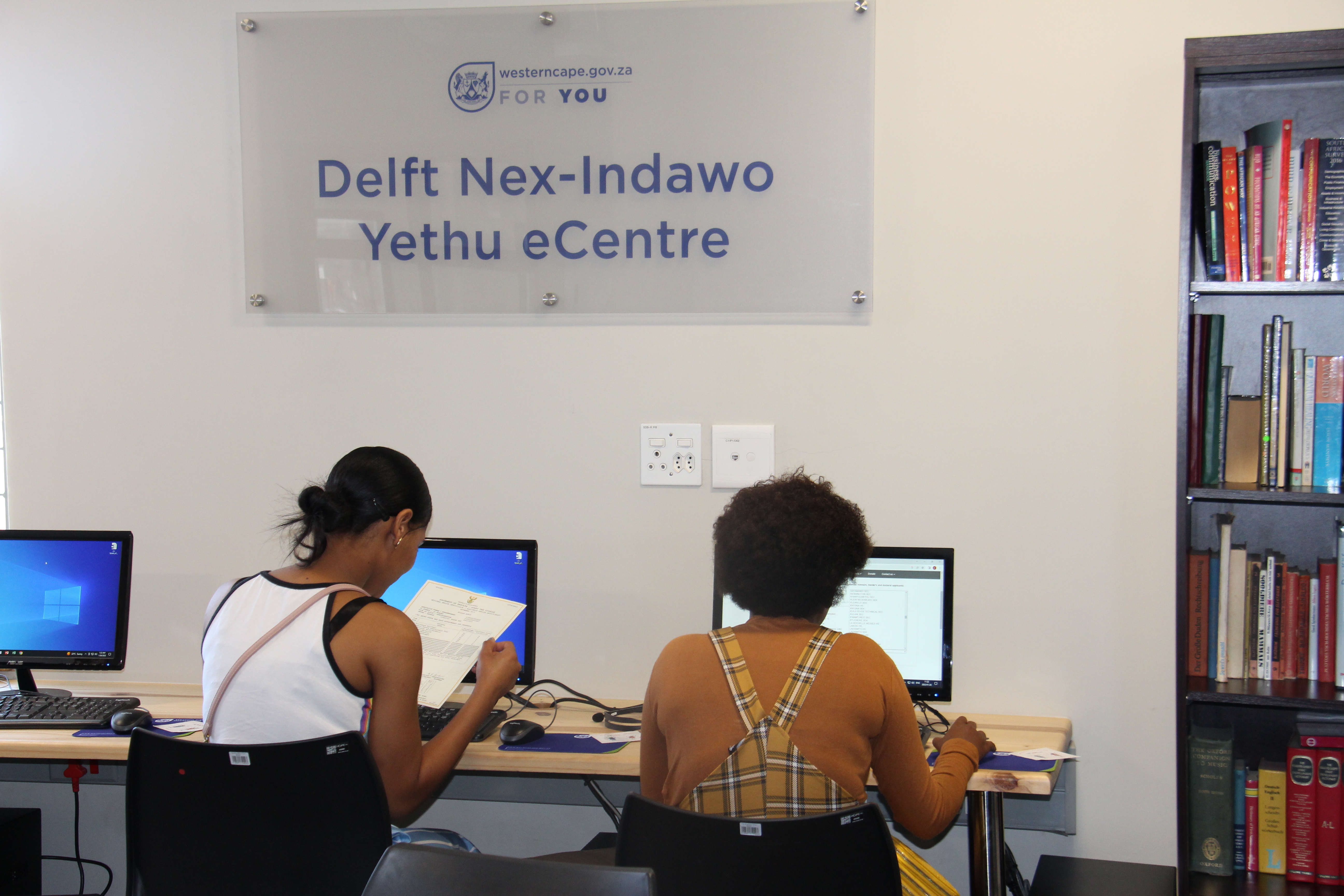
Working in Delft

Talking to a cleaning lady at a South African hotel I am staying, she enquires about my work. Hearing that my office is in Delft, you could see the disbelief in her eyes – and the first words in response: “I would never go to Delft!” Born and raised in Bontheuwel and now residing in Mitchells Plain; both so-called “coloured” areas not really known for too much peace, she still makes a determination that walking the streets of Delft voluntarily is utter madness.

This recent encounter once again made me aware how even locals look at the township of Delft. Certainly, it is the murder capital No 1 in the province according to the last crime statistics and No 3 in the country; it is high on the list of rape, GBV and other crimes not to name gang related violence. But I ask myself whether it is fair to judge and discriminate against hundred thousands of people because it has its admitted problems of severe nature.

I realise of course how anxious people are to come to Delft. How it sometimes needs convincing to visit us on campus. But I also see how – once there – the realisation sets in that while acknowledging the realities, the fantasies and anxieties are often bigger than what one experience once there.

Delft is unique – and there should be the unique Delft way to get it right. To get it right, there needs to be communication and encounters, there needs to be the openness of joint engagement.
Talking to our advisory committee the goal is clear: not to run away to anyhow not greener pastures but to stay and to change the situation so that people can live in peace, prosper and make a living for their families.

Change will only happen when those living in Delft will be working on this change. HOPE Cape Town and “The Nex – Indawo Yethu” can in this regard only be a tool, an auxiliary, a point of synergy and a force of good and goodwill.

And the organisation can be the way into this community for those coming from outside to engage, to understand and to be part of a way to what every human being dreams of: a decent life in a safe environment and a better future for the next generation.

But there is more:
Certainly, the LEAP forces make a great impact in reducing crime and bringing more safety and stability. NGO’s try their very best to unlock potential and assist those in need. Church groups are hard at work with charity efforts. Civil society groups and self-help groups are dedicated admirably to tackle problems, supported by local councillors in many ways.

Looking at the youth unemployment rate for Delft it is clear that also the opportunity to find work must improve heavily. The City of Cape Town prides itself with attracting business and investment, like we have seen with the Amazon company. If there would only be more courage to offer incentives to do business in the Cape Flats, creating jobs and prosperity. It might mean in the beginning more efforts to upskill people and to guarantee security. But in the long run, it would change not only a township, but it would have a ripple effect for others with the message: change is doable and the Cape Flats could become also a beacon of hope which those living there deserve to experience every day more.

Filed under: HOPE Cape Town Association & Trust, HOPE Cape Town Trust, Politics and Society, Reflection, Society and living environment, South Africa, Uncategorized, , , , , , , , , ,

Mandela Day reflection

Make everyday a Mandela Day -#itisinyourhands

This was the motto of this year’s Mandel Day.

Mandela Day is an annual global celebration that takes place on 18 July to honour the life and legacy of Nelson Mandela. This day is a call to action for individuals, communities, and organisations to take time to reflect on Mandela’s values and principles and to make a positive impact in their own communities.

I am always amazed to see and read afterwards how NGO’s, politicians and ordinary people are coming together – and even trying to set world records in how much food they have given out and how much soup was distributed.

I see the pictures of smiling kids paraded in front of pots and food and toys …

And I feel uneasy – year after year more – asking myself whether “to reflect on Mandela’s values and principles and to make a positive impact in their own communities” are really translate in hand outs for 67 minutes year after year.

Making a positive impact in a community – is that not more than hand-outs? Does the feel-good-hand-out time with certainly all the good intentions really make a difference in the lives of those who benefit, or is it not a quick pass by of receiving but really not changing the lives of people?

Impact should mean change for the long run – so how can we transform a charity event into a contribution to real development – impact which means real change in the lives of people and communities…

Any suggestions?

Filed under: Africa, Networking, Politics and Society, Reflection, Religion and Ethics, Society and living environment, South Africa, Uncategorized, , , , , , , ,

Human Rights Day in South Africa

The Human Rights Day in South Africa is historically linked with the 21st March 1960 and celebrated as a Public Holiday in the new democratic South Africa.
And why the 21st March 1960, those not living in South Africa, will ask.

Sharpeville is the answer: On that day, 69 people died and 180 were wounded when police fired on a peaceful crowd that had gathered in protest against the unjust pass laws.

Today we commemorate on those events, and those laws are gone, and we live in a free and democratic society, so we say. But looking more closely, we have to admit, that changing to one person one vote has not brought us to the point where human rights are respected in South Africa.

The last weeks we experienced how a political party can call on infringements of human rights and threatened violence with their “national shutdown”. It was in most parts prevented by a coordinated effort of police and security services, as well as court decisions. Alone that Members of the National Parliament are able to use intimidation and threats tells a story.

But looking at the living conditions of many of South Africans, it triggers the question about human rights and the ability to enjoy them in current times.

Human rights are rights inherent to all human beings, regardless of race, sex, nationality, ethnicity, language, religion, or any other status. Human rights include the right to life and liberty, freedom from slavery and torture, freedom of opinion and expression, the right to work and education and the list is longer.

At the end, it is the right to have a decent life in safety and security and sheltered in an adequate human way.

Looking at my working place in a township, I am not sure, I witness human rights making it to the front. Violence, gender-based-violence, poverty, lack of education and work opportunities, just to name some, prevent people from enjoying their human rights. It is not particular one place – many townships and locations don’t provide for the living conditions needed to enjoy the real meaning of human rights and human dignity.

I honestly often take my hat off seeing and experiencing the dignity and good will of people who are deprived of the chances and who still try to make the best out of it.

With all those people of goodwill, there is so much more to do to make our Human Right Day in South Africa a celebratory day. For now, it is a day of reflection and commemoration, but also a day of awareness and a reminder, what all has still to be done.

As the world is currently in general in a bad space or in a transition time, it is even more difficult for an emerging democracy to get it right and to give its citizens what they rightfully are entitled to.

Human Rights Day 2023 – a day of commemoration, reminder, and order and not political Sunday sermons.

Filed under: Africa, General, Politics and Society, Reflection, Society and living environment, South Africa, Uncategorized, , , , , , , , ,

Create HOPE in the World

Rotary International revealed last week the motto for the Rotary Year 2023/2024.
Reflecting on this motto at the beginning of the new calendar year, indeed hope is needed. Looking around into the world in January 2023 one could be frightened.

The constant attacks of Russia trying to bring a neighboring country down by sheer bombing terror towards infrastructure and non-military aims has shown no letting down on ferocity.

Brazil and the USA, followed by Hungary and now Israel continue to show how democracy can be eroded on a continuous base, and it seems that a major part of the respective population supports the move into more anarchy and oligarchy.

China’s COVID-19 politics has shown how dictatorial states irrationally govern and at the end are bringing more suffering to the people solely through nonsensical decisions filtering down from top to bottom without being questioned.

And in the country I live, the blackouts give witness to the ongoing incompetence and corruption of the nationally governing parties; failing their very own people in basic matters.

So yeah, hope is needed, and fascinating is, that Rotary does not want to give hope, but indeed create hope. This sounds like a very active approach, and an approach which is the only way to go against the wave of hopelessness and despair, people experiencing on a daily basis.

And this despair brings lots of people to turn towards populists and conspiracy theories. Being told that there is only “black and white” and one is given a clear path to walk is often perceived as the most easy way to escape the amount of challenges the world is facing.

Creating hope means now to actively go against populism and all the other woes of modern society. It means to be on the ground and to work with the people concerned by developing alternatives, by voicing reason publicly and by simple leading and living by example.

For me, as the chairperson of HOPE Cape Town Trust, the new motto is also an encouragement to do more in this regard. It seems to me one of the best wishes for 2023. Not only because it is so desperately needed. But also because I know that millions of Rotarians around the world can make a difference, joining forces with all the NGO’s and civil society institutions already hart at work.

We need a coalition of the willing, a term we know from the Iraq war, but now meant in a very positive way of goodwill and enthusiasm. We need people who put their ideologies aside and first and foremost see the person and his/her needs. And we need people who understand human rights, human dignity and the portion of freedom and self-determination to be afforded to everybody.

Looking at the challenges the world is facing, creating hope means a hands-on approach. It means practicality at work and a mixture of grass-roots approach and policies giving reason and direction.

With this motto Rotary has set a scene giving hope – now lets see how the creation of this hope looks like in real life. As a Rotarian myself I am thrilled to be part of this creation.

Filed under: General, Networking, Politics and Society, Reflection, Society and living environment, Uncategorized, , , , , , , , , ,

In between – NGOs in the times of war and pandemic

I guess nobody would argue against the statement, that NGOs are living through a difficult time. During the pandemic, those in the sector of health, nutrition and social support spend considerably more money than the agreed budgets provided. And those who had not put away some money for difficult times stood quickly at the brink of inability to pay due to overspending.

And no, neither in South Africa nor in Germany the state would consider support in the times of Covid – only companies, only economic entities were able to claim support from the state coffers. Looking at South Africa and seeing what NGO’s had achieved in supporting those left alone and in some instances still waiting for the state sponsored food support, it is clear: the situation would have been much dire without their work. In Germany, the food banks called “Tafeln” also were under strain because of the higher demand versus less support.

Generally, supporters and sponsors worldwide are more cautious in spending and granting support. Nobody really knows what is next and how to survive the possible next economic onslaught. It is understandable, but it hurts the ability of NGO’s to function.

Now the war in Ukraine rages on and as a result everything is getting more expensive while budgets, especially those fixed for some years via a grant, remain the same. Again: trouble is looming when not planned and forward-looking kept house.

The way forward? Not sure, but it is important to point out the in-between position of non-governmental organisations and their value for society and economy. Social interventions and economic development are going hand-in-hand. Development aid has always something to do with economical relationships. Both are important for the good and well-being of countries and societies.

Maybe after Covid and while the war is raging it is time to put those relationships but also the development agencies of countries on the test bench to have a sharper look what serves the purpose. The world is changing, and so the ways we do business – not only in the economical world.

Filed under: Africa, Politics and Society, Reflection, Society and living environment, South Africa, Uncategorized, , , , , , , , , ,

Blog Categories

Follow God, AIDS, Africa & HOPE on WordPress.com

You can share this blog in many ways..

Bookmark and Share

Enter your email address to follow this blog and receive notifications of new posts by email.

Join 2,711 other subscribers

Translation – Deutsch? Française? Espanol? …

The translation button is located on each single blog page, Copy the text, click the button and paste it for instant translation:
Website Translation Widget

or for the translation of the front page:

* Click for Translation

Copyright

© Rev Fr Stefan Hippler and HIV, AIDS and HOPE.
Unauthorized use and/or duplication of this material without express and written permission from this blog’s author and/or owner is strictly prohibited. Excerpts and links may be used, provided that full and clear credit is given to Rev Fr Stefan Hippler and HIV, AIDS and HOPE with appropriate and specific direction to the original content.

This not withstanding the following applies:
Creative Commons License
This work is licensed under a Creative Commons Attribution-ShareAlike 3.0 Unported License.