
God, AIDS, Africa & HOPE

Reflections / Gedanken

Racism – the original sin one cannot escape?

Visiting the Duke University with its vast history of racial divide and coming together there can’t be any evening meal with lecturers of history without at some point touching on the question of racism in the USA. Stories told about black movements on Duke campus – and those experiencing equality and black conscience movements in Montgomery and in other parts of the South States of the USA – for a German living in South Africa an intense evening of sharing the pain and questions arising from history and the challenges future will hold.

While it seems that my US American friends have made peace with the fact that as a white man, one cannot escape the original sin of racism purely by being born from a white mother and father -I still grapple with the fact whether it is fair to be again and again put in the structural and personal white privilege and somehow racist corner – no matter how engaged or involved one has been in healing the racial divide.
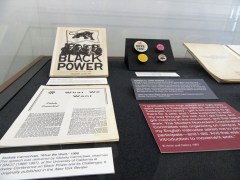
Recognizing the past, acknowledging structural privilege is one thing – making it the Cain’s mark of every white person for the foreseeable future is another. My question was on this eve and still remains whether talking in the same “termini” our forefathers have done will assist in overcoming a racist past and leading into a non-racist future. While under Obama and Trump here in the USA seemingly the topic is discussed much more prominent and controversial – so different from the usual US American way of being nice , shallow on this subject and avoiding conflict – we also going in South Africa and I guess in many parts of the world through a renewed debate on this topic. Yes, maybe it is true that we on all sides have to speak out and speaking out might even hurt – not only the listener, but also the speaker acknowledging truth we can’t allow for this seemingly original sin to linger and therefore darken the future of future generations.

Maybe the debate, the pain ,the accusations are a necessary redemption to be in the future saved from the evil of racism – maybe the revolution of social media taken note of all the racist acts and laying in bare in the public to see, to judge, to mourn, to decry – maybe all this is necessary in the development of a human civilization, which at the end only knows one race, the human race – later looking back on today’s debate and yesterdays history in sheer non-believe that racism was even a possibility to entertain for so long in history.

For me, this question remains after this eve as painful as ever – and the question-marks keep nagging how to approach a seemingly original sin which keeps on poising societies in our times. My experience at Duke University was a reminder how much had been done, and how much still has to be done – and how many circles we have already run without really moving in-depth forward on this question.

Filed under: Africa, General, HOPE Cape Town USA, Politics and Society, Reflection, Society and living environment, South Africa, Uncategorized, , , , , , , , , ,

And the question is…

South-Africa-question“What has this all to do with your work?” – I was asked recently discussing my blog and the person questioning me noticed the hardly not to notice political overtone of the last blog entries.
The answer is very simple: the  roller coaster on the political scene influences together with the water scare and now the polony  scandal the psyche of the people around us – the madness of state capture, the midnight changes in cabinet, the economic meltdown of South Africa in the last years resulted in more food-insecurity, in more unemployment, in more emptiness, in more loss of perspective as society. Students were encouraged to demand fee-free education which is in itself a non-sense, as there is nothing for free and the result of the reckless announcement of former President Jacob Zuma of the implementation of for said “free”   education means now in return an increase in VAT and again, the poor have to carry the biggest burden.
The unstable politics of the last years have taken a toll in all spheres of society and the divided ruling party, warming up to the party of the Gucci revolutionary “Commander in Chaos” with his only hardly veiled racism and power hunger balances the hope of a better future with the new president again negatively.

Add in the Western Province the serious threat of taps running dry – it all creates a situation where people are visibly on edge and less inclined to think rational and with measure.

HOPE Cape Town developed since years already a second arm of service which aims to assist those in need not only in the medical field, but also tries to remedy social woes of troubled South African families: poverty, lack of education, early childhood development and deficits in the framework of broken communities – read drugs, alcoholism, broken families, gangs, violence, corruption – has to be tackled simultaneously with any medical intervention to be successful.
This social services and assistance arm will be further developed – a part-time social worker and an occupational therapist are at the core of those developments working hand in hand with the doctors and the social system of the state – latter unfortunately a broken system with gaps hurting and killing children as a result.

The pain giving birth to a new and democratic South Africa with all the up’s and down’s are impacting in many practical terms the work of NGO’s like ours. Strikes and service delivery protests are damaging not only infrastructure but people engaged in those activities often forget their medication, their doctor’s appointment or even to put food on the table for the family. Corruption on all levels of society makes life more expensive for those anyhow struggling to make ends meet – and if delivery of state services are chaotic it is indeed difficult to get the papers needed for e.g. registering somebody into school.

And people who have nothing to lose anymore are obviously vulnerable to propaganda and ideology which wouldn’t make sense if one would have the time and the education to ponder what is often told from politicians in public.

The world is in the moment globally a bit in turmoil, and working in the non-profit part of it means to be vigilant and vocal for all those who have no voice or are somehow silenced by food parcels and t-shirts or a free meal – popular methods of those wanting to remain in power here in South Africa.


Filed under: Africa, General, HOPE Cape Town Association & Trust, HOPE Cape Town Trust, Politics and Society, Reflection, Society and living environment, South Africa, Uncategorized, , , , , , , , , , , , , , , , , , , , , ,

JuJu, you are wrong

“The time for reconciliation is over; now is the time for justice” , with those words commented Julius Malema, self-styled “commander-in-chief” of the EFF on the motion brought in by the very same party to allow expropriation land without compensation. Which would mean in consequence a change of the South African constitution to allow for it to happen.

The problem is not the question of redistribution of land which could obviously be achieved in great parts through the existing laws if and when the government systems would function without corruption and nepotism hindering progress on all levels of the administration. Obviously one can discuss how far in history one want to go to redress wrongs – whether the ethnic groups coming into the Southern tip of Africa long ago also took land and from whom – all valid and ethically important questions even including the repeated request of Mr Lakota in the national Parliament: “who are our people?” and from whom is the land taken and from whom not?

Where I see the wrong is in playing reconciliation against justice – because you simply can’t do it. Reconciliation needs justice and justice need reconciliation – the populist outcry of Julius Malema declaring reconciliation as ended is either a very calculated slogan to pour more oil in the emotional fire of land redistribution, or he has no sense for the realities of justice or reconciliation. Fact is, that such either/or is damaging the healing process of a troubled South Africa. It does not help to find a way to undo injustices without creating new wounds and new injustices which certainly will cause later generations to go through trouble nobody wants them to be burdened with.

Again: there is nothing wrong with redistribution of land, but a party which openly advocated land grabs Zimbabwean style is the least advocate for justice. There is a fine line between doing right in such a question – and yes, satisfying the masses makes it not easy to look at it with the reflection needed to give justice to the fact that all South Africans deserved land. The slogan “land without compensation” is like “white monopoly capital” and other slogans good for populist speeches, but bad for politics serving especially those in need and the poor. No action can take the pain away the older generations have endured in the past – and those are the once who should be part of finding a just solution – the loudest outcries I hear are from those too young to know the struggle first hand – and this cry sounds often shallow and more of entitlement then justice.

It is not easy to stand up against the mood of the so-called masses and emotions fired up on this question. One just be reminded how Mosiuoa Lekota was screamed down in Parliament. And it does not make it easier to do so while recognizing the depth of injustices committed during apartheid times. But a voice of reason never has a good time to speak out: Justice can only be done in the service of reconciliation – who says otherwise is not telling the truth to the people of South Africa.

Whatever we do in South Africa as South Africans – it must always be serving justice AND reconciliation – it is the only way to heal society.

Filed under: Africa, Politics and Society, Reflection, Society and living environment, South Africa, Uncategorized, , , , , , , ,

No place for the faint-hearted

It is indeed difficult to describe the mood of people in South Africa in the moment – and it gets even more complicated if and when one looks at the Western Cape. The drought in the latter slowly but surely creeps into the minds and hearts of those until now still ignorant of “Day Zero”, the day the City of Cape Town runs out of water. The consequences are harsh: the prospect of queuing for 25 L of water every day triggers now runs on the shops to secure enough drinking water – since days it seems almost impossible to get the 5 L still water containers – as soon as the truck arrives the water supposed to be stocked is sold out. But it’s not only water – the hunt for water-less hand sanitizer and plastic containers adds to the dooms scenario experienced by the woken up shopper in our days. Social media is full of sort of advice how to save water and stories are told around the dinner table how to cut down shower water use to under 2 liter while catching the grey water for flushing the toilet. Amazing times for Cape Town.
Spiced and interlinked because bulk water supply is normally belonging to the national sphere of government is the chaos triggered by state capture and it’s related parliamentary inquiries, not to forget the not so smooth farewell of our President Jakob Zuma, who simply refuses to resign to the dismay of many in his own party. While the opposition party of the DA is aggregating itself in Cape Town and the EFF keeps abusing those in despair for the own political gains of their “commander in chaos” the overall picture one could get overlooking South Africa in total is that of a soap opera playing out in such an unbelievable way that the viewer would say this can’t be real. But it is – South Africa at its best and the mood, one is in, swings from despair to amusement, from “I can’t believe it” to “it only can get better”. People are either surrendered to whatever comes next or they are on edge – it is difficult to remain in a space in between.

In all this social, emotional and political turmoil one keeps working and wondering what’s next hitting the fan and making life somehow “more interesting”. No place for the faint-hearted..

Filed under: Africa, Politics and Society, Reflection, Society and living environment, South Africa, Uncategorized, , , , , ,

Drought and Water scares

Meanwhile it is almost known in every corner of the global village that the Western Cape is facing a severe drought and that Cape Town might be the first big city completely running out of water. Emotions are flaring high and accusations are flying into all directions: local government, the people of Cape Town, the system, the complicated spheres of government, national government – everybody is able to pick up his or her argument to blame others for the crisis.

I guess it is a typical scenario where half truth are used to cover up own faults – its human to pick what serves my argument:

Yes, it is correct that there was a severe drought for 3 years in a row – but since years there is talk of a desalination plant and done was really nothing.
Yes, it is correct that the water use of some people is unreasonably high – but you can’t expect that people realize the severity when you played your cards of counting down to day zero already last year and it did not happen
Yes it is correct that national government is obviously reluctant to assist an opposition governed province, but honestly, opposition took government officials so often to court in the last years but failed on this one badly.

So I would say that bad planing, bad coordination, bad politics and bad habits here joined hands to get to the situation as is in the moment. Responsibility lies with government officials to  lead the way out of crisis – and there is the next problem: with all the finger-pointing and in-fights there is no real leadership – dealing with citizens like school kids does not help nor creating a situation which will lead to chaos and anarchy and a breakdown of public life as we know it.

The way the water crisis is handled is a dis-service to the people of Cape Town, but also South Africa – it damages not only the reputation but the possibilities to create a better life for all – some soul-searching paired with honesty and fairness to all concerned would assist in getting the situation back on track.  Communication must improve – watching for example Xanthea Limberg as  mayoral committee member for informal settlements, water and waste services and energy talking about the situation feels like a detached person taking about a minor problem of technical nature. “Empathy” is the missing word and emotion.

And there is more to say: If the City of Cape Town would have a proper and transparent plan to overcome the situation people would be more willing to engage. For example the drought charge now given up on: If there would be a plan to build a proper desalination plant – given the public plans, figures and timelines with a projected outcome I am sure the support for such a charge would have been overwhelmingly positive. People must see and feel that their money is working for some good in the future. Saying that such a charge makes up for lost revenue because people saved water was quite bad and those who do the marketing of such communication should be fired on the spot.

Millions of people queuing for water every day – no running toilets in office buildings and restaurants – sanitation and health issues as a feasible threat, closing temporarily primary health care facilities as per existing plans – the list is long and time to avoid it is short – instead of continuous finger-pointing I would like to see all responsible to get to work – reflection can come later when there is the appropriate time. Definitely some lessons to learn for the new democracy of South Africa and it’s functioning in real life experience.

And lets be clear: the lack of proper planing and maintenance in the area of water and sanitation also from other provinces and national government  together with climate change will South Africa hit hard if not immediate steps are done to avoid more disaster scenarios in South Africa. And to be honest: as a priest I also miss the vocal and leading voice of churches and interfaith communities: water and access to water is a human right – and yes, one could hear some voices here and there, but not the swell of guiding concerns needed in such a situation.

Filed under: Africa, Networking, Politics and Society, Reflection, Society and living environment, South Africa, Uncategorized, , , , , , , , , ,

Blog Categories

Follow God, AIDS, Africa & HOPE on WordPress.com

You can share this blog in many ways..

Bookmark and Share

Enter your email address to follow this blog and receive notifications of new posts by email.

Join 2,711 other subscribers

Translation – Deutsch? Française? Espanol? …

The translation button is located on each single blog page, Copy the text, click the button and paste it for instant translation:
Website Translation Widget

or for the translation of the front page:

* Click for Translation

Copyright

© Rev Fr Stefan Hippler and HIV, AIDS and HOPE.
Unauthorized use and/or duplication of this material without express and written permission from this blog’s author and/or owner is strictly prohibited. Excerpts and links may be used, provided that full and clear credit is given to Rev Fr Stefan Hippler and HIV, AIDS and HOPE with appropriate and specific direction to the original content.

This not withstanding the following applies:
Creative Commons License
This work is licensed under a Creative Commons Attribution-ShareAlike 3.0 Unported License.