People can be confused when dealing with HOPE Cape Town. It seems to be one organisation, but there are different additions to “HOPE Cape Town”: either Trust or Association. “What’s the difference?” they ask often.
When HOPE Cape Town was founded in 2001, an Association was created and named: HOPE (hiv outreach program & education) Cape Town Association. In the years to follow, the Association grew from a 1 employee organisation with a small board into a more sizable entity.
In 2006 the Board decided after long and intense discussions: There is a need for oversight. The HOPE Cape Town Association should in future be functioning as the working horse. The HOPE Cape Town Trust was founded as an oversight entity, looking after the financials and overseeing the marketing/fundraising part of the organisation. The trustees generally don’t get involved in operational questions, but assist from time to time in a very limited and clearly defined role.
The HOPE Cape Town Trust also became the face of the organisations for all marketing/fundraising related activities.
Once a year, the HOPE Cape Town Association presents the budget to the Board of Trustees, which in turn exams and gives approval to the projected spending.
Both entities, Trust and Association, are each a NPO and a PBO in their own right with all the necessary credentials in South Africa. Both entities have a board – the Association’s board is called the “Board of Expertise”, being exactly this: experts in the various fields of work. The chairperson of the Association is ‘ex officio’ part of the Board of Trustees with voting rights and vice verse.
While the Board of Trustees meets formally twice a year, the Board of Expertise meets quarterly to conduct business.
Reading newspapers, social media or watching news on TV or stream in the first days of the New Year confirms what those say, who never celebrate New Year: “Nothing will change except the date!”
And indeed nothing seems to have changed, even the opposite rules supreme: more bombs in Ukraine and Gaza, more killing, more suffering. The political and social drama in the USA does create rather fear than optimism, and I could now list here a litany of what’s wrong in this world.
And still I believe that the New Year is meant to be a reminder, that nothing has to stay the same, that there is always the chance to change for the better. A chance which is so often forgotten when we are battling our daily life and challenges.
And this applies not only in the private sphere — it applies to those running companies or carrying responsibility social or politically — and looking at the world, the social and economic challenges, the complexity of the world; they need this reminder.
To be able to change and to assist the change in society or economy, it is important to be able to think and see outside the box. It is essential to have time to look far ahead and plot a way forward. And it is critical to have friends and colleagues who are not nodding ‘yes’ at everything you think is right.
Running an NGO is like running a company. There is a business plan, a strategic plan, a financial plan. There are employees counting on receiving their salary at the end of the month and boards to satisfy. And those who “invest” in development to reassure, to report back to and to gain new friends, partners, and supporters. Last, but not least, not to forget those we work with. They are more than “customers’, they are people we walk with for a while to explore possibilities, to strengthen their resolve and to allow for hope translated into real life action.
So what are our steps into and our vision for 2024 as HOPE Cape Town?
Hopefully for most of our employees to still have a great time off work – with family and friends together charging their batteries and to come back to work relaxed and with joy in their heart.
We have had big dreams in the last years, and we still do with the extension of the garden project. The “Bettina Benzoni-Ruffert Community Garden — Environmental Training Centre” will grow in 2024. Training, education and environmental questions are the guiding forces behind this addition.
We will sharpen our fundraising. Living only from donations if and when they come in is difficult when you have reached adulthood as a foundation. We would like to connect with people who understand that social investments and letting money work for years or decades to come is an investment into the next generation in a connected world.
Our strategy plan for the next 5 years is on the homestretch. We hope to impact meaningful social and economically and to connect even more with those who do similar. After some years on the new campus we learnt lessons now implemented and further explored.
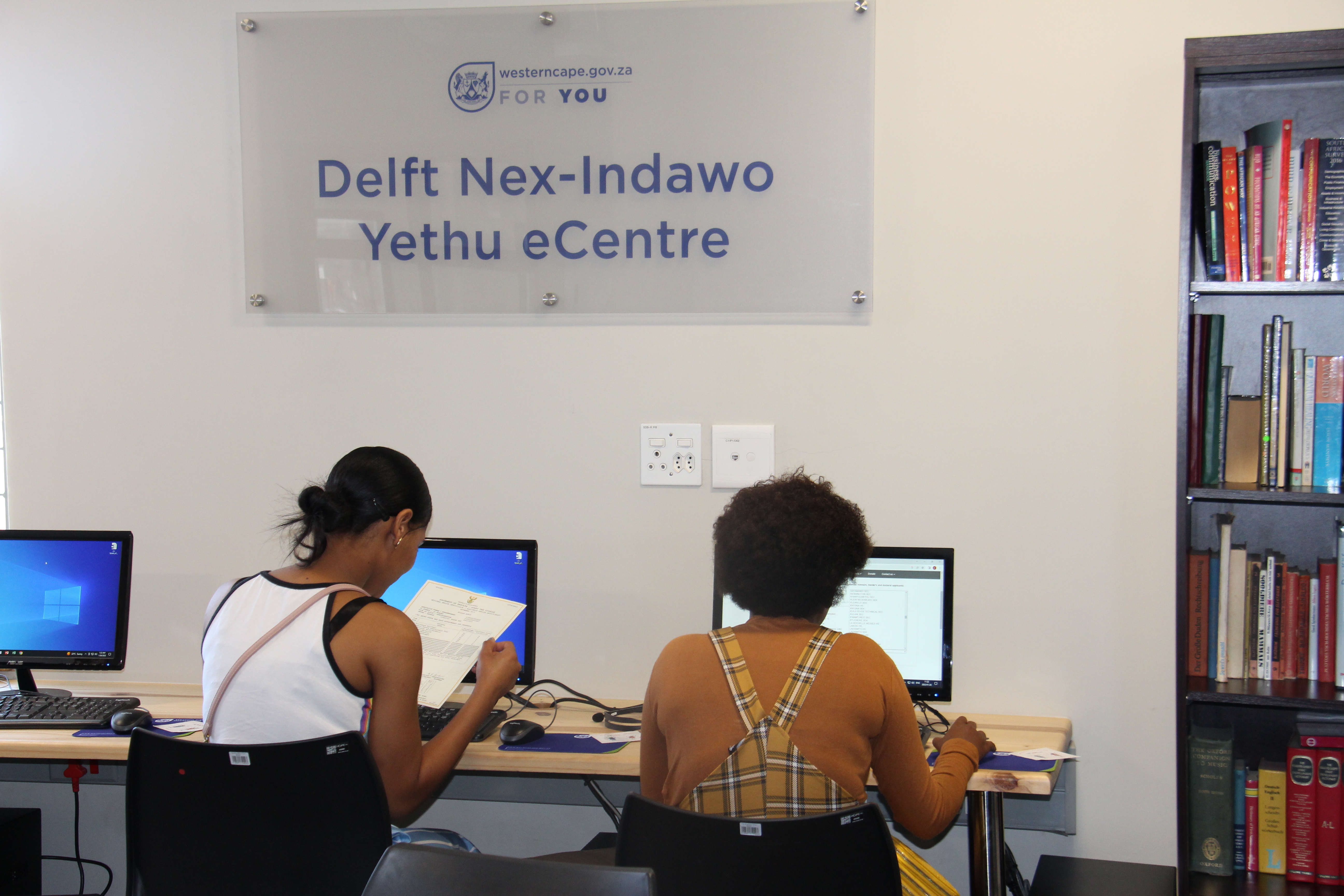
We will see all our challenges as opportunities and therefore overcome them. We are looking forward to continuing making our campus “The Nex – Indawo Yethu” and all satellites welcoming locations and places of learning and mutual understanding.
If you want to have a quick view of our work – please check this 3-minute video here; subscribe to the channel to be always the first to know…
If you want to be part of this inspiring journey in any form or shape, please let me know.
Focusing on marketing and fundraising for the organisation HOPE Cape Town in South Africa, I had the pleasure – if it is a pleasure – to travel between three continents this year again, trying to find, reach and convince people in the USA, South Africa and European countries to support our holistic approach.
It is generally not an easy task, but the world is currently so much up-side-down, that the challenges seem to grow every day. It becomes a minefield, not only, because of money being diverted for current affairs but also as ideology, insecurity and anxiety are more than ever factors of life.
Gaza and Israel, it seems that you have to put every word on the golden scale to not offend but toe the line to stand on the right side – whatever that may be. Looking at the human factor without politics, as NGO’s do, is a difficult option as you’re directly under general suspicion of supporting terror.
The war in Ukraine means fundraising for people in a country, in which the leadership without any shame stands with the aggressor and pretends to be neutral.
South Africa’s grey listing and constant corruption on the highest levels are often points of debates with funders. They believe that South Africa has enough resources if and when the elite stops stealing money.
The USA is currently in an epic battle when it comes to democracy and a hotbed for the attempt to mix white superior religion, clearly visible in proclaiming a certain candidate a Godsend. Not to forget, a leader of the House who has direct conversations with God and is not the new Moses. In some states, history is rewritten and books are banned again. Not really an ideal environment to discuss support for people in South Africa.
Generally, Covid and the restrictions seem to have a profound effect on people, who felt that the security and safety their life was build on, was gone in seconds. It shows still today in actions, reactions and behaviour.
Business people in Germany, but generally in Europe, are more than worried about the current economic situation in the country and the direction, they are taken by those politically in charge.
All this impacts the world of fundraising a great deal, it makes it perfectly clear, that depending on donations alone is not sufficient for the long run. NGO’s like companies have to build up and maintain a reserve like any other companies if they want to survive long term and meaningfully.
It also makes it necessary to speak with people face to face – not FaceTime, not zoom or teams. Those can be interim measures to keep contact, but the person encounter is in times like ours the most essential part of fundraising.
The need to navigate between the world of possible funders and the reality of the recipients becomes more tricky as sensitivities and anxieties looking at the future reign high.
All this makes the work of NGOs like HOPE Cape Town even more important, because the victims of all the political, social and economic turbulence are those anyhow at the bottom of society. Those who lost out by birth are loosing again. NGOs are the lifeline to survive and even to grow under these circumstances.
We as NGOs need, besides the normal donation also people who want their support working for years to come. We need people investing in the future of others long-term, and so becoming role models for the next generation they helped to form and sustain.
Not only that, but we need this support to be able to stand firm in our support for human dignity and human rights declared for everybody. There are shifts of proportion happening now when it comes to demography, political influence, economic powers. NGOs are essential in those times, balancing what often is overlooked in daily struggles on the world stage. A reason more to support, sustain and to invest in the non-governmental sphere of society.
Talking to a cleaning lady at a South African hotel I am staying, she enquires about my work. Hearing that my office is in Delft, you could see the disbelief in her eyes – and the first words in response: “I would never go to Delft!” Born and raised in Bontheuwel and now residing in Mitchells Plain; both so-called “coloured” areas not really known for too much peace, she still makes a determination that walking the streets of Delft voluntarily is utter madness.
This recent encounter once again made me aware how even locals look at the township of Delft. Certainly, it is the murder capital No 1 in the province according to the last crime statistics and No 3 in the country; it is high on the list of rape, GBV and other crimes not to name gang related violence. But I ask myself whether it is fair to judge and discriminate against hundred thousands of people because it has its admitted problems of severe nature.
I realise of course how anxious people are to come to Delft. How it sometimes needs convincing to visit us on campus. But I also see how – once there – the realisation sets in that while acknowledging the realities, the fantasies and anxieties are often bigger than what one experience once there.
Delft is unique – and there should be the unique Delft way to get it right. To get it right, there needs to be communication and encounters, there needs to be the openness of joint engagement. Talking to our advisory committee the goal is clear: not to run away to anyhow not greener pastures but to stay and to change the situation so that people can live in peace, prosper and make a living for their families.
Change will only happen when those living in Delft will be working on this change. HOPE Cape Town and “The Nex – Indawo Yethu” can in this regard only be a tool, an auxiliary, a point of synergy and a force of good and goodwill.
And the organisation can be the way into this community for those coming from outside to engage, to understand and to be part of a way to what every human being dreams of: a decent life in a safe environment and a better future for the next generation.
But there is more: Certainly, the LEAP forces make a great impact in reducing crime and bringing more safety and stability. NGO’s try their very best to unlock potential and assist those in need. Church groups are hard at work with charity efforts. Civil society groups and self-help groups are dedicated admirably to tackle problems, supported by local councillors in many ways.
Looking at the youth unemployment rate for Delft it is clear that also the opportunity to find work must improve heavily. The City of Cape Town prides itself with attracting business and investment, like we have seen with the Amazon company. If there would only be more courage to offer incentives to do business in the Cape Flats, creating jobs and prosperity. It might mean in the beginning more efforts to upskill people and to guarantee security. But in the long run, it would change not only a township, but it would have a ripple effect for others with the message: change is doable and the Cape Flats could become also a beacon of hope which those living there deserve to experience every day more.
I always believed that for every founder of an organisation there is one duty which is of utmost importance, whether in a company or in an NGO, and that duty is to secure a smooth and timely succession plan. Ensuring that the transfer of responsibility happens calmly and without too much excitement or disruption is vital for any organisation.
Already in 2018 I engaged with the trustees of the HOPE Cape Town Trust, and together we developed a strategy and created a transition period with clear rules and responsibilities for changes within the organisation.
Dr Izane Reyneke has taken over as CEO dealing with all day-to-day business and Mrs Marlene Whitehead has taken over as program manager of the organisation. Both are working in their new positions now for more than a year with diligence and dedication. Mrs Carole Armstrong Hooper will chair the two HOPE Cape Town Trust board meetings.
In the last two years, HOPE Cape Town has created two new positions to facilitate this transition and at the same time to step up the professionalism of the work done. The launch of the campus “The Nex – Indawo Yethu” marked the beginning of a new chapter in the life of the organization, which made these structural changes even more meaningful.
I will not be disappearing or turning my back on HOPE Cape Town, far from it, my role within the organisation will also change. For the next 2 years, my focus will be on marketing and fundraising for HOPE Cape Town in Europe and the USA. I don’t need to explain the impact, Covid-19 and the ongoing Ukraine war has on fundraising, and it is amazing how the plan discussed in 2018 now fits nicely into what is necessary for the organisation’s sustainability going forward. To cut flight times and to be more flexible, my home base will be Malta for the time being.
I will remain a Trustee, part of the Executive Board and the Finance Committee for the time being. Practically, I will split my time between South Africa, Europe, and the USA. Currently, I spend 2/3 of my time in South Africa and 1/3 travelling, from now on this will be reversed.
To be able to take the initiative to plan and implement ‘stepping back’ into the second row is indeed a blessing, and it also allows the organisation to calmly develop and grow. Nobody is irreplaceable. To sit and to rest on one’s laurels until called to higher service in heaven is not my style, nor does it serve any purpose.
As founder of the HOPE Cape Town Trust, I am looking forward to supporting the organisation in my new role and responsibilities. I am also looking forward to meeting many of our European and US supporters more frequently. It is indeed exciting and a blessing to change roles and being able to serve the organisation in different ways.
My plea to you: Please continue to support HOPE Cape Town in the future. As I always say, we, the people on the ground, are only the extended arm of your generosity and solidarity.
Together, we are the HOPE family, bringing tangible hope to those less fortunate.