God, AIDS, Africa & HOPE

Reflections / Gedanken

Why should we support an NGO in Africa?

“Why Africa?” is a phrase I often hear when I present the work of HOPE Cape Town. Two weeks ago in Bitburg at the Secondary School I was discussing the question of why young people in Bitburg / a little town in Germany, should be interested in what is happening at the very bottom of the African continent.

“We have our own problems: the war in Ukraine, the many refugees, the economic situation, the climate” – and those, they tell me, “are more important to us than South Africa at the moment.”

The sentiment is right – and Corona and the experience of powerlessness during the pandemic, as well as the government measures that were often perceived as excessive during this time, have massively increased the anxiety and insecurity of many people. Many people’s sense for security has been eroded in times of Covid-19; this has long-term consequences.

But feelings are not always the whole reality – and it seems difficult to understand the complexity of life and interdependencies far beyond borders and distances.

Take the refugee issue in Germany: 2015 was a year Germany felt the influx of refugees in a very special way. But long before 2015, it was clear to anyone who wanted to know that Europe would have a problem that would be massively exacerbated by the climate issue. War, hunger, but also the simple human impulse for more security, prosperity and that children should have a better life are pushing people to flee or embark on the – often supposed – journey to a better future. This has also become a highly attractive business that promises massive profits for human traffickers as well as security companies. And it has become a political pawn between European countries and interests – see Hungary or Turkey, for example – and a bargaining chip for decision-making in the EU and beyond.

People stay at home when it is peaceful and there is a chance to live safely. Nobody sets off on an uncertain journey just for fun or because it’s funny. Sheer economic hardship is also a serious reason for people.

I don’t have the impression that much has really changed on this issue in Germany since 2015. Development policy has not really changed fundamentally. And the political landscape that increasingly consists of professional politicians. They are often distanced from the realities of ordinary people as a result – and their focus is often limited to the next election – they often fail terribly to see the bigger picture, which also includes the far-reaching complexity of matters in our days. Perhaps we also need to think about how politics should be structured differently in such a rapidly changing and evolving world. And whether it should be entrusted to professional politicians; some of whom who never have learned or practised a profession or trade, is another important question.

But back to the question of why people in Bitburg, or let’s say in Germany, should take an interest in what is happening in Africa and do something about it?

The mass exodus of people will not be stopped if money flows through the governments in Africa, which take their “cut” and whose corrupt actions are known and almost factored in.

The problem of refugees will not be solved as long as the economy is mostly seen to benefit Europe and adding value does not take place on the African continent.

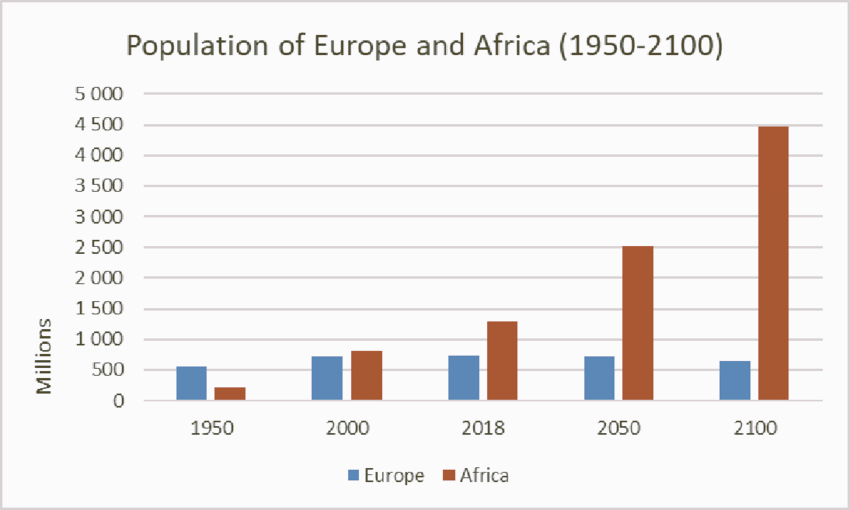
Africa will have the youngest population in 2050 – and therefore consumption and work will take place on this continent. We are facing massive upheavals not only in terms of the climate, but also in terms of the future of the world’s population, the future of work distribution, which people in Europe need to take into account now. We should avoid that in 30 years’ time the old saga repeats again that nobody saw this coming. The run by European politicians for green hydrogen from Africa shows where the journey is heading. The economic stagnation of many African countries is now becoming an advantage when it comes to renewable energies.

For this reason alone, Africa is important. And also South Africa, which is still a major player in African politics and is often used economically as a gateway to Africa. It should be mentioned in passing that South Africa has taken its share of refugees from Somalia to Zimbabwe. Anyone who looks at the numbers of internally displaced persons in Africa knows how critical the situation is and how few refugees actually arrive in Europe.

We are facing tectonic shifts as humanity, as societies. Europe not really looking beyond their own backyard, thinking only nationally or Eurocentric  – even if that is currently “in” – is simply short-sighted and will exacerbate the problems in Europe even more. No one is an island, no one can do it alone: climate, hunger, war, demography in a country and so much more require global solutions.

To break it down and put it simply: we as humanity, as a society, must ensure that wealth, added value, security and future prospects are available in every country (in Africa there are 54 countries covering 30 million square meters). We can only achieve this by working together and with an honesty and willingness to cooperate that can certainly be improved at present. Far-sightedness is required, and solidarity that ultimately also serves those who exercise it. Africa is a continent of the future, and Europe should align its policies accordingly. And NGOs are important points of contact here because they work at a level that enables decision-makers to see and understand realities. They often do very local but crucial groundwork on which society and politics can then build. Supporting NGOs in Africa is far more than charity; it serves the future security and peace of all, especially in Europe.

Filed under: Africa, General, Politics and Society, Reflection, Society and living environment, Uncategorized, , , , , , ,

Working in Delft

Talking to a cleaning lady at a South African hotel I am staying, she enquires about my work. Hearing that my office is in Delft, you could see the disbelief in her eyes – and the first words in response: “I would never go to Delft!” Born and raised in Bontheuwel and now residing in Mitchells Plain; both so-called “coloured” areas not really known for too much peace, she still makes a determination that walking the streets of Delft voluntarily is utter madness.

This recent encounter once again made me aware how even locals look at the township of Delft. Certainly, it is the murder capital No 1 in the province according to the last crime statistics and No 3 in the country; it is high on the list of rape, GBV and other crimes not to name gang related violence. But I ask myself whether it is fair to judge and discriminate against hundred thousands of people because it has its admitted problems of severe nature.

I realise of course how anxious people are to come to Delft. How it sometimes needs convincing to visit us on campus. But I also see how – once there – the realisation sets in that while acknowledging the realities, the fantasies and anxieties are often bigger than what one experience once there.

Delft is unique – and there should be the unique Delft way to get it right. To get it right, there needs to be communication and encounters, there needs to be the openness of joint engagement.
Talking to our advisory committee the goal is clear: not to run away to anyhow not greener pastures but to stay and to change the situation so that people can live in peace, prosper and make a living for their families.

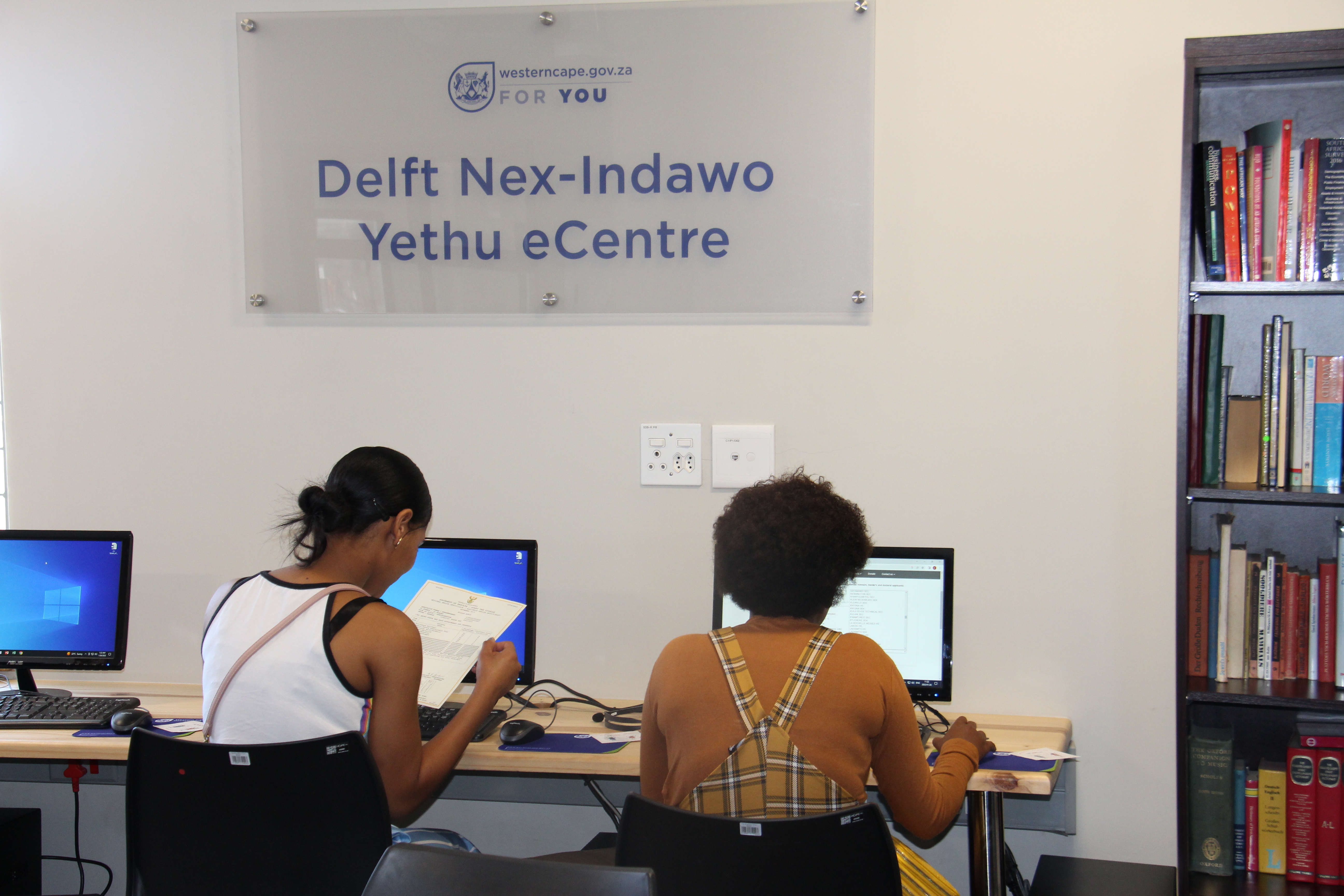
Change will only happen when those living in Delft will be working on this change. HOPE Cape Town and “The Nex – Indawo Yethu” can in this regard only be a tool, an auxiliary, a point of synergy and a force of good and goodwill.

And the organisation can be the way into this community for those coming from outside to engage, to understand and to be part of a way to what every human being dreams of: a decent life in a safe environment and a better future for the next generation.

But there is more:
Certainly, the LEAP forces make a great impact in reducing crime and bringing more safety and stability. NGO’s try their very best to unlock potential and assist those in need. Church groups are hard at work with charity efforts. Civil society groups and self-help groups are dedicated admirably to tackle problems, supported by local councillors in many ways.

Looking at the youth unemployment rate for Delft it is clear that also the opportunity to find work must improve heavily. The City of Cape Town prides itself with attracting business and investment, like we have seen with the Amazon company. If there would only be more courage to offer incentives to do business in the Cape Flats, creating jobs and prosperity. It might mean in the beginning more efforts to upskill people and to guarantee security. But in the long run, it would change not only a township, but it would have a ripple effect for others with the message: change is doable and the Cape Flats could become also a beacon of hope which those living there deserve to experience every day more.

Filed under: HOPE Cape Town Association & Trust, HOPE Cape Town Trust, Politics and Society, Reflection, Society and living environment, South Africa, Uncategorized, , , , , , , , , ,

Nothing is more constant than change

Dear Friends and Supporters of HOPE Cape Town

Nothing is more constant than change (Heraklit)

 I always believed that for every founder of an organisation there is one duty which is of utmost importance, whether in a company or in an NGO, and that duty is to secure a smooth and timely succession plan.  Ensuring that the transfer of responsibility happens calmly and without too much excitement or disruption is vital for any organisation.

Already in 2018 I engaged with the trustees of the HOPE Cape Town Trust, and together we developed a strategy and created a transition period with clear rules and responsibilities for changes within the organisation.

Dr Izane Reyneke has taken over as CEO dealing with all day-to-day business and Mrs Marlene Whitehead has taken over as program manager of the organisation. Both are working in their new positions now for more than a year with diligence and dedication. Mrs Carole Armstrong Hooper will chair the two HOPE Cape Town Trust board meetings.

In the last two years, HOPE Cape Town has created two new positions to facilitate this transition and at the same time to step up the professionalism of the work done. The launch of the campus “The Nex – Indawo Yethu” marked the beginning of a new chapter in the life of the organization, which made these structural changes even more meaningful.

I will not be disappearing or turning my back on HOPE Cape Town, far from it, my role within the organisation will also change. For the next 2 years, my focus will be on marketing and fundraising for HOPE Cape Town in Europe and the USA.  I don’t need to explain the impact, Covid-19 and the ongoing Ukraine war has on fundraising, and it is amazing how the plan discussed in 2018 now fits nicely into what is necessary for the organisation’s sustainability going forward. To cut flight times and to be more flexible, my home base will be Malta for the time being.

I will remain a Trustee, part of the Executive Board and the Finance Committee for the time being. Practically, I will split my time between South Africa, Europe, and the USA. Currently, I spend 2/3 of my time in South Africa and 1/3 travelling, from now on this will be reversed.

To be able to take the initiative to plan and implement ‘stepping back’ into the second row is indeed a blessing, and it also allows the organisation to calmly develop and grow. Nobody is irreplaceable. To sit and to rest on one’s laurels until called to higher service in heaven is not my style, nor does it serve any purpose.

As founder of the HOPE Cape Town Trust, I am looking forward to supporting the organisation in my new role and responsibilities. I am also looking forward to meeting many of our European and US supporters more frequently. It is indeed exciting and a blessing to change roles and being able to serve the organisation in different ways.

My plea to you: Please continue to support HOPE Cape Town in the future. As I always say, we, the people on the ground, are only the extended arm of your generosity and solidarity.

Together, we are the HOPE family, bringing tangible hope to those less fortunate.

Best

Rev Fr Stefan Hippler

Filed under: HOPE Cape Town Association, HOPE Cape Town Association & Trust, HOPE Cape Town Association & Trust, HOPE Cape Town Trust, Networking, Reflection, South Africa, The Nex - Indawo Yethu, , , , , ,

Handouts and Charity

Working in the NGO field in South Africa, one often meets a sort of demand for handouts and charity to attract people or fill programs with participants. Also, local politicians are tempted to have give-aways at hand – it seems to be the culture of work in the townships of South Africa.

The argument is frequently that people are too poor to pay – or that indeed as mentioned you don’t get people to come if there is nothing for free or to gain. And not even seldom, those invited to join programs ask for what goodies to expect when joining a program. Not to tell about competition within the NGO sector who is able to hand out more.

I get it – indeed, people are poor and times are tough. And yes, it is easier to attract people with food, gifts, and takeaways. But I doubt that this vouches for respect, dignity and development.

Free handouts make people dependent; handouts are charity and needed in absolute emergency situation to stabilize people and to giving them a perspective.

But to change the situation of people, and to foster a non-dependence relationship; to sustain a path to a better life, NGO’s need to walk with people in a giving / contributing relationship. And this does not always have to do with the exchange of lots of money. Small contributions chipped in. Offering talents and time as a contribution. The results:

The acknowledgement of self-worth and the value of what is being offered or jointly worked on. The feeling of being partners on eye-level and respectful towards each other. And the learning curve resulting from all of these aspects: more dignity, more self-respect and the knowledge: I can do it – we can do it together.

All this needs a shift in mindset in all sectors of engagement. It requires the courage to walk the talk of real development; a walk which can be rough and at times scary. But it is the only way to better the lives of people sustainably and to make everybody a real participant and less a dependent waiting for the next handout.

Filed under: Africa, General, HOPE Cape Town Association & Trust, HOPE Cape Town Trust, Networking, Reflection, South Africa, , , , , , , , , ,

Sustainability and the ability to plan

Promoting and deepening sustainability is certainly a priority after experiencing the lockdown during Covid-19 and now the ongoing war in Ukraine with all the consequences felt worldwide.
In the beginning of the lockdown we felt it: 42 staff members and their jobs, but also necessary programmes, were suddenly at risk.

Being not for gain or profit – it meant no support from government, but more expenses not budgeted for.

HOPE Cape Town has always been well managed and has taken care of every penny. This meant we came out of the crisis in pretty good shape. We had great support to provide children and families in Blikkiesdorp with food. But we also lost donors; companies ceased to exist, and many sponsors quite understandably wanted to wait and see before spending on charity or development.

The question remains:
How do we secure the future of our organisation in the long run? How do we guarantee the quality of the work and create reliability?
We have discussed this intensively in the Finance Committee and the Executive Committee of the South African HOPE Cape Town Trust. I would like to take you, the reader, with me on this journey in the coming posts and share thoughts and ideas with you.

Perhaps we can enter into a dialogue, and the blog is not a one-way street. I look forward to feedback, ideas, and dialogue. Your input is of great value for us as an organisation.

Filed under: HOPE Cape Town Association, HOPE Cape Town Association & Trust, HOPE Cape Town Association & Trust, HOPE Cape Town Trust, HOPE Cape Town USA, HOPE Gala Dresden, , , , , , , , , , , , ,

Blog Categories

Follow God, AIDS, Africa & HOPE on WordPress.com

You can share this blog in many ways..

Bookmark and Share

Enter your email address to follow this blog and receive notifications of new posts by email.

Join 2,711 other subscribers

Translation – Deutsch? Française? Espanol? …

The translation button is located on each single blog page, Copy the text, click the button and paste it for instant translation:
Website Translation Widget

or for the translation of the front page:

* Click for Translation

Copyright

© Rev Fr Stefan Hippler and HIV, AIDS and HOPE.
Unauthorized use and/or duplication of this material without express and written permission from this blog’s author and/or owner is strictly prohibited. Excerpts and links may be used, provided that full and clear credit is given to Rev Fr Stefan Hippler and HIV, AIDS and HOPE with appropriate and specific direction to the original content.

This not withstanding the following applies:
Creative Commons License
This work is licensed under a Creative Commons Attribution-ShareAlike 3.0 Unported License.