God, AIDS, Africa & HOPE

Reflections / Gedanken

Working in Delft

Talking to a cleaning lady at a South African hotel I am staying, she enquires about my work. Hearing that my office is in Delft, you could see the disbelief in her eyes – and the first words in response: “I would never go to Delft!” Born and raised in Bontheuwel and now residing in Mitchells Plain; both so-called “coloured” areas not really known for too much peace, she still makes a determination that walking the streets of Delft voluntarily is utter madness.

This recent encounter once again made me aware how even locals look at the township of Delft. Certainly, it is the murder capital No 1 in the province according to the last crime statistics and No 3 in the country; it is high on the list of rape, GBV and other crimes not to name gang related violence. But I ask myself whether it is fair to judge and discriminate against hundred thousands of people because it has its admitted problems of severe nature.

I realise of course how anxious people are to come to Delft. How it sometimes needs convincing to visit us on campus. But I also see how – once there – the realisation sets in that while acknowledging the realities, the fantasies and anxieties are often bigger than what one experience once there.

Delft is unique – and there should be the unique Delft way to get it right. To get it right, there needs to be communication and encounters, there needs to be the openness of joint engagement.
Talking to our advisory committee the goal is clear: not to run away to anyhow not greener pastures but to stay and to change the situation so that people can live in peace, prosper and make a living for their families.

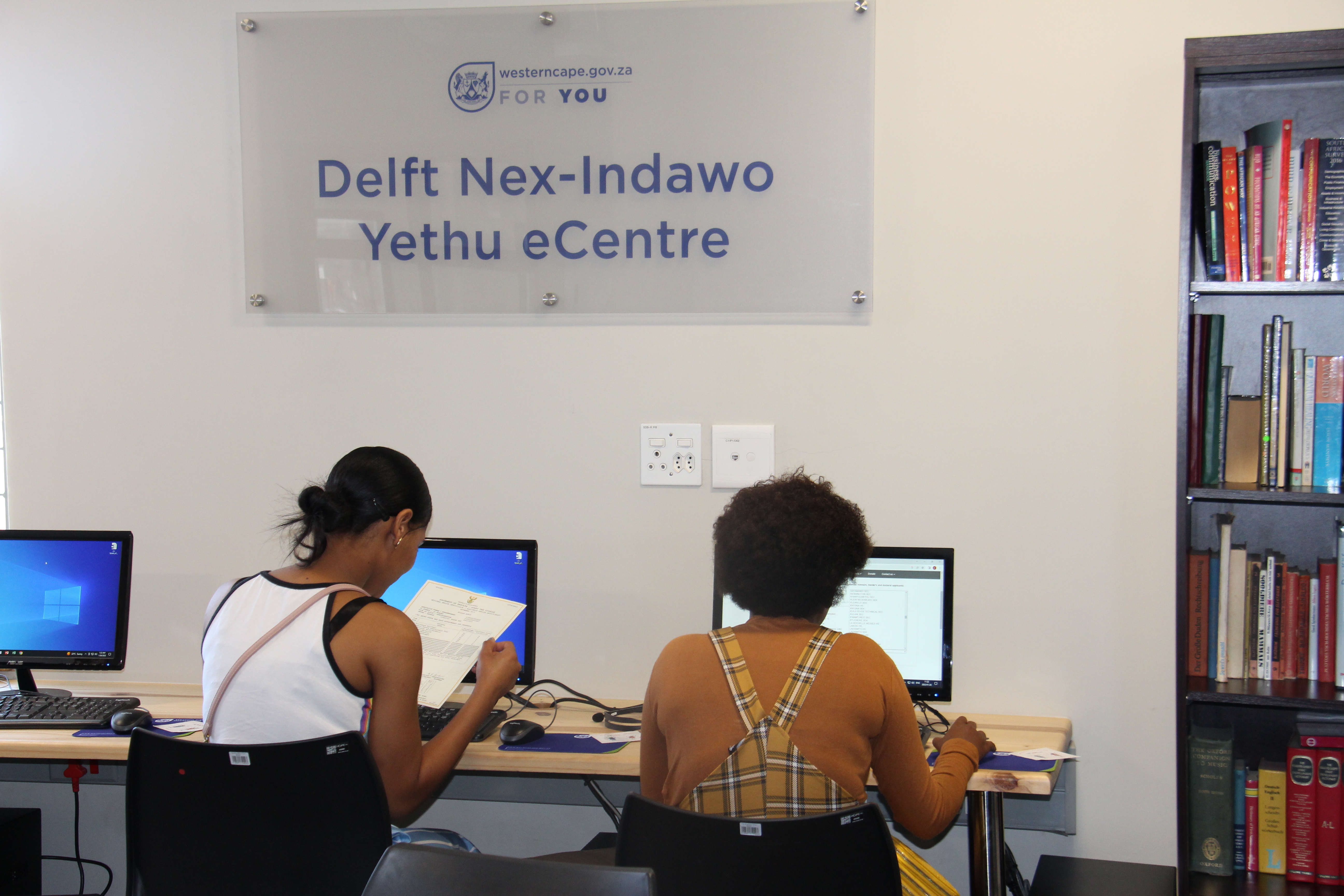
Change will only happen when those living in Delft will be working on this change. HOPE Cape Town and “The Nex – Indawo Yethu” can in this regard only be a tool, an auxiliary, a point of synergy and a force of good and goodwill.

And the organisation can be the way into this community for those coming from outside to engage, to understand and to be part of a way to what every human being dreams of: a decent life in a safe environment and a better future for the next generation.

But there is more:
Certainly, the LEAP forces make a great impact in reducing crime and bringing more safety and stability. NGO’s try their very best to unlock potential and assist those in need. Church groups are hard at work with charity efforts. Civil society groups and self-help groups are dedicated admirably to tackle problems, supported by local councillors in many ways.

Looking at the youth unemployment rate for Delft it is clear that also the opportunity to find work must improve heavily. The City of Cape Town prides itself with attracting business and investment, like we have seen with the Amazon company. If there would only be more courage to offer incentives to do business in the Cape Flats, creating jobs and prosperity. It might mean in the beginning more efforts to upskill people and to guarantee security. But in the long run, it would change not only a township, but it would have a ripple effect for others with the message: change is doable and the Cape Flats could become also a beacon of hope which those living there deserve to experience every day more.

Filed under: HOPE Cape Town Association & Trust, HOPE Cape Town Trust, Politics and Society, Reflection, Society and living environment, South Africa, Uncategorized, , , , , , , , , ,

Handouts and Charity

Working in the NGO field in South Africa, one often meets a sort of demand for handouts and charity to attract people or fill programs with participants. Also, local politicians are tempted to have give-aways at hand – it seems to be the culture of work in the townships of South Africa.

The argument is frequently that people are too poor to pay – or that indeed as mentioned you don’t get people to come if there is nothing for free or to gain. And not even seldom, those invited to join programs ask for what goodies to expect when joining a program. Not to tell about competition within the NGO sector who is able to hand out more.

I get it – indeed, people are poor and times are tough. And yes, it is easier to attract people with food, gifts, and takeaways. But I doubt that this vouches for respect, dignity and development.

Free handouts make people dependent; handouts are charity and needed in absolute emergency situation to stabilize people and to giving them a perspective.

But to change the situation of people, and to foster a non-dependence relationship; to sustain a path to a better life, NGO’s need to walk with people in a giving / contributing relationship. And this does not always have to do with the exchange of lots of money. Small contributions chipped in. Offering talents and time as a contribution. The results:

The acknowledgement of self-worth and the value of what is being offered or jointly worked on. The feeling of being partners on eye-level and respectful towards each other. And the learning curve resulting from all of these aspects: more dignity, more self-respect and the knowledge: I can do it – we can do it together.

All this needs a shift in mindset in all sectors of engagement. It requires the courage to walk the talk of real development; a walk which can be rough and at times scary. But it is the only way to better the lives of people sustainably and to make everybody a real participant and less a dependent waiting for the next handout.

Filed under: Africa, General, HOPE Cape Town Association & Trust, HOPE Cape Town Trust, Networking, Reflection, South Africa, , , , , , , , , ,

Mandela Day reflection

Make everyday a Mandela Day -#itisinyourhands

This was the motto of this year’s Mandel Day.

Mandela Day is an annual global celebration that takes place on 18 July to honour the life and legacy of Nelson Mandela. This day is a call to action for individuals, communities, and organisations to take time to reflect on Mandela’s values and principles and to make a positive impact in their own communities.

I am always amazed to see and read afterwards how NGO’s, politicians and ordinary people are coming together – and even trying to set world records in how much food they have given out and how much soup was distributed.

I see the pictures of smiling kids paraded in front of pots and food and toys …

And I feel uneasy – year after year more – asking myself whether “to reflect on Mandela’s values and principles and to make a positive impact in their own communities” are really translate in hand outs for 67 minutes year after year.

Making a positive impact in a community – is that not more than hand-outs? Does the feel-good-hand-out time with certainly all the good intentions really make a difference in the lives of those who benefit, or is it not a quick pass by of receiving but really not changing the lives of people?

Impact should mean change for the long run – so how can we transform a charity event into a contribution to real development – impact which means real change in the lives of people and communities…

Any suggestions?

Filed under: Africa, Networking, Politics and Society, Reflection, Religion and Ethics, Society and living environment, South Africa, Uncategorized, , , , , , , ,

The “Ball of HOPE” joy – please join in…

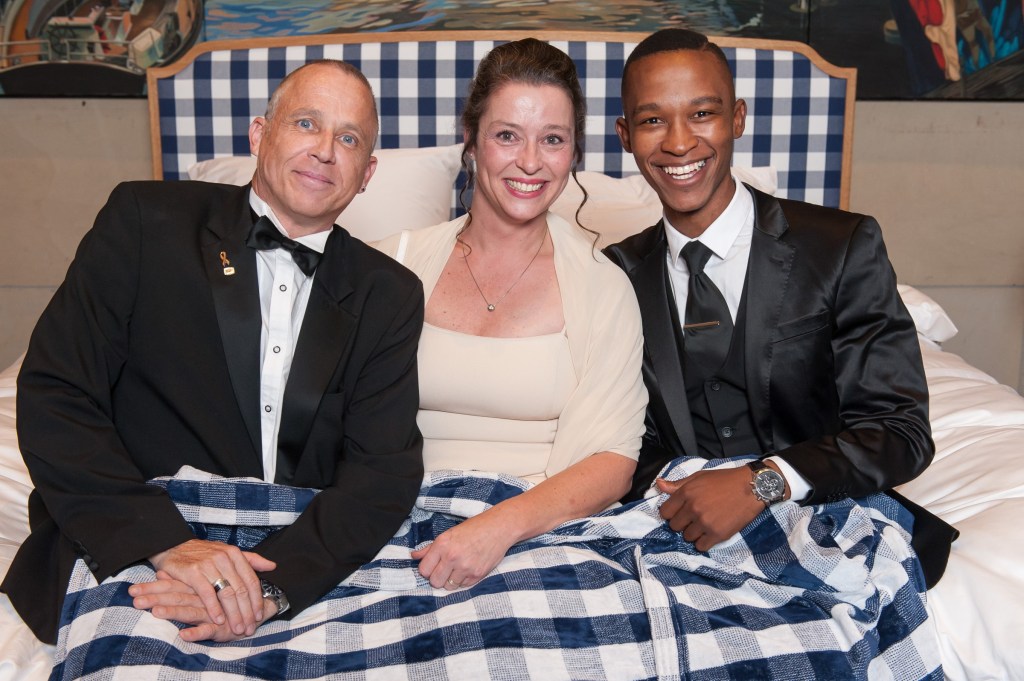
Indeed, there is much joy in the hearts of those organizing the Ball of HOPE for the 20th time. After 2 years of cancellations due to Covid-19 it looks good for the 21st of May 2022 at the Westin Hotel by Marriott in Cape Town.

20 years Ball of HOPE, the end of the 20 years anniversary year of the organisation itself and the better late than never celebration of 20 years of the local office of the Southern African – German Chamber of Commerce and Industry.

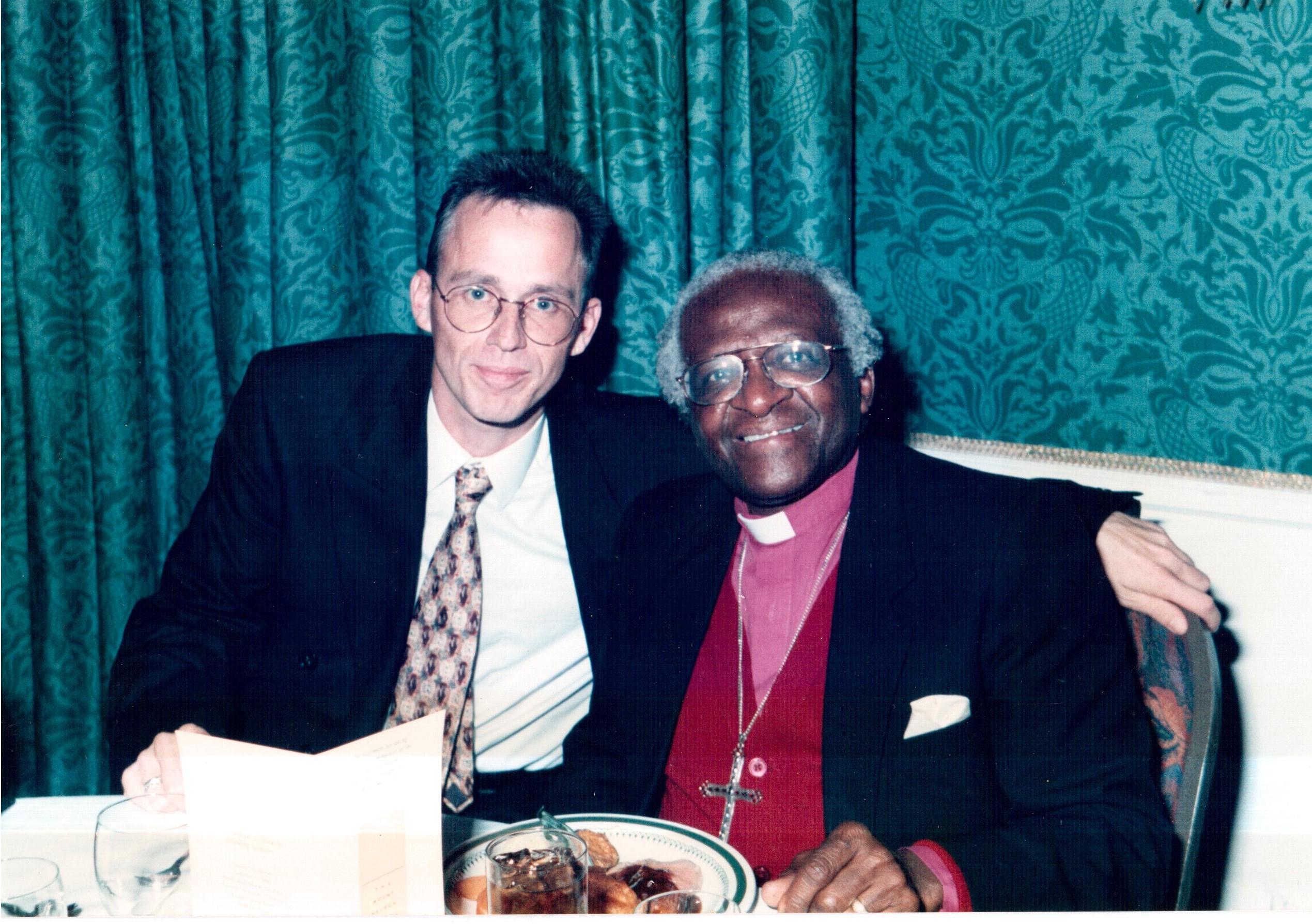
The Ball of HOPE developed out of a dinner-dance established in 1998 at the Mount Nelson and organised by the German-speaking Catholic Community in Cape Town. The first guest of honour was Archbishop Desmond Tutu. He also introduced the culture of letting culinary chefs be in pain keeping the main course hot and tasty, while speeches are indeed longer than anticipated.

The first guest of honour: Archbishop Desmond Tutu

With the opening of the local office of the AHK in Cape Town, the dinner-dance became the “Ball of HOPE” in cooperation between the newly founded organisation HOPE Cape Town and the Chamber of Commerce. In 2003 the Westin was inaugurated, and the event moved from the Mount Nelson Hotel to the then newly established Arabella Hotel at the Foreshore in Cape Town, which today is the Westin by Marriott.

Opening and blessing of the new Westin Hotel

During the following years, the Ball of HOPE became a fixture in the social calendar of Cape Town, and attracted also visitors from Europe to come and join this prestigious event.

So, yes, we are full of joy to invite all of you to the 20th Ball of HOPE – please come, register and join us in this celebration of service, of commitment and of a partnership between business and development, which changes the lives of people for the better in the last more than 20 years.

Filed under: HOPE Cape Town Association & Trust, HOPE Cape Town Trust, SA-German Chamber of Commerce & Industry, South Africa, Uncategorized, , , , , , , , , , ,

I don’t know how you want to pull this through…

A new and fresh year has started – and while the world as such is still in combat mood regarding Covid-19 admittedly in different stages and variations around the world, also other challenges have not changed because a new yearly chapter has been opened.

Building a holistic campus like “The Nex – Indawo Yethu” in such times was and is a challenge in itself; looking at how South Africa is perceived by many currently adds to the woes. Besides all praise for doing what HOPE Cape Town is doing in the various townships of Cape Town in the last 20 years, there are a lot of nagging questions we face on an ongoing base:

How can you build in a notorious violent township, a place nobody wants to go?
How can you dare to think, that you can change a place riddled with desperation?
And more general questions and statements:

South Africa is doomed – how can you invest time and energy in a lost cause?
Are you not dreaming of a pie in the sky – believing in values while corruption, cadre deployment, empty promises and betrayal of “our people” governs daily life in South Africa?

Yes, maybe I am a dreamer; maybe HOPE Cape Town is taking on more than it can handle. Maybe I have too much confidence in our partners and their ability to walk the talk and to show the world, that change – positive change – is possible.

But in my view, this is the only way to get out of the doomsday vision and the self-fulfilling prophecies of decline and retrogression. Believing in people, in partnerships, and trusting in the ability of people to join and work together towards a better future is what creates positive development. And this is not only a humanistic or religious motion.

Africa will be soon to have the youngest population in the world and with it one of the biggest markets and opportunities. South Africa remains the gateway for quite a part of it. The whole environmental questions currently discussed are a challenge for African countries, but if done right, they will be on the forefront of a new reality which is not determined by Covid-19, but ambience needs bringing humanity in line and in tune with the preservation of environment simply for survival of human mankind.

South Africa is not doomed but deserves every effort for upliftment. The world, being currently in discussions and battles of all sorts and manners about the history of colonisation, racism, male dominance and asking critical questions about how the world economics is run and dominated warrants much more patience and determination to get it right.
South Africa has still the possibility to become again a beacon of hope for the world, showing how diversity can be an asset and how the own history can be a teacher for future generations.

“The Nex – Indawo Yethu”, the holistic campus in Delft and the work of HOPE Cape Town in general will continue to contribute to this vision of a better world and a decent future for South Africa and the people living in it. It understands itself to be one little building block – offering to partner with whoever is walking the same talk – dreaming big and walking little realistic baby steps at the same time.

And coming back to the question of how to pull through with the project?

I don’t know – HOPE Cape Town walking with the local people and not having all answers means the adventure of development, based on trust and the confidence, that doors will open at the right time, people will join at the right time and that together we will – despite all bumpers and rollercoasters on the way – succeed in creating a better future for all.

That does not mean that there are no plans and strategies, that there are no aspirations and wishes, but not prescribing a way but discerning a way together with those living in Delft – a participatory process – means no fixed road to walk but landmarks on the way. Agility would be the word in the business world used.

Despite what we read in the newspapers and on social media every day – the majority of people – also in a township of Delft and in South Africa – are prepared to work for the common good. And that willingness, together with all the partners joining, should be enough to pull it through.

Filed under: Africa, HOPE Cape Town Association & Trust, HOPE Cape Town Trust, Networking, Reflection, Society and living environment, South Africa, The Nex - Indawo Yethu, Uncategorized, , , , , , ,

Blog Categories

Follow God, AIDS, Africa & HOPE on WordPress.com

You can share this blog in many ways..

Bookmark and Share

Enter your email address to follow this blog and receive notifications of new posts by email.

Join 2,711 other subscribers

Translation – Deutsch? Française? Espanol? …

The translation button is located on each single blog page, Copy the text, click the button and paste it for instant translation:
Website Translation Widget

or for the translation of the front page:

* Click for Translation

Copyright

© Rev Fr Stefan Hippler and HIV, AIDS and HOPE.
Unauthorized use and/or duplication of this material without express and written permission from this blog’s author and/or owner is strictly prohibited. Excerpts and links may be used, provided that full and clear credit is given to Rev Fr Stefan Hippler and HIV, AIDS and HOPE with appropriate and specific direction to the original content.

This not withstanding the following applies:
Creative Commons License
This work is licensed under a Creative Commons Attribution-ShareAlike 3.0 Unported License.