God, AIDS, Africa & HOPE

Reflections / Gedanken

Reflection on a trip to Europe

2 weeks of promoting HOPE Cape Town are coming to an end and I am sitting at Frankfurt airport waiting for my flight back home to South Africa. Time was flying as usual and sitting here and waiting gives some time to reflect on all what was happening in the last 14 days.
Faces of students are crossing my mind whom I met while giving a talk in one of the more rural schools in the northern part of Germany. People, who have never seen a HIV positive person were subjected to a talk about the danger of HIV. And not only that: how to bring the South African reality of crime, corruption and toi-toi to those who never experienced anything else than the orderly running of day-to-day life. Filling the gap, this is what HOPE Cape Town is doing in the fields of HIV and AIDS when it comes to government involvement, filling the gaps applies also when bridging the well-protected realities of a student attending school in rural Germany and those living in Manenberg or Wallecedene.
Press conference in Dresden in preparation of the HOPE Gala – another crowd of people, journalists, wanting to know the progress of HOPE Cape Town’s work in the Western Cape and how money is spend in a responsible way. Pre-recording for a German radio broadcaster – HOPE Cape Town’s story and some private talk included – the moderator wants to know the person behind the project including the seemingly ever hot topic of church and HIV and the famous “c” question…Bridging worlds means also knowing different people – a wedding in France was another highlight on this trip to Europe – diving into the world of stars and VIP’s and playing a small little role in the romance of two people. It’s more on the private side but also serves some networking for HOPE Cape Town on a very different scale.
So from the small town student to the previous chancellor of Germany – the scale of people I met was quite amazing and so have been the interactions and chats in between. Being able to touch the lives of so different people in so many different ways – this is the beauty and the blessing of the work, I am allowed to do. And so remains gratefulness as the essence of the reflection I was able to do before Cape Town and HOPE Cape Town and all the others waiting for me demand again all my time and energy. Life is good.

Filed under: General, HIV and AIDS, HOPE Cape Town Association & Trust, HOPE Gala Dresden, Networking, Reflection, Society and living environment, , , , , , , , , , , , , , ,

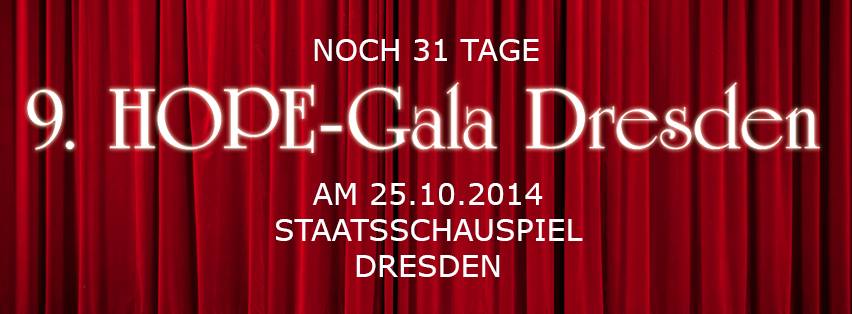
HOPE Gala Dresden


http://www.hopegala.de (German language)
or contact
admin@hopecapetown.com for more info

Filed under: General, HOPE Cape Town Association & Trust, HOPE Gala Dresden, , , , , , ,

From Internet worries to gay conversion – moments of a week’s work

Often when people make contact with me or it comes to a meeting they ask what a  typical week looks like for me as a priest and AIDS activist and the only thing I can say is: There is no typical week. A lot of time this week was spent on HOPE Cape Town affairs: we getting used to a new computer system which records every meeting, every result thereof and to do so, one needs some training and motivation to get used to it. How much bits and pieces of information gets lost when one not religiously records encounters, offers and follow-ups during the day? I can tell, it is amazing and the older one gets, the less one remembers with all the information streaming in every day. But HOPE Cape Town also changed this week service providers for the internet, email, web hosting etc. and as expected, there are some problems arising until everything is settled. Not being able to access email and information is very disruptive in our days and once again one is reminded how much we depend on it. Connected with this was a meeting with TBWA – a well-known marketing / advertising company in South Africa which does pro bono work for us. After re-designing our flyers it shifts now to our webpage which will be the next object of reflection and changes. All has to do with branding and getting the brand “HOPE Cape Town” known and identifiable in using all instruments available in this department. Doing good and getting the message across is so important , from an informational point of view as well as from the fundraising aspect. Another aspect of work this week was to go through the new employer handbook for HOPE Cape Town – we have to adhere to the South African labor law and this is indeed changing again and again. So the newest version was checked by labor lawyers and now we have to finalize it before it is handed out to the employees of HOPE Cape Town and forms then part of the work contract. On Wednesday I also met with all HOPE Community Health Workers on the issue of the “bonus” to be paid out at the end of the year. Obviously everybody likes a bonus to shop for all the Christmas presents, but a bonus is always at the discretion of the board. It also is a result of merit assessments – and once in a while one has to remind employees that a bonus is paid for exceeding expectations at work; not for doing what one is paid for anyhow. On the other hand it must be clear-cut how an assessment is done and what tick boxes are important to receive a bonus. Surely all important discussion points. HOPE Cape Town also secured it’s first official HOPE Cape Town Ambassador – watch the space, I will not tell here and now who was chosen and accepted gladly.
What else happened the last week?
The Southern African – German Chamber of Commerce and Industry hosted a luncheon with MEC Alan Winde. As a member of the Regional Council I attended this event and listened carefully what Alan had to say about the state of affair when it comes to business and investment in the Western Cape and in South Africa. As new legislation comes into effect regarding BB BEE coming year it is also important for HOPE Cape Town to know the next changes we are BB BEE approved and we would like to keep it that way.
Bavaria and the Western Cape celebrating 20 years of partnership next year, so a meeting to find out how HOPE Cape Town can participate in these events in Bavaria and showcase its contribution towards the partnership.
A meeting with Rev Ryan from the Philippines saw discussions about HIV / AIDS support groups in this part of the world.  I learned that the Catholic Church in the Philippines supports conversion programs trying to get gay people straight – quite shocking for me – as this runs counter all academic research and adds to the burden to people anyhow threatened by HIV and AIDS and the difficulties to come out in a very Catholic environment. It surely adds to the shame people feel as being HIV positive and gay at the same time as it implies that there is something wrong with them besides the punishment of HIV. Somehow the expression “dark middle ages” came to my mind. Conversion as a possibility to get rid of being who I am is on an ethical level as bad as criminalizing is on a legal level. I once again realized how much is still to do….
Exhalation of the Cross – the Catholic Feast celebrated with the Catholic Community in Belgravia ended a week – being reminded of all the crosses people carry and are burdened with and celebrating our believe that the good message of the kingdom of God is told to all and everybody – unconditional love, that’s what we are called for.  And that is a good starting point for the coming week which will bring me to Europe again for a couple of days.

Filed under: Catholic Church, General, HIV and AIDS, HOPE Cape Town Association, HOPE Cape Town Association & Trust, HOPE Cape Town Trust, Networking, Politics and Society, Reflection, Religion and Ethics, SA-German Chamber of Commerce & Industry, Society and living environment, , , , , , , , , , , , , , , , , , , , , , , , , , , , , , , , , , ,

Nobody left behind..

The Melbourne Declaration is the final document of the World AIDS Conference 2014 in Melbourne / Australia. In the times of discrimination and stigmatization but also criminalization especially in African countries it is important to reflect on the aspects being able to give birth to a HIV free generation. A declaration is only as potent as the implementation after the event:

AIDS 2014 Melbourne Declaration
We gather in Melbourne, the traditional meeting place of the Wurundjeri, Boonerwrung, Taungurong, Djajawurrung and the Wathaurung people, the original and enduring custodians of the lands that make up the Kulin Nation, to assess progress on the global HIV response and its future direction, at the 20th International AIDS Conference, AIDS 2014. We, the signatories and endorsers of this Declaration, affirm that non-discrimination is fundamental to an evidence-based, rights-based and gender transformative response to HIV and effective public health programmes.
To defeat HIV and achieve universal access to HIV prevention, treatment, care and support – nobody should be criminalized or discriminated against because of their gender, age, race, ethnicity, disability, religious or spiritual beliefs, country of origin, national status, sexual orientation, gender identity, status as a sex worker, prisoner or detainee, because they use or have used illicit drugs or because they are living with HIV.
We affirm that all women, men, transgender and intersex adults and children are entitled to equal rights and to equal access to HIV prevention, care and treatment information and services. The promotion of gender equity is essential to HIV responses that truly meet the needs of those most affected. Additionally, people who sell or who have sold sex, and people who use, or who have used illicit drugs are entitled to the same rights as everyone else, including non-discrimination and confidentiality in access to HIV care and treatment services.
We express our shared and profound concern at the continued enforcement of discriminatory, stigmatizing, criminalizing and harmful laws which lead to policies and practices that increase vulnerability to HIV. These laws, policies, and practices incite extreme violence towards marginalized populations, reinforce stigma and undermine HIV programmes, and as such are significant steps backward for social justice, equality, human rights and access to health care for both people living with HIV and those people most at risk of acquiring the virus.
In over 80 countries, there are unacceptable laws that criminalize people on the basis of sexual orientation. All people, including lesbian, gay, bisexual, transgender and intersex people are entitled to the same rights as everyone else. All people are born free and equal and are equal members of the human family.
Health providers who discriminate against people living with HIV or groups at risk of HIV infection or other health threats, violate their ethical obligations to care for and treat people impartially. We therefore call for the immediate and unified opposition to these discriminatory and stigmatizing practices and urge all parties to take a more equitable and effective approach through the following actions:
• Governments must repeal repressive laws and end policies that reinforce discriminatory and stigmatizing practices that increase the vulnerability to HIV, while also passing laws that actively promote
equality.

• Decision makers must not use international health meetings or conferences as a platform to promote discriminatory laws and policies that undermine health and wellbeing.
• The exclusion of organisations that promote intolerance and discrimination including sexism, homophobia, and transphobia against individuals or groups, from donor funding for HIV programmes.
• All healthcare providers must demonstrate the implementation of non-discriminatory policies as a prerequisite for future HIV programme funding.
• Restrictions on funding, such as the anti-prostitution pledge and the ban on purchasing needles and syringes, must be removed as they actively impede the struggle to combat HIV, sexually transmitted
infections, and hepatitis C among sex workers and people who inject drugs.

• Advocacy by all signatories to this Declaration for the principles of inclusion, non-criminalization, non-discrimination, and tolerance.
In conclusion we reaffirm our unwavering commitment to fairness, to universal access to health care and treatment services, and to support the inherent dignity and rights of all human beings. All people are entitled to the rights and protections afforded by international human rights frameworks.
An end to AIDS is only possible if we overcome the barriers of criminalization, stigma and discrimination that remain key drivers of the epidemic.

Filed under: HIV and AIDS, HIV Prevention, HIV Treatment, Medical and Research, Networking, Politics and Society, Reflection, Society and living environment, Uncategorized, , , , , , , , , ,

8 policemen and 11 days

What do you expect from the police when you are robbed and all your belongings you carry with you are stolen? Right: to go to the police station and lay charge and get a case number. That’s the theory but it seems that even that simple truth is not always working properly in South Africa.

One of our HOPE Community Health Workers was robbed on the street and with all her belongings also the new tablet just received was taken from her. The tablet, a donation from the Consulate General in Cape Town was insured and so it seemed to be a clear-cut case besides the trauma of being robbed: to go to the Police Station and report the incident and to get the case number for the insurance company. Not so with the South African Police Force. According to them, a tablet can only be reported stolen if one has the number of the SIM Card inserted into the tablet. But what happens if you don’t have a SIM card because your tablet should work only with wireless and there is no need for a SIM card. Well, according to the police their form has a field requiring the SIM card number and the consequences are clear: no SIM Card – no robbery case number.
One would think that policemen are able to think outside the box, but it took 8 different policemen during 11 days to archive the goal: getting a case number – and it needed finally the threat of our outreach facilitator to camp inside the police station until she gets the case number to make it happen.

What do we learn of it: Giving a police officer a form to fill in can be dangerous in South Africa… and there is a long way to go to get people to think on their own or to apply common sense. One of the most dangerous pitfalls in the training and education of South Africa is that repetition is all it need to pass – to think of your own is not only not required but even not wanted. The consequences are obvious and annoying to those having just gotten out of a dangerous situation and then not able to lay charge because of formalities. About police I can share another story just coming to my mind.

I remember being stopped by a policewoman in the North-West Province for not stopping correctly at a four – way stop. I was asked to step out of the car and the fine form was filled in. Question of the policewoman: “What is your profession?” Answer: “I am a priest.” Question: “Is that a profession?” My answer: “Yes” – Follow up question: “How do you spell that?”
Funny? – Well, depends how you see it – but it is better than having to buy chicken wings for hungry police officers to get off the hook while stopped for a traffic offense in Johannesburg.

Filed under: General, HOPE Cape Town Association, HOPE Cape Town Association & Trust, HOPE Cape Town Association & Trust, HOPE Cape Town Trust, Reflection, Society and living environment, Uncategorized, , , , , , , , , , , , , , , , , , , , , , , ,

Blog Categories

Follow God, AIDS, Africa & HOPE on WordPress.com

You can share this blog in many ways..

Bookmark and Share

Enter your email address to follow this blog and receive notifications of new posts by email.

Join 2,711 other subscribers

Translation – Deutsch? Française? Espanol? …

The translation button is located on each single blog page, Copy the text, click the button and paste it for instant translation:
Website Translation Widget

or for the translation of the front page:

* Click for Translation

Copyright

© Rev Fr Stefan Hippler and HIV, AIDS and HOPE.
Unauthorized use and/or duplication of this material without express and written permission from this blog’s author and/or owner is strictly prohibited. Excerpts and links may be used, provided that full and clear credit is given to Rev Fr Stefan Hippler and HIV, AIDS and HOPE with appropriate and specific direction to the original content.

This not withstanding the following applies:
Creative Commons License
This work is licensed under a Creative Commons Attribution-ShareAlike 3.0 Unported License.