Delft, a township near Cape Town in South Africa, makes often headlines for the wrong reasons: violence, crime, gangster, rape, drugs, guns – you name it, Delft is in for it.
Looking a bit deeper, it appears that Delft has all credentials to be the opposite: a beacon of hope for the new South Africa and a promising place for what should be the norm for aspiring communities.
Delft is not only located close to the airport – an economic hub which should provide for jobs and upliftment of a community, the township also has excellent schools, all necessary infrastructure and a mix of people from all walks of life mirroring the diversity which should be the norm in South Africa.
There is indeed no reason for Delft not to rise from the ashes of lost hopes by violent crimes and high unemployment towards a really confident hub within the greater Cape Town area where people live, earn and spend their money and participate in the economic development provided by the expansion of the airport.
The question is what it takes to ignite the pride of the residents and the energy needed to move from a place of fear and partly hopelessness to being a crown jewel and an example of successfully turning a township around towards prosperity for all.
HOPE Cape Town has set a mark of uplifting with the decision to settle its home in Delft and to concentrate on this area with holistic services and the intent to walk the talk with the community, building on years of work within the community of Blikkiesdorp and services rendered at the health facilities.
It might sound more like a dream to turn around the township of Delft into an area of peace and prosperity, but every real action starts with the imagination of a dream. Obviously nobody can do it alone, but together with all parties concerned and putting aside for a while the egos and rivalry, much can be achieved for a better life for all in this area.
Lots of ideas and initiatives are already in place – but the joined effort and the synergies possible if those efforts are coordinated would promise faster results and more possibilities in a feasible timeframe. Political will and the buy-in of the people would be the base for such synergies.
I guess those living in South Africa feel the rollercoaster of emotions having experienced not only the continuous lockdown related to Covid-19 but also the looting and burning and destruction which marred KwaZulu Natal and Gauteng, leading to a breakdown of public order for a couple of days. A state who definitely failed to protect its citizens and only late intervened; ministers who simply displayed being clueless and not up to the task and incompetent added to the concerns many have about the state of affair in South Africa.
From all is clear, that the fight within the ANC party can and will spill over to society and that party politics simply don’t care about the country, willing to hurt and destroy for the sake of winning the battle of fractions within this party.
And even looking at the latest shuffle of ministers in national government – it is playing musical chairs within the governing party but not the coup starting to liberate South Africa from the claws of corruption, incompetence, cadre deployment or their likes.
For somebody building a campus in the midst of a township offering health and education on a developmental path, the question arises once in a while whether this is worth the effort. What can one achieve in a country, where government and ruling party is in battle with itself, where wannabe revolutionaries steer the flames of racism and clearly advocate violence as a political tool; and where frustration, failed education systems and hopelessness lead to more violence, service delivery protests and actions out of anger and bitterness.
The answer to the question is not easy. On one hand, one could pack and walk away. Another possibility is to stay and reason your efforts with the German word “trotzdem“.
At the heart of “trotzdem” is the word “trotz”, which surely is very German; a harsh word meaning defiance;it triggers the feeling and action of “Hell no!” – I will not do it! It is basically a somehow stubborn or holy resistance – a resistance to accept the doomsday scenarios while at the same time standing up and offering an alternative way into the future. I personally think it is also a theological word, looking how in the bible – especially in the Old Testament – God is described who never gives up on human mankind.
So building the campus “The Nex – Indawo Yethu” in the township of Delft – a place featuring high on the scale when it comes to crime statistics, unemployment and like often in South Africa a lack of decent education – together with many partners and collaborators and investing in vocational training and health holistically is a social, political and theological statement of “Hell no!”
And strongly believing that it is never too late to turn the tide, to stop cutting the corners of development, to cease cadre deployment and corruption and to liberate society from racism and other woes impeding progress and healing. And a perspective for every decent South African who deserves to live in freedom and security. It needs a network of all those small little places of hope and confidence that life has more to offer than what may experience on a daily basis being kept dependent on handouts and charity.
People of faith think in religious terms, their whole life makes sense in the light of a belief system giving meaning to what they do and how they see life in general. It does not mean to prescribe this to all involved, but it serves as an explanation for motivation, reflected on a deeper personal level. This is a first draft, a first attempt to reflect on the theological meaning of building a campus in Delft / South Africa.
Theological Consideration – first thoughts…
Normally Catholic priests in South Africa are bound to parish life, leading under the authority of a Bishop the faithful of a prescribed territorial area in prayer, worship and charity for those in need.
Running a foundation during the week and only attending to the spiritual needs on a weekend as a supply priest before retirement is already different and for some not fitting the picture of a priest. Building a campus in a gang and crime ridden area is then certainly not their first priestly task and would be seen as extra-ordinary, rather flamboyant in church terms.
And still, I believe there is merit to look with a theological and pastoral eye exactly on this campus comprising of buildings serving in the following areas: Health, Early Childhood Development, Social Services, Youth, Entrepreneurial Skills Development and Vocational Training. Not to forget community uplifting, understanding of democracy and the value of human life and human dignity.
Then God looked over all he had made, and he saw that it was very good! Genesis 1:31
Having worked in the Delft area since more than a decade Delft mirrors all the shortcomings of the new South Africa, it showcases the lost hopes, the cut-short aspirations, the undervalue of life as such, latent racism and not a lot of those living there would on a daily basis and in their daily life agree, that all is “very good”. Churches of different kinds are spread all over Delft and often for some hours they beam those attending gatherings into a different sphere trying to instil hope for the days to come.
Sermons can be a good tool to inspire but I feel that theology and bible are more than source for fiery sermons, theology – the word of God – must trickle down much more than just in words and charity, it must be felt and walked the talk by development and action on the ground. The word of God must be felt in the trenches of daily life experience for those left out here in South Africa after more than 30 years living in the promised land called the New South Africa.
Theology can also not only be confined in the framework of parishes, formation seminars, theological faculties and church structures – it must cover that “God looked over all he had made” – so there should be room for more than church structures allowing the word “catholic” – meaning covering the whole – universal to be put into action.
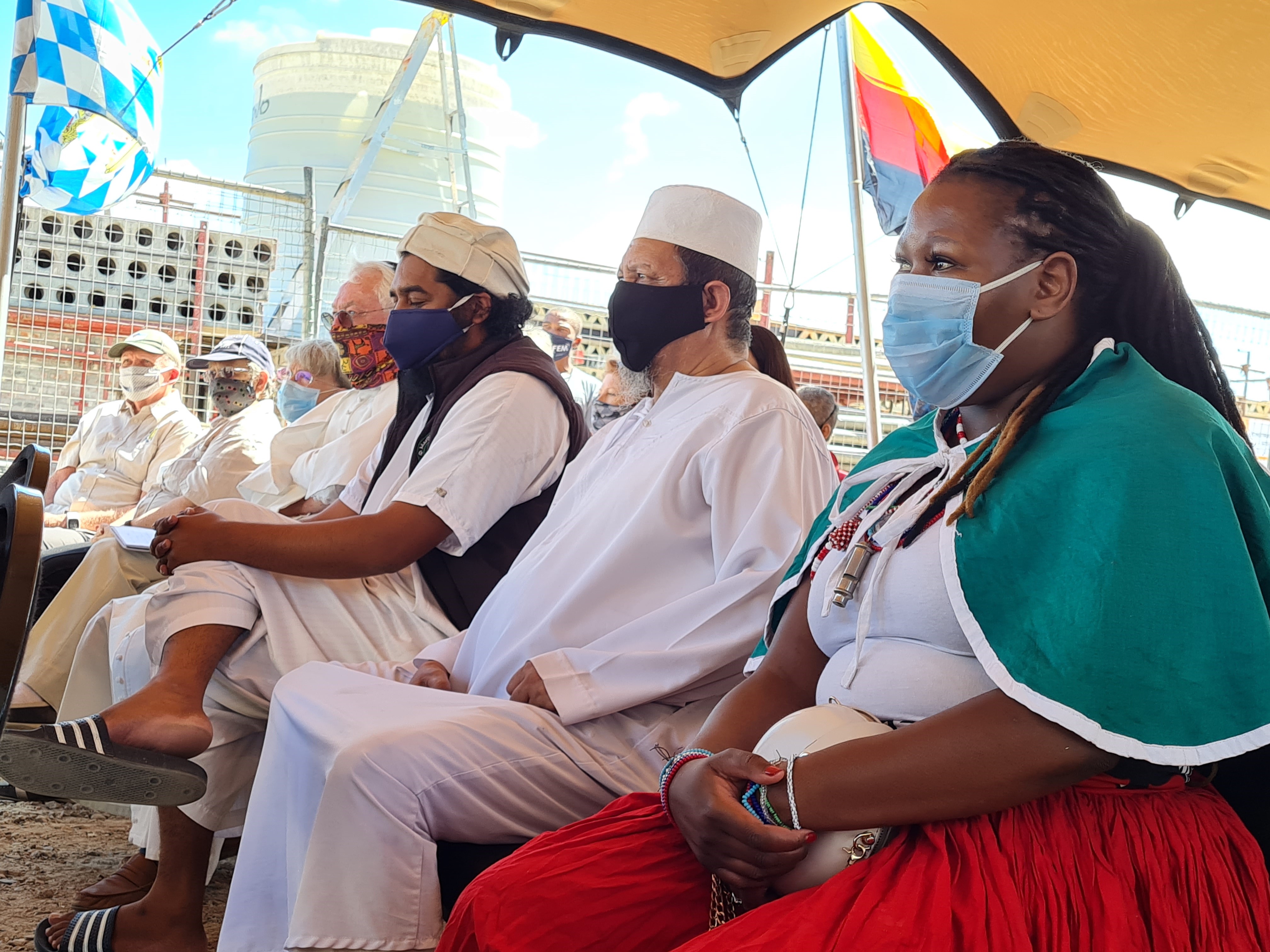
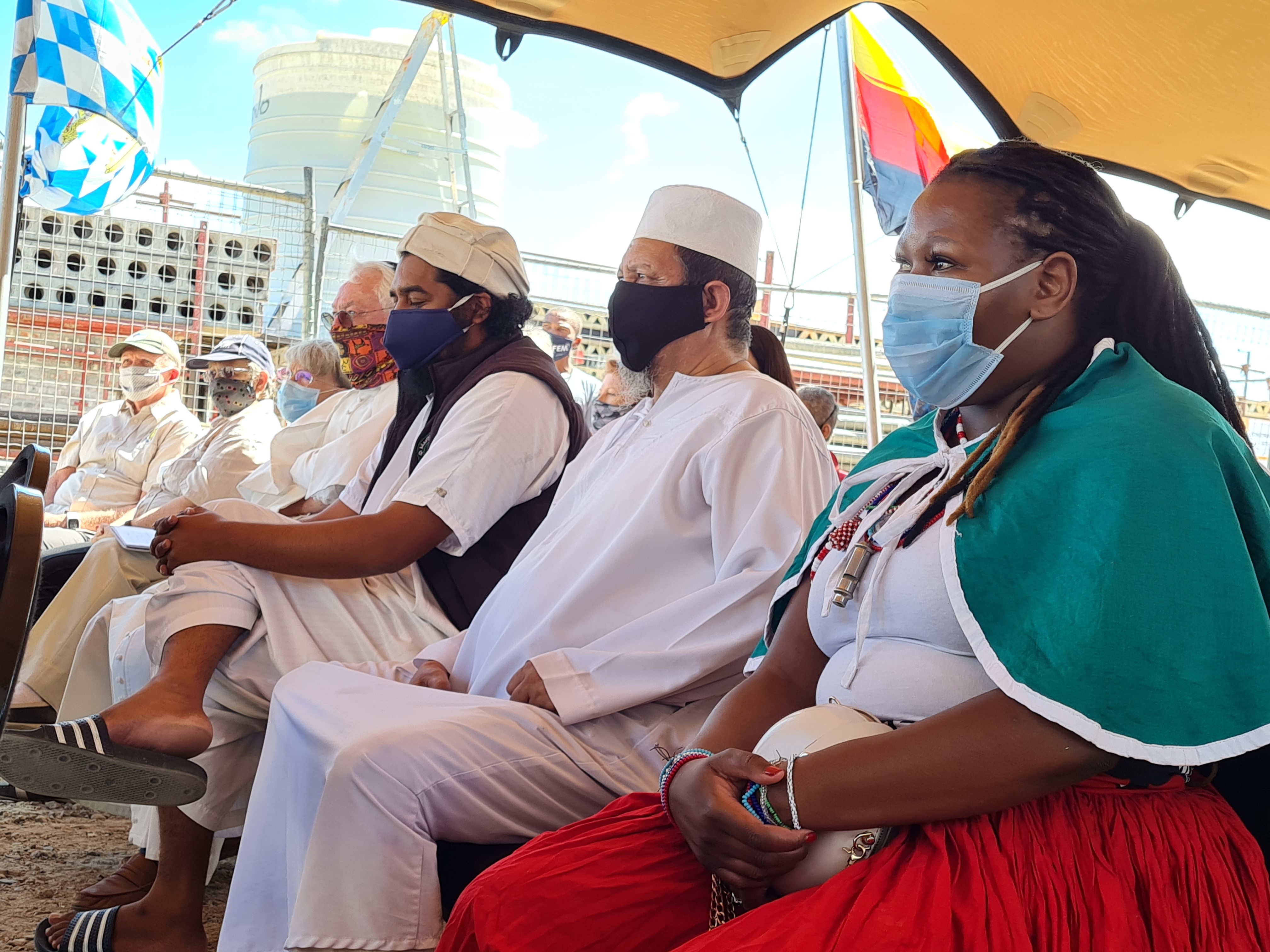
Theology must also be able to be applied to what we do and how we act – it should be able to make sense and to bring a greater meaning to our action – it is part of a circle of action – interpretation – encouragement and out of this more, different but definitely better or more appropriate action again before the circle starts anew. At the same time there is no need for religion to capture what is done. There will be different motivations, different ethos and different religious affiliation and convictions of those working together on a project like “The Nex”. There will be different ways to describe God or the reason for creation, there will be different theologies – and if such a project fosters more dialogue amongst those different pictures without becoming a competition there is another ecumenical and inter-religious meaning in what we do. “The Nex” becomes a place where unspoken different religions encounter each other in a practical way for the better good of people. The blessings ceremony for The Nex – Indawo Yethu gave witness to intention and prayers when a Catholic priest, a Rabbi, an Imam and a Sangoma not only spoke but brought the blessings onto the new venture.
In the Catholic Church we talk about the “option for the poor” – and again here we are: How easy is it, to establish oneself as an NGO in one of the safe areas instead of going there, where it hurts, where things will on a long run not only run smoothly but hurtles will be encountered, failures will happen and the hardship of life will be mirrored and shared within this project as people experience it themselves every day. Walking together and staying together even if it hurts at times is taking the words “all is very good” almost on a prophetic level: we are not in the promised land, but we have made ourselves ready to walk towards it; together and equipped with hope, love and faith, that we can reach our destiny.
“Don’t you realize that your body is the temple of the Holy Spirit, who lives in you and was given to you by God?.” 1 Corinthians 6:19
Spiritually is often connected to meditation and prayer, sometimes fasting exercises which indicate that concentrating on the body is an important part of such exercises. Mindfulness towards body and spirit. I strongly believe that to a holistic spiritual wellbeing health and attention to the body is non-negotiable. The Nex – Indawo Yethu acknowledges this with the offering of health services, linked to social services and the programme of the “First 1000 days” specifically looking at the wellbeing of a human being in the decisive foundation phase of life.
Health, Wellness – mental health and an environment to thrive is so important especially for children and adolescents. Not forgetting those kids with special needs whose wellbeing will be catered for specifically in the Early Childhood Development Centre of the Campus.
Safety is another aspect of bodily wellbeing. The Nex – Indawo Yethu is situated in an area which is marked currently by violence and gangsterism as well as drug-related problems. It is certainly not a safe area, and it was interesting to see and hear, that in the first community participation meeting we had, the question of safety was raised several times: “Are our kids, our youngsters safe on your campus?” Obviously, this is a challenge and if you want the ugly side of business to admit, that security measures have to play a vital role in planning and executing this project. But ones again: the hope that The Nex – Indawo Yethu can be a turning point in moving into a more peaceful future translates a building into a prophetic sign that change is possible and change in this regard is on the way.
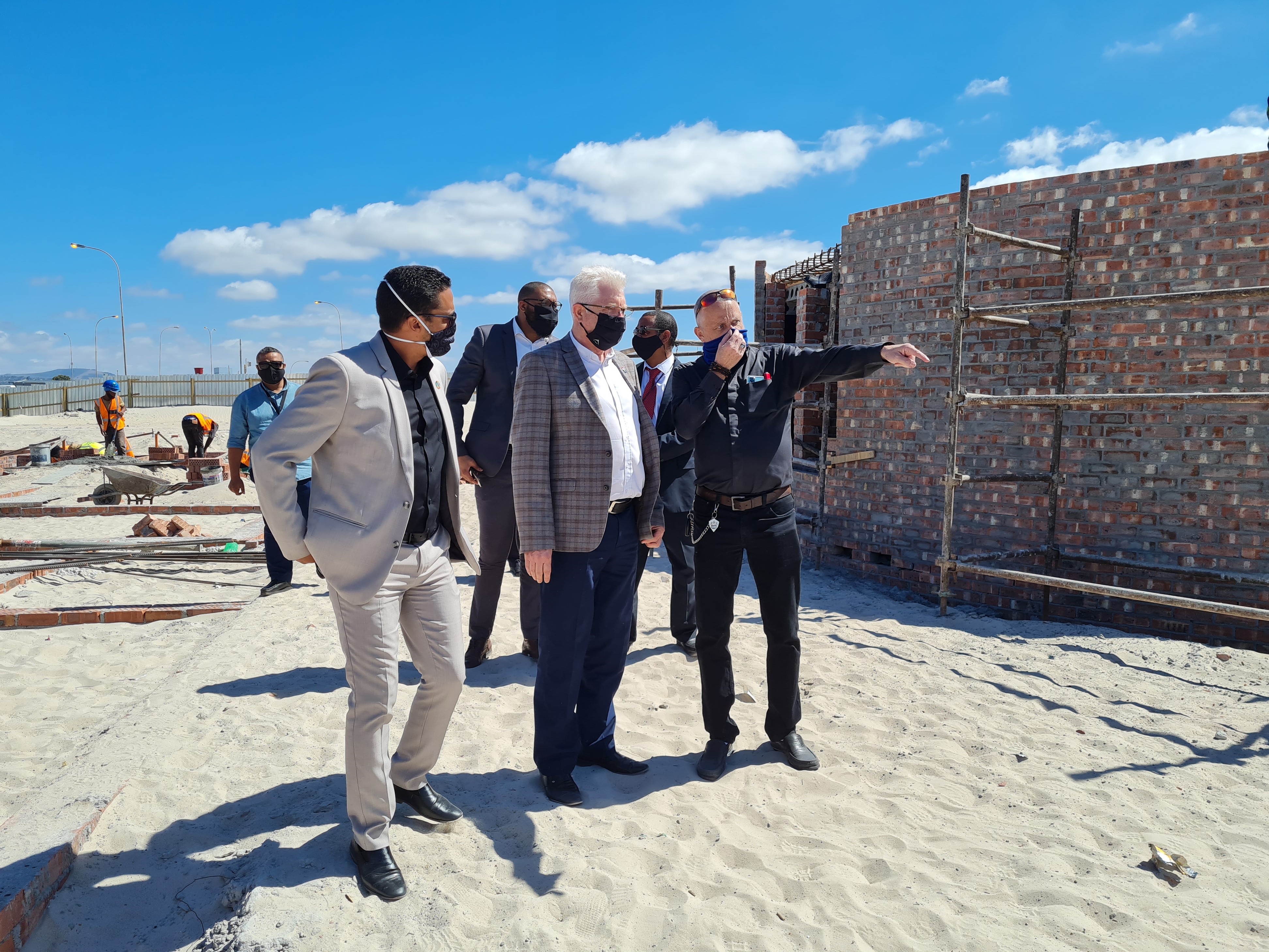
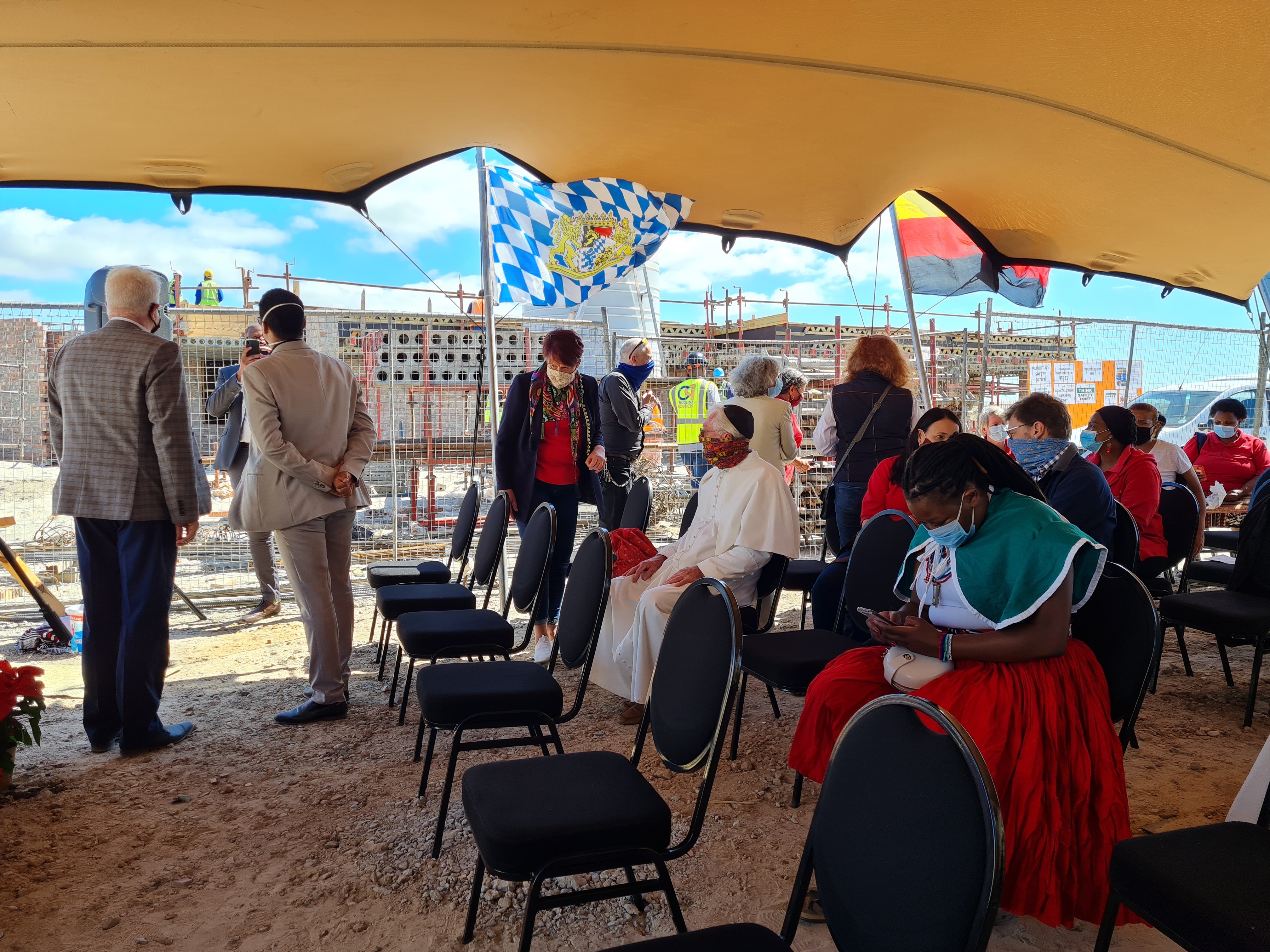
In Delft, the blessing ceremony for a safe space campus called “The Nex – Indawo Yethu” has taken place yesterday in the presence of Premier (WP) Alan Winde, Minister for Human Settlement (WP) Tertuis Simmers, Executive Mayor from Cape Town Dan Plato, Consul General of Germany Matthias Hansen, religious leaders and various guests and collaborators.
The Nex – Indawo Yethu is a safe space project of HOPE Cape Town (www.hopecapetown.org) and will holistically offer services: health, social services, early childhood development, youth work, afterschool care, vocational dual training, entrepreneurial skills development training for the people within the greater Delft area. This project is in collaboration with the Western Cape Government, the City of Cape Town, the government of the Free state of Bavaria and other NGO’s and institutions.
The blessings were given by a Catholic priest, an Imam, a Rabbi and a Sangoma. Here are some pictures from this event.
VOCATIONAL TRAINING IN A HOLISTIC FRAMEWORK: SAGCCI AND HOPE CAPE TOWN PILOT PROJECT
The Hope Cape Town Trust (HOPE) and the SA – German Chamber of Commerce and Industry (SAGCCI) have entered into a MoU to create an integrated socioeconomic project in Delft (WP).
Forging partnerships that will yield the best results for the benefit of the Youth of under-resourced areas of Cape Town are key to our strategy. All stakeholders have to work together to maximize the potential of this training program.
SAGCCI has developed programs that complement and supplement curricula so that trainees are exposed to a variety of content and hands-on practices.
By providing additional academic and social support, HOPE Cape Town prepares the Youth who have the potential to succeed in further developing their analytical and critical thinking skills.
Jointly, the SAGCCI and HOPE Cape Town have developed a curriculum revolution by understanding the Youth from under-resourced communities, building humanizing relationships and enabling the trainees to be the innovators in their learning.
HOPE Cape Town undertakes to establish a separate and autonomous training center in Delft.
SAGCCI will provide TETA accredited tuition to trainees while they obtain their practical work experience under the mentorship of specifically accomplished trainers within nearby Logistics companies.
To achieve this within the desired time frame, HOPE Cape Town undertakes to marshal resources from foundations and the business sector. Furthermore, HOPE Cape Town will provide administration, liaison, security and maintenance for the center. The associated operational costs of running the center will also be born by HOPE Cape Town.
Through their CSI strategies and budgets, companies are invited to participate in the transformation of under-developed communities into sustainable communities by way of a multipronged holistic approach with a focus on a variety of available and accessible interventions and services.
HOPE Cape Town is a registered non-profit organization with PBO and a Level 4 BBBEE status.
Hope will provide you with an 18A certificate for contributions and thereby raise your BBBEE scorecard level for a contribution from your Corporate Social Investment budget towards one of the six focus areas that are aligned with your CSI strategy:
This venture creates a win – win situation for all of us. Please discuss the proposal, which was presented at the Back to Work functions of the Chamber in Cape Town and in Johannesburg, with the relevant colleagues in your company.
FOR MORE DETAILED BACKGROUND ON THE PILOT PROJECT PLEASE CONTACT:
Ms Marlene Whitehead
Hope Cape Town
Phone: 021 507 5757





 God, AIDS, Africa & HOPE