God, AIDS, Africa & HOPE

Reflections / Gedanken

The Gap

Sitting at the Waterfront in Cape Town I watch the crowd of people making their way through the shops and passages of this No 1 tourist attraction. It is buzzing as always after the day of pay for most of the people. Having read a report of the NGO Oxfam just a bit earlier, I wonder how to reconcile what I see with what was written in the research ” Is South Africa Operating in a Safe and Just Space? ”  In the conclusion they mention that South Africa has one of the highest official unemployment rates in the world (25%) and is one of the most unequal countries, with a Gini coefficient of 0.69. The wealthiest 4% of households receive 32% of total income while 66% of households receive only 21% of all income. Over half of South Africans live below the national poverty line and more than 10% live in extreme poverty, on less than R15.85 per day.
Once again it is obvious which gaps exists between those who have and those who don’t have. All BEE and BB BEE and revised BBBEE has not achieved that the entrepreneurial spirit ignited on a scale changing the destiny of the country. Poor leadership and cadre deployment has done injustice to those aspiring to leave the spiral of poverty, hunger and desperation. It is the millions still living under conditions not suitable for humans which did not get the fair share in the new South Africa. But not all is lost – there is an immense will and dedication in many places to better the lives of those in need and hope never has disappeared. But South African society will remain unequal till the spirit of 1994 re-emerges and people understand that only together we can make it and turn the tide towards a prosper nation. It is also this inequality which makes sometimes working in the fields of HIV and AIDS so difficult: empowerment of patients to understand their treatment, to have the means to dish out good food on their tables, a social network which carries those in need the extra-mile. It is not only about donations – bridging the gap between those who have and those who don’t have means to get to a real understanding of each other and a solidarity which comes from the dept of the heart and not as a feeling of obligation to share some bucks with the poor. Religion could play here a much better and supportive role – if all the energy which goes into the controlling of sexuality and related fields as well as marking the territory against competition or those believing differently into supporting social coherence and healing the wounds of our society, much could be achieved in little time. At least the aforesaid gap could be narrowed and the blessings of the new South Africa could be spread to many more as it is done in the moment.

Filed under: General, HIV and AIDS, HOPE Cape Town Association & Trust, Politics and Society, Reflection, Religion and Ethics, Society and living environment, South Africa, , , , , , , , , , , , , , , , , , , , , ,

Job offer: HOPE Doctor in Cape Town – South Africa (part-time)

HOPE Cape Town Association – HOPE Doctor

HOPE Cape Town, a local non-profit Organisation providing outreach and education in the field of Paediatric HIV and AIDS and related illnesses seeks a part-time medical doctor to co-manage the HOPE Doctor portfolio. Responsibilities of this position include, but are not limited to:

• Clinical work
Provide comprehensive clinical care to HIV infected children at community based state health care facilities.
Interact and liaise with the Tygerberg Paediatric Infectious Diseases doctors
•Research
Identify translational research opportunities; plan and implement formal and informal research
•Training
Manage the medical elective student program
Train and support the HOPE Community Health Workers
Provide external training and awareness as required
•Project management and support
Assist in planning, initiating and executing HOPE Cape Town Association projects and programs.
•Other
Interact with donors and media as required
Participate in HOPE Cape Town events
Oversee resistance testing and liaise between requesting doctors and the lab.

The HOPE Doctor will be based at the HOPE Cape Town offices at Tygerberg Campus, University of Stellenbosch, but will be required to travel to health care facilities and community based projects. The successful candidate will form part of the senior staff team and will report to the Program Coordinator. This is a part time position (20 hours per week).

Requirements:
•M.B.Ch.B (Bachelor of Medicine and Bachelor of Surgery)
•Valid Registration with HPCSA (Health Professions Council South Africa)
•Registration with MPS (Medical Protection Society)
•Excellent interpersonal skills
•Superior Communication Skills: Fluent in English (spoken and written); other languages an asset
•Advanced computer skills (Microsoft Office)
•Drivers licence with independent transport
•No criminal record
•Work permit (if not SA resident)

The following experience and skills would be advantageous:
•At least one year’s experience in managing HIV positive patients on ARV treatment (including children)
•Diploma in HIV Management of college of family physicians of South Africa (Dip HIV Man (SA))
•Research experience

Applications should include a covering letter detailing each of the identified qualifications and skills, proof of qualifications, a current CV and a minimum of two references. Completed applications may be forwarded to:
Dr Izane Reyneke
HOPE Cape Town
Phone 021 – 938 9930
Fax 021 – 938 6662
Email program @ hopecapetown.com
Suitable candidates will be invited for an interview
Closing date for applications: 29 June 2015


Filed under: HIV and AIDS, HIV Prevention, HOPE Cape Town Association, HOPE Cape Town Association & Trust, HOPE Cape Town Association & Trust, , , , , , , , , , , , , , , , ,

Risk of AIDS, Serious Illness and Death Reduced by 53% with Early ART

Press Release of the National Institute of Allergy and Infectious Diseases ( US Department of Health and Human Services)

Starting Antiretroviral Treatment Early Improves Outcomes for HIV-Infected Individuals
A major international randomized clinical trial has found that HIV-infected individuals have a considerably lower risk of developing AIDS or other serious illnesses if they start taking antiretroviral drugs sooner, when their CD4+ T-cell count—a key measure of immune system health—is higher, instead of waiting until the CD4+ cell count drops to lower levels. Together with data from previous studies showing that antiretroviral treatment reduced the risk of HIV transmission to uninfected sexual partners, these findings support offering treatment to everyone with HIV.
The new finding is from the Strategic Timing of AntiRetroviral Treatment (START) study, the first large-scale randomized clinical trial to establish that earlier antiretroviral treatment benefits all HIV-infected individuals. The National Institute of Allergy and Infectious Diseases (NIAID), part of the National Institutes of Health, provided primary funding for the START trial. Though the study was expected to conclude at the end of 2016, an interim review of the study data by an independent data and safety monitoring board (DSMB) recommended that results be released early.
“We now have clear-cut proof that it is of significantly greater health benefit to an HIV-infected person to start antiretroviral therapy sooner rather than later,” said NIAID Director Anthony S. Fauci, M.D. “Moreover, early therapy conveys a double benefit, not only improving the health of individuals but at the same time, by lowering their viral load, reducing the risk they will transmit HIV to others. These findings have global implications for the treatment of HIV.”
“This is an important milestone in HIV research,” said Jens Lundgren, M.D., of the University of Copenhagen and one of the co-chairs of the START study. “We now have strong evidence that early treatment is beneficial to the HIV-positive person. These results support treating everyone irrespective of CD4+ T-cell count.”
The START study, which opened widely in March 2011, was conducted by the International Network for Strategic Initiatives in Global HIV Trials (INSIGHT) at 215 sites in 35 countries. The trial enrolled 4,685 HIV-infected men and women ages 18 and older, with a median age of 36. Participants had never taken antiretroviral therapy and were enrolled with CD4+ cell counts in the normal range—above 500 cells per cubic millimeter (cells/mm3). Approximately half of the study participants were randomized to initiate antiretroviral treatment immediately (early treatment), and the other half were randomized to defer treatment until their CD4+ cell count declined to 350 cells/mm3. On average, participants in the study were followed for three years.
The study measured a combination of outcomes that included serious AIDS events (such as AIDS-related cancer), serious non-AIDS events (major cardiovascular, renal and liver disease and cancer), and death. Based on data from March 2015, the DSMB found 41 instances of AIDS, serious non-AIDS events or death among those enrolled in the study’s early treatment group compared to 86 events in the deferred treatment group. The DSMB’s interim analysis found risk of developing serious illness or death was reduced by 53 percent among those in the early treatment group, compared to those in the deferred group.
Rates of serious AIDS-related events and serious non-AIDS-related events were both lower in the early treatment group than the deferred treatment group. The risk reduction was more pronounced for the AIDS-related events. Findings were consistent across geographic regions, and the benefits of early treatment were similar for participants from low- and middle-income countries and participants from high-income countries.
“The study was rigorous and the results are clear,” said INSIGHT principal investigator James D. Neaton, Ph.D., a professor of biostatistics at the University of Minnesota, Minneapolis. “The definitive findings from a randomized trial like START are likely to influence how care is delivered to millions of HIV-positive individuals around the world.” The University of Minnesota served as the trial’s regulatory sponsor and statistical and data management center.
Prior to the START trial, there was no randomized controlled trial evidence to guide initiating treatment for individuals with higher CD4+ cell counts. Previous evidence to support early treatment among HIV-positive people with CD4+ cell counts above 350 was limited to data from non-randomized trials or observational cohort studies, and on expert opinion.
START is the first large-scale randomized clinical trial to offer concrete scientific evidence to support the current U.S. HIV treatment guidelines, which recommend that all asymptomatic HIV-infected individuals take antiretrovirals, regardless of CD4+ cell count. Current World Health Organization HIV treatment guidelines recommend that HIV-infected individuals begin antiretroviral therapy when CD4+ cell counts fall to 500 cells/mm3 or less.
In light of the DSMB findings, study investigators are informing all participants of the interim results. Participants will be offered treatment if they are not already on antiretroviral therapy, and they will continue to be followed through 2016.
The HIV medicines used in the trial are approved medications donated by AbbVie, Inc., Bristol-Myers Squibb, Gilead Sciences, GlaxoSmithKline/ViiV Healthcare, Janssen Scientific Affairs, LLC, and Merck Sharp & Dohme Corp.
In addition to NIAID, funding for the START trial came from other NIH entities, including the National Cancer Institute; the National Heart, Lung and Blood Institute; the National Institute of Mental Health; the National Institute of Neurological Disorders and Stroke; the Eunice Kennedy Shriver National Institute of Child Health and Human Development; the NIH Clinical Center; and the National Institute of Arthritis and Musculoskeletal and Skin Diseases. Funding was also provided by the National Agency for Research on AIDS and Viral Hepatitis (ANRS) in France, the Federal Ministry of Education and Research in Germany, the European AIDS Treatment Network and government organizations based in Australia, Denmark, and the United Kingdom.
The Medical Research Council Clinical Trials Unit at University College London; the Copenhagen HIV Program at the Rigshospitalet, University of Copenhagen in Denmark; the Kirby Institute at the University of New South Wales in Sydney, Australia; and the Veterans Affairs Medical Center affiliated with George Washington University in Washington, D.C. coordinated the work of the 215 START sites.
For more information about the START trial, see the Questions and Answers or visit ClinicalTrials.gov using study identifier NCT00867048.
NIAID conducts and supports research—at NIH, throughout the United States, and worldwide—to study the causes of infectious and immune-mediated diseases, and to develop better means of preventing, diagnosing and treating these illnesses. News releases, fact sheets and other NIAID-related materials are available on the NIAID website.

About the National Institutes of Health (NIH): NIH, the nation’s medical research agency, includes 27 Institutes and Centers and is a component of the U.S. Department of Health and Human Services. NIH is the primary federal agency conducting and supporting basic, clinical, and translational medical research, and is investigating the causes, treatments, and cures for both common and rare diseases. For more information about NIH and its programs, visit www.nih.gov.

NIH…Turning Discovery Into Health ®


Filed under: HIV and AIDS, HIV Prevention, HIV Treatment, Medical and Research, Networking, , , , , , , , , ,

Memories of the Ball of HOPE 2015

This slideshow requires JavaScript.

More pictures under http://hopecapetown.com/Ball_of_Hope/

Filed under: Catholic Church, General, HIV and AIDS, HOPE Cape Town Association, HOPE Cape Town Association & Trust, HOPE Cape Town Association & Trust, HOPE Cape Town Trust, Networking, Politics and Society, SA-German Chamber of Commerce & Industry, Society and living environment, South Africa, Uncategorized, , , , , , , , , , , , , , , , , , , , , , , ,

How the Ball of HOPE came into existence…

Many times I was asked how the Ball of HOPE came into existence and here it is: the story of the Ball of HOPE.

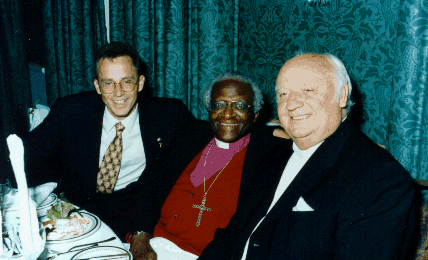
Being appointed chaplain to the German-speaking Catholic Community way back in 1997 I felt not a lot of willingness to raise money for the community via a bazaar, selling all the stuff nobody wants and thereafter give away for the next event of this kind. So I resolved to have a dinner – dance – booked the Mount Nelson, invited Archbishop Desmond Tutu – who to my surprise agreed to come and talk – and simply started with 70 people attending the first such event. In 2000 a young woman called at that time Anja Spandern moved to Cape Town to open the office of the SA-German Chamber of Commerce and Industry. Being her first customer – in need of some donations – a common plan was hatched to turn the dinner – dance of the Mount Nelson into a real ball. As in 2001 also HOPE Cape Town came in to existence, the Ball of HOPE was born.

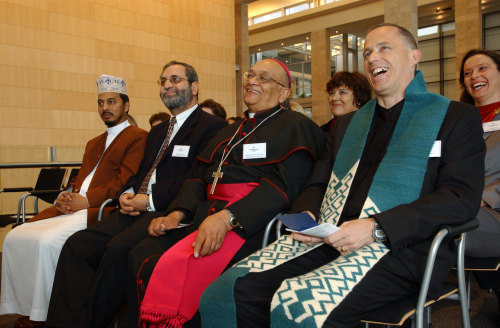
The venue moved in 2003 to the Westin Hotel after having had the honor to bless the hotel during the opening ceremony together with the late Archbishop Lawrence Henry and other religious leaders of different faith.

Ever since that day the Ball of HOPE, HOPE Cape Town and the Southern African – German Chamber of Commerce are interlinked with the Westin Hotel, and I hope that this event of fundraising, but also entertainment, good food and a fabulous vibe will remain on the social calendar for many more years to come.

HOPE Cape Town is grateful for all the support rendered via the Ball of HOPE in the last years – and to talk numbers. I started in 1998 with a proceed of 20.000 Rand in total – in the last years the proceeds going to HOPE Cape Town were in the range of 150 000 – 200 000 Rand. Every cent of this money went straight and without deduction into the work of the organization, every cent was transformed into hope for a child, a family suffering from the consequences of HIV, AIDS or related illnesses.

This years Ball of HOPE is once again sold out – and if you want to know more about HOPE Cape Town or want to contribute towards the good cause, visit our website: http://www.hopecapetown.com

1998 Dinner Dance with Archbishop Desmond Tutu

1998 Dinner Dance with Archbishop Desmond Tutu

Blessing of the Westin Hotel 2003

Blessing of the Westin Hotel 2003

Filed under: Africa, Catholic Church, HIV and AIDS, HOPE Cape Town Association, HOPE Cape Town Association & Trust, SA-German Chamber of Commerce & Industry, , , , , , , , , , , , , , , ,

Blog Categories

Follow God, AIDS, Africa & HOPE on WordPress.com

You can share this blog in many ways..

Bookmark and Share

Enter your email address to follow this blog and receive notifications of new posts by email.

Join 2,711 other subscribers

Translation – Deutsch? Française? Espanol? …

The translation button is located on each single blog page, Copy the text, click the button and paste it for instant translation:
Website Translation Widget

or for the translation of the front page:

* Click for Translation

Copyright

© Rev Fr Stefan Hippler and HIV, AIDS and HOPE.
Unauthorized use and/or duplication of this material without express and written permission from this blog’s author and/or owner is strictly prohibited. Excerpts and links may be used, provided that full and clear credit is given to Rev Fr Stefan Hippler and HIV, AIDS and HOPE with appropriate and specific direction to the original content.

This not withstanding the following applies:
Creative Commons License
This work is licensed under a Creative Commons Attribution-ShareAlike 3.0 Unported License.