God, AIDS, Africa & HOPE

Reflections / Gedanken

“Kill the gay” bill receives Catholic support…

The “Kill The Gays” bill is infamous around the world for its provision mandating the death penalty for anyone convicted of “crimes” in the area of  homosexuality, same-sex rape,  “serial offender,” and  HIV/AIDS .
It has been sponsored since 2009 by David Bahati, an MP with clearly visible homophobic tendencies.
The bill is strongly supported by the First Lady Janet Museveni and legislators with close ties to the American religious right. Opposed by the State Department and leaders around the world, it never came to a vote in parliament.

Also the Roman-Catholic Church under Bishop Cyprian Lwanga denounced the bill’s death penalty and imprisonment provisions as a contradiction to a “Christian caring approach” towards the issues. But he also stated: “We, the Catholic Bishops of Uganda, appreciate and applaud the Government’s effort to protect the traditional family and its values.”His last statement seems now to catch up with him.

The Vatican issued in December 2009 a clear statement denouncing “all grave violations of human rights against homosexual persons,” particularly “the murder and abuse of homosexual persons are to be confronted on all levels, especially when such violence is perpetrated by the State.”

The bill also includes:

  • A 7-year jail sentence for consenting adults who have gay sex;
  • A life sentence for people in same-sex marriages;
  • Extradition and prosecution of LGBT Ugandans living abroad;
  • The death penalty for adults who have gay sex with minors or people with disabilities, consensual or no, or who communicate HIV via gay sex, regardless of condom usage or consent;
  • Jail for anyone who doesn’t report suspected gay people within 24 hours;
  • A ban on the “promotion” of homosexuality so open-ended that it would endanger HIV/AIDS treatment and sexual health clinics in the country and could effectively exclude gay people from petitioning the courts by making those representing them liable for criminal action;
  • A mandate to break all ties with international commitments and laws opposing the Anti-Homosexuality Bill.

Now it seems that the stance of the Roman Catholic Church in Uganda is now snow from yesterday.

The Uganda Joint Christian Council (UJCC), an ecumenical body which brings together the Anglican, Catholic and Orthodox churches,participants  resolved that the bill  should be brought back to parliament.  The UJCC said that the bill was needed to prevent what they called “an attack on the Bible and the institution of marriage.” MP Bahati seems to indicate his belief, that during the process of debating the bill in parliament, the death penalty would be removed from the bill. Certainly a very vague hope for a Catholic Bishop, now calling for the introduction of a bill, he vocally opposed in December 2009 during his broadcasted Christmas message.

This bill is clearly against human rights and the dignity of people – values every Catholic Bishop is called to defend. What ever drives Bishop Cyprian Lwanga – it can never be an excuse and what is remaining is to call on him to retract his support for this bill before it is too late and destroyed lives and blood is on his hands.


Filed under: HIV and AIDS, HIV Prevention, Networking, Politics and Society, Reflection, Society and living environment, Uncategorized, , , , , , , , , , , , , , , , , , , ,

International Criminal Court for the Vatican?

“International Criminal Court proceedings for the Vatican’s stance on condoms” – this was one of the questions asked when discussing the question of HIV and AIDS in Southern Africa at the Osnabruecker Afrika Festival. “Surely not” – so my clear answer, but the question shows how much people are bothered by the outdated views on condoms regarding the pandemic on HIV and AIDS. It is getting more and more difficult to reason the case for all the consequences of Humanae Vitae and honestly: the battle is lost for the church. The faithful are not only not following the church in this anymore but feel more and more irritated about the fact, that this is even worth a discussion in our days. How much ground have we lost through this debate about a piece of rubber? Too many for my taste.

And what to tell the youngsters of the Ursulaschule, the diocesan High School in Osnabrueck – those who are experiencing their first love and – depending on the given family values – know that they should abstain (what they don’t do) as marriage in Germany is more and more a thing for people in their 30’s – and once again: who really waits that long? So what to tell them in their realities?

With the changes of the liturgical words “pro multis” Pope Benedict XVI has shown that he can and is willing to rectify decisions of his predecessors – so why not in this case a correction that ends debate and let us move forwards to all the other important questions we have to answer in these modern days.

Filed under: HIV and AIDS, HIV Prevention, Networking, Reflection, Society and living environment, Uncategorized, , , , , , , , , , , , , ,

Follow up…

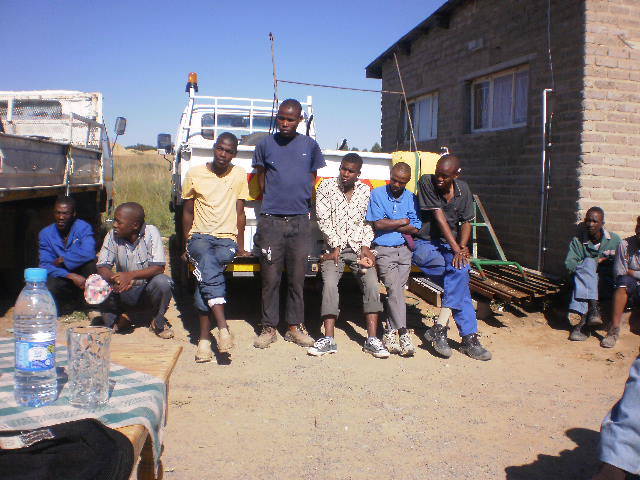
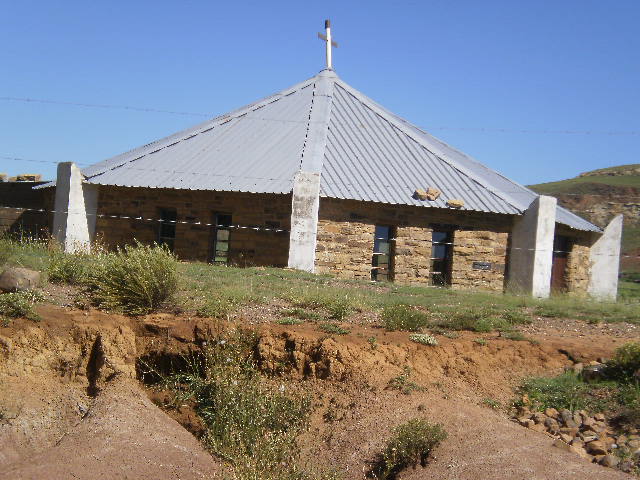
The reader might remember the trip to Sterkspruit in the Eastern Cape before Easter and since then things are moving a bit at least: The water from the mountains is in Cape Town and awaits analysis about content and quality. Sam, our trustee have had a meeting with the representative of the SA-German Chamber of Commerce and Industry and is now going to Johannesburg with Fr Jo to investigate the possibilities of training with the Chamber’s head of training services. Just to give you an idea about the place we visited some pictures:

]

Filed under: General, HIV and AIDS, HIV Prevention, Networking, Reflection, Society and living environment, Uncategorized, , , , , , , , , , , , , , , , , , ,

And it does move

Stefan Hippler


And it does move  –  Instead of an epilogue, a wish list for our Church

Why did we write this book? Because we have a matter with which we are trying to reach the Vatican, the centre of our Church. We sent the German edition of this book to Pope Benedict XVI in Rome as this was the only way of reaching him. We tried, but for an ordinary foreign chaplain it is impossible to secure a private audience with the pontiff, and even less so when he is accompanied by a critical brethren, a journalist even. “But why is the pope so important to you?” our friends ask. That’s simple: because the Catholic Church is centred on one man whose word is the law in the Catholic Church; he represents God’s supremacy. In these bewildering times of HIV/Aids, he – and only he – can effect a real landmark change.

I have tried to get access at least to an influential curial cardinal, the equivalent of a cabinet minister in the Vatican government. But even that turned out to be a mission impossible, because the path to them runs through local episcopates, which in turn were less than cooperative because our matter relates to the delicate subject of HIV/Aids. My co-author Bartholomäus Grill asked Father Eberhard von Gemmingen, the Jesuit editor-in-chief of Vatican Radio’s German service, for advice. He suggested that we collaborate with other theologians in formulating a kind of declaration to be sent to the Vatican. This book is our declaration.

Some fellow Catholics advised against taking this route. “It won’t accomplish anything. You won’t be thanked for it and in the end you’ll get into trouble,” they warned. Clearly there is not much confidence in our Church leadership’s openness to dialogue. But in the Second Vatican Council’s Pastoral Constitution Gaudium et Spes it is written: “By virtue of her mission to shed on the whole world the radiance of the Gospel message, and to unify under one Spirit all men of whatever nation, race or culture, the Church stands forth as a sign of that brotherhood which allows honest dialogue and gives it vigour” (92). This is a caution that even in the licit diversity of thought in the Church, dialogue must always be marked by “mutual esteem, reverence and harmony”. Gaudium et Spes teaches that  “thus all those who compose the one People of God, both pastors and the general faithful, can engage in dialogue with ever abounding fruitfulness. For the bonds which unite the faithful are mightier than anything dividing them. Hence, let there be unity in what is necessary; freedom in what is unsettled, and charity in any case.” This could be the leading motto of our book.

I am convinced that in this spirit, development on controversial ecclesial and theological issues is and must be possible – that in the 21st century we can and may revise the time-honoured teachings of Church Fathers such as St Augustine.

Konrad Hilpert, professor of moral theology at Munich’s Ludwig-Maximilian University, in a highly recommended essay demonstrated how St Augustine’s dictum of error having no freedom marked papal proclamations right up to the Second Vatican Council (1962-65). As recently as the reign of Pius IX in the 19th century, encyclicals such as Quanta cura and its attendant syllabus (a list of “theological errors”) denied the notion of religious freedom. Pius IX even described the idea of freedom of conscience and safeguarding it in civil law as an “error and absurdity, and even madness”.

Hilpert credits our Pope Benedict XVI, among others, for the Vatican II decree which enshrined religious freedom. For the Pope, then Fr Joseph Ratzinger and a theological expert at the Council, 28 October 1965 signified the “end of the Dark Ages” That was the day that, after much heated discussion, the Council adopted the decree Nostra aetate. It included the revolutionary sentence: “The Church reproves, as foreign to the mind of Christ, any discrimination against men or harassment of them because of their race, colour, condition of life, or religion.” A courageous Council managed a breakthrough from which we can’t and don’t want to turn back.

More than 40 years have passed since, and the world has become so much more complex and complicated that an individual person can’t understand it in its totality. Not even the Pope. He must rely on the analysis of highly qualified experts. And this is where the problems begin: It always seems as though some papal advisers have divorced themselves from the secular world, as if they are sitting in the ivory tower of the Vatican, trying to understand the realities of “out there”. Often this creates a conflict with actual conditions. A reform that would see the regular rotation of consultative curial personnel is overdue. We need consultants who know real life and in the pursuit of truth conduct a fearless dialogue with the world.

Our hopes rest entirely with the Pope. He is a kind and humble man, and a brilliant theologian – that is a perfect combination of attributes to bring about freedom of research and spiritual examination within the ecclesiastical system. Theology and life, teaching and praxis, tradition and experience, religion and enlightenment must reconcile for the convergence of truth. Of course this is a self-critical endeavour which might afflict some people. It’s about the Church’s capacity to adapt, something which throughout Church history has always posed a challenge. But we have the protection of the Holy Spirit and must trust that the Spirit will guide our thoughts and actions.

The journey with HOPE Cape Town has changed my life. My encounters in the townships, my work with people from different cultures, the existential confrontation with dying and death, with desperation and hope – all these experiences are a gift from God for which I am infinitely thankful. I am at home in two worlds: in the world of poverty which needs aid, and in the world of prosperity which can offer such aid. I am something of a nomad between these worlds – I often had doubts that I might be able do that. Today I can say that it was the best thing that could ever have happened to me.

One must have visited a corrugated iron shack in South Africa to get a measure of the extent of the crisis. One must have held the hand of someone about to die from the effects of immune deficiency to appreciate the extreme injustice of globalised apartheid. One must have seen, heard, smelled and tasted the misery to really understand it. Only then is it possible to fully comprehend the scandal of the present conditions, the ignorance of the mighty, and the indifference of the affluent.

The Sabbath exists for the people, not the people for the Sabbath (Mark 2:27). With that in mind, I express my wish that the Church leaders in the inner circles would occasionally turn around to see the realities faced by the people on the periphery.

I have contributed to this book as a human being who is confronted every day with the struggles for survival of the poor and the ill, as one who lives and suffers with them. I have written as a Christian who believes to be meeting Jesus in every one of our brothers and sisters. I have written as a Catholic who knows that the joys and fears of his fellow human beings are also his joys and fears. And I have written as a pastor of a church which always seeks, because of its historical experience and eternal vocation, to reform itself anew.

Translation from the book:
Gott – Aids – Afrika
Hardcover: 207 pages  –  Publisher: Kiepenheuer & Witsch GmbH (August 31, 2007)
Language: German  –  ISBN-10: 3462039253  –  ISBN-13: 978-3462039252
Gott – Aids – Afrika
Paperback  – Bastei – Luebbe  –
Language: German  –  ISBN-10: 3404606159  –  ISBN-13: 978-3404606153

Filed under: General, HIV and AIDS, HIV Prevention, HIV Treatment, HOPE Cape Town Association & Trust, HOPE Cape Town Trust, Medical and Research, Networking, Politics and Society, Reflection, Society and living environment, , , , , , , , , , , , , , , , , , , ,

Wanted – a theology of Aids

Stefan Hippler

Wanted – a theology of Aids
The principle of oikonomia: a way out for a Catholic dilemma

It is remarkable that in our godless times, when many people have abandoned faith and church, the debate about the meaning of religion should become more intense than it has been for a long time. It relates to Samuel Huntington’s controversial theory of the “Clash of Civilisations” which today finds expression in the various conflicts and inflated sensibilities between the Muslim and Christian worlds. And it also relates to the death of Pope John Paul II and the choice of his successor, Benedict XVI.

Since his election, Catholic moral teaching has been subjected to much heated discussion in the media. Of course, the old debate about condoms keeps coming up, especially among journalists who normally show scant interest in the Church. The Holy See is not impervious to this: at least the Vatican has started to think about the use of preservatives as a possible means of protection within marriage.

The first time the new pope welcomed a delegation of bishops from Southern Africa, he shared their deep concern about the destruction created by Aids. But the full extent of the tragedy was still being underestimated, because the pontiff underlined chastity and fidelity as the only reliable way of curbing the disease.

While the centre is in a state of understated bafflement, we at the periphery have to observe that those who follow the Church teachings on sexual morality too scrupulously put themselves at mortal risk, particularly African women whose husbands are unfaithful. The continent tells many thousands distressing stories – but few are listening, not even in the Church which places a primacy on the protection of life. We are letting our people down – with all good intentions but fatal consequences. Among Africa’s millions of Aids dead are also millions of dead Catholics. But most Church leaders have learnt to keep quiet, looking to Rome for answers. Which way are we going to take?

The Catholic Church is a communion of saints and sinners, and we are called to attend to both. Vatican II refers us to our sister churches and their rich traditions. I am delighted to note that Pope Benedict XVI’s intent to build on the legacy of the Council. Perhaps this may open a window of opportunity, a little window of hope? Perhaps words will be followed by action? Perhaps we can learn from our sister churches?

For example, the Orthodox Church recognises the principle of oikonomia.

A Greek word meaning maintenance and prudence, it expresses the mystery of divine love made real through Jesus Christ’s message and His living example which endures in the endeavours of the Church. The principle respects the authoritative rules of the Church, but allows for these to be set aside under exceptional circumstances – not to set a precedent, but for the sake of suffering people. For instance, the Orthodox Church applies oikonomia in a failing marriage: in principle, matrimony is indissoluble, but it can break down irreconcilably. In such cases, new nuptials are permissible after a period of reflection and penance. Thus, God’s merciful and unconditional love is manifest even in failure. What God makes possible, the Church has to put into action as it seeks to communicate a credible account of a loving God.

Vatican II calls on us Christian to read the “Signs of the Times”, and HIV/Aids is such a sign.

For the Church, the only appropriate response is to fight the pandemic not with moral arguments, but by embracing infected people with God’s absolute love – with a love that does not care only for the ill but is also open to all human reality, and which does not condemn. I plead with theologians and bishops to discuss this way, this principle of oikonomia sincerely and judiciously, and to do so very soon, because our brothers and sisters are dying. We are running danger of sinning against them by omission. It simply cannot be that the disciplines of the Church precede the right to life!

As I attempt to explain the spirit of oikonomia to my Christian brothers and sisters, I am met by very diverse reactions. Moral theologians point out that the principle isn’t at all new, and that many a cardinal or bishop is already leaning towards it. The brave among them even permit the option of condom use. But it is exactly because I take the Church’s teaching authority so seriously that I am hoping for a clear word from the Prince of the Apostles in Rome. On a global scale, a papal pronouncement would weigh more than diffuse episcopal voices. An impassioned word, borne of the suffering of people and God’s unending love, could save so many lives.

Some of my critics have contended that the theological principle of oikonomia would open the gates for immoral behaviour through the backdoor. They misinterpret my suggestion. I cannot work out how the freedom to use condoms should invariably lead to debauchery, especially when scientific studies do not support that argument. Even less do I understand why a little piece of latex should ignite such heated debate in Catholic circles. Of course it is right that we as Church should advocate our moral code, but from this flows no right to condemn effective protection against death and thereby confuse the faithful.

The most frequent question put to me on this point is this: “Isn’t the manner in which you seek to interpret and apply the oikonomia principle focussed exclusively on the condom issue?” My answer is: No, it means much, much more than that. Primarily the oikonomia principle would serve to address prejudice and stigmatization. In the field of HIV/Aids, the issues range from the disciplines of the Church to equal gender rights.

The lives and suffering of HIV-positive people would change if we welcomed them as brothers and sisters, instead of letting them feel subtle discrimination, for example when people who reveal themselves as HIV-positive are quietly advised to move into another parish, or when they have to wait until they are mortally ill before we provide them with palliative care. Of course we will encounter individuals who reject our Christian value system. But even in these cases it is important to reveal all life options and to control our missionary zeal. In doing so we don’t betray our moral principles, but much more recognise the freedom of conscience of those who don’t conform to them.

In the early 1980s, when the virus was first discovered, Ronald Reagan was the president of the United States of America. He was a devout Christian and, like many of his co-religionists, saw the disease as a “gay illness”, a punishment for the supposed depravity of homosexuals. As a result, the US government did not take the epidemic seriously and responded to it only half-heartedly. The consequences of that are well known: the virus spread unchecked.

The errors of Reagan’s administration should remind us Christians in particular that all our actions and all our teachings could have a fatal price. They should also remind us that we human beings are the first recipients of God’s infinite love. Which brings us back to oikonomia. Only if we recognise and experience this principle ourselves will we be able to pass it on to our sisters and brothers elsewhere.

Our sermons, statements and good intentions count for nothing against the applied Word of God, the experience of God’s love. So we must today do everything we can to curb the spread of HIV/Aids so that in 50 years time the Catholic Church need not issue a remorseful mea culpa – that would be of absolutely no use to millions of Aids victims.

We desperately need a theology of Aids – but not one taking the form of academic proclamations from the Roman curia, but a new, living doctrine which draws from the experiences of HIV-positive people. Because it is here – among the infected, the suffering and the dying, and among all our sisters and brothers – where we find God. Here we meet our Brother Jesus, the very source of our theology.

A practical suggestion: We should utilise our churches and institutional facilities as places of tranquillity and discretion where people can let themselves be tested. Our Church is the biggest religious communion in the world; none has greater numbers of facilities that could be employed in the fight against the pandemic. This would be constructive especially in developing countries where the necessary infrastructure is often lacking.

Why don’t we offer voluntary HIV-tests before every wedding, and then, regardless of the results, encourage the love between two people and strengthen it in the sacrament of matrimony? What a wonderful symbol of solidarity that would be! We would no longer judge and condemn, but assist HIV-positive people and their incipient family life. Of course we also would have to answer the question of how to prevent the transmission of the virus in procreation. Scientific research has shown that a positive test result and knowledge of it has no significant influence on sexual behaviour. We must use this fact to encourage permanent behavioural modification. This is one way in which we as the Catholic Church can move ahead without zealousness.

Pope Benedict is preparing for a second Synod for Africa. It would be a courageous and groundbreaking sign if two days would be allocated to the topic of HIV/Aids and its catastrophic effects. One day, perhaps, to just listen to people who carry the virus, and a second day in which to prayerfully reflect on their reports. Utopic, you say? No, that would be oikonomia in action!

Translation from the book:
Gott – Aids – Afrika
Hardcover: 207 pages  –  Publisher: Kiepenheuer & Witsch GmbH (August 31, 2007)
Language: German  –  ISBN-10: 3462039253  –  ISBN-13: 978-3462039252
Gott – Aids – Afrika
Paperback  – Bastei – Luebbe  –
Language: German  –  ISBN-10: 3404606159  –  ISBN-13: 978-3404606153

Filed under: General, HIV and AIDS, HIV Prevention, HIV Treatment, HOPE Cape Town Association & Trust, HOPE Cape Town Trust, Medical and Research, Networking, Politics and Society, Reflection, Society and living environment, , , , , , , , , , , , , , , , , , , ,

Blog Categories

Follow God, AIDS, Africa & HOPE on WordPress.com

You can share this blog in many ways..

Bookmark and Share

Enter your email address to follow this blog and receive notifications of new posts by email.

Join 2,711 other subscribers

Translation – Deutsch? Française? Espanol? …

The translation button is located on each single blog page, Copy the text, click the button and paste it for instant translation:
Website Translation Widget

or for the translation of the front page:

* Click for Translation

Copyright

© Rev Fr Stefan Hippler and HIV, AIDS and HOPE.
Unauthorized use and/or duplication of this material without express and written permission from this blog’s author and/or owner is strictly prohibited. Excerpts and links may be used, provided that full and clear credit is given to Rev Fr Stefan Hippler and HIV, AIDS and HOPE with appropriate and specific direction to the original content.

This not withstanding the following applies:
Creative Commons License
This work is licensed under a Creative Commons Attribution-ShareAlike 3.0 Unported License.