God, AIDS, Africa & HOPE

Reflections / Gedanken

Nothing new in the South

Bartholomaeus Grill

Nothing new in the South  – HIV: the biggest weapon of mass destruction of our time
A reflection in 2007

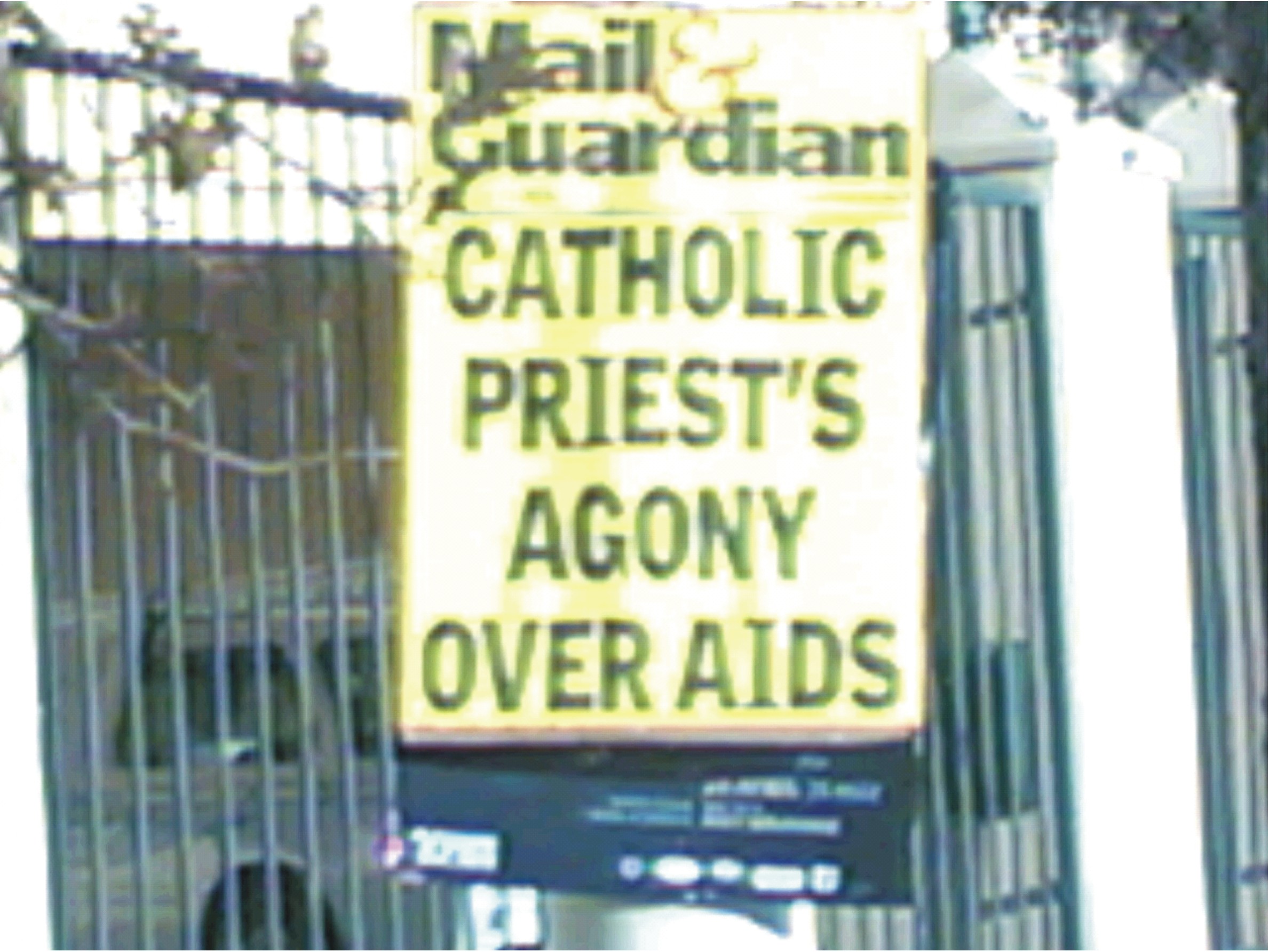
An infection by a lethal virus every six seconds. Every day 8,000 Aids deaths. In 2006, five million new infections. Worldwide almost 40 million HIV-positive people. These figures are frightening; they exceed the powers of our imagination. These are the annual statistics from the United Nations. In the West they may be noted with resignation or they are just ignored. The pandemic does not register as a threat there because the numbers of infections – 275,570 reported cases in Western Europe’s 22 countries in December 2006 – are small in global terms. The threat of Aids death has lost its shock value in the West because of a false notion that antiretroviral medication can cure the disease. Those not affected by it tend to trivialize or even evade the pandemic.

First it was the “gay cancer”. Then it came for the prostitutes and the drug addicts. Eventually it came for the blacks. In between, in the 1980s, a shock wave took hold briefly when it was realised that actually everybody was in danger. Nevertheless, in the collective consciousness of the rich parts of the world, Aids – the Acquired Immune Deficiency Syndrome – has remained a curse which afflicts others: the deviants, the failed, the poor, the Africans. Like the medieval Black Plague, the Aids pandemic is inexplicable – it seems to rage in another place, at another time. And because, to paraphrase Albert Camus, a dead man weighs something only if one has seen him dead, history’s millions of Aids-corpses are “nothing but the smoke of the imagination”.

The African must surely feel like those people in Camus’ novel The Plague who are quarantined in the coastal city of Oran. A giant sightscreen surrounds their continent; they suffer and die unnoticed. But the virus transcends fortress walls and state borders. Unlike the medieval city, the expanding citadel of affluence, the European Union, cannot close its fortified gates and hope to be spared. Aids is another phenomenon of globalisation; at least the virus takes on its characteristics. It travels around the word like jet planes, data streams, cash flows or waves of immigration; it is fast, unpredictable and knows no frontiers.

The pandemic connects the North and the South, but also separates the two hemispheres. The HIV-infected in affluent countries reach older age thanks to better therapies; Aids has become a chronic illness. In developing countries, immune deficiency is fatal; it claims ever more lives and depresses life expectancy. For those who are literate the threat diminishes. Those who cannot afford to acquire costly medicines die. “The truth about Aids is a universal truth about the world today,” as the Swedish author Henning Mankell wrote.

The epidemic is spreading almost uncontrollably and at a high-speed in countries such as Kazakhstan, Estonia, Russia and the Ukraine. The rate is even more dramatic in India, where 2,5 million are infected. The new economic superpower has one of the world’s highest numbers of infected, steadily catching up with South Africa, which still tops the table in the death statistics. But those governments that remain indifferent or uncertain can observe in South Africa and its neighbours what will befall their societies if they fail to take swift counteraction. In the southern African region, the pandemic has already entered its devastating phase. There are images of overcrowded hospices, endless funeral processions, overflowing cemeteries. The general rate of infection in Swaziland is 39%, and 56% of pregnant women are infected – these are distressing world records. The average life expectancy in Botswana has dropped to 34,9. In Zambia, twice as many teachers die every year than are being trained at colleges. In Malawi families go hungry because of shortages of agricultural labour. The army of Aids orphans has swelled to 12 million.

Aids exacerbates misery. Aids leads to exploding health costs. Aids consumes growth. Aids undermines development. As the virus destroys the immune system of the human body, so does the epidemic contaminate the fabric of society. In the end, villages will fall silent, just as they did in Europe during the Black Plague, when Petrarch of Verona reported: “No more can you hear voices, sorrow, cries of pain, weeping.”

The American secret service, the CIA, in spring 2001 called HIV/Aids the “biggest threat” to democracy, security and stability in Africa. Then came the autumn, the 11th of September, and since then the biggest threat is something quite different: global terrorism. But billions of people feel no threat from terrorism. They are threatened by poverty, hunger, disease. From their point of view, the most dreadful weapon of mass destruction is called Human Immunodeficiency Virus (HIV). Since its discovery in 1981, about 25 million have fallen victim to the pathogen. You don’t have to be Cassandra to prophesy that in 30 years the epidemic will have extinguished more lives than the Second World War. These are depressing prognosis, but they don’t seem to concern the world powers much.

Stephen Lewis, former UN special envoy for Aids, explained in 2002 during a trip to Ethiopia: “On September 11, 2001, 3,000 people died in a horrific terrorist act and within a few days, the world was talking about hundreds of billions of dollars to fight terrorism. But in 2001, 2,3 million Africans died of Aids and you have to beg and plead to find a few hundred million dollars to spend.” The angry Canadian ex-diplomat accuses the smug, satiated rich regions of the world of mass murder by complacency. In that light the global hysteria that greeted a few thousand cases of SARS or the panic about bird flu seem absurd.

Beyond Africa, the pandemic’s social, economic and security “collateral damage” is not understood. It shatters nation-states and ruins economies. It aggravates crises and conflicts. It jeopardises the stability of entire regions. But it seems as though the world’s elite will not learn from Africa’s experiences. They have more important things on their minds than to deal with the most devastating catastrophe of our time. Their indifference, as Stephen Lewis puts it, is obscene.

Translation from:
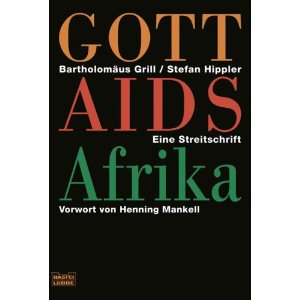
Gott – Aids – Afrika
Hardcover: 207 pages  –  Publisher: Kiepenheuer & Witsch GmbH (August 31, 2007)
Language: German  –  ISBN-10: 3462039253  –  ISBN-13: 978-3462039252
Gott – Aids – Afrika
Paperback  – Bastei – Luebbe  –
Language: German  –  ISBN-10: 3404606159  –  ISBN-13: 978-3404606153

Filed under: General, HIV and AIDS, HIV Prevention, HIV Treatment, HOPE Cape Town Association & Trust, HOPE Cape Town Trust, Medical and Research, Networking, Politics and Society, Reflection, Society and living environment, , , , , , , , , , , , , , , , , , , ,

What I expected from being a priest and how I became an Aids activist in Africa

Stefan Hippler:

Was that it? – What I expected from being a priest and how I became an Aids activist in Africa

I remember it as if it was yesterday. It was in July 1986, shortly after my ordination to the priesthood. I was driving from Koblenz to Trier, in south-western Germany. Suddenly a strange anxiety gripped me: was this all there was?

The beautiful scenery of the countryside of Hunsrück and the Eifel flew by, and it felt as if I was confined to a golden cage. My priestly future seemed to be limited to a few precise, definable coordinates. A parish, service to the Church, pastoral duties – I saw my life flashing before me. In the end, a small obituary would say: “Well done, thou faithful and loyal servant…”, and with it a catalogue of parishes and other stations of importance, and a note of appreciation from the bishop of Trier. But I managed to shake off this sense of confinement and lack of direction, and reported to my first post as curate in Münster-Sarmsheim. I was ready to follow the promise I had made at my ordination, to experience the glorious freedom of God’s children.

At the same time I was also intensively engaged in the peace movement – much to the distress of my Episcopal superiors. I took part in a sit-in at the American nuclear depot in Hasselbach, and was promptly arrested, along with a couple of high-profile protesters. The officials of my diocese were less than impressed when they watched the TV footage of their vicar being bundled into a police van. And so just six months into my priesthood my career, in as far as there is such a thing in the Church, was already on a slope.

When the first Gulf War broke out in the early 1990s, I was serving as vicar in Andernach. My parish of St Peter’s became a regional refuge of spiritual resistance, and again the superiors were irritated by my peace activism. At the same time it bothered me, as a young priest, to be preaching Sunday sermons at my congregations without having been exposed much to real life – I felt that I needed real life experience before I could act as a proper pastor. So I applied for a year’s leave. The sabbatical turned out to last five years during which I didn’t always work in the vineyard of the Lord, but also in other pastures. A McDonald’s drive-in restaurant taught me how to prepare burgers. After the Berlin Wall fell, McDonald’s offered me a lucrative managerial post in eastern Germany. I turned it down: I wanted life experience, not a career.

Instead I went to work for 18 months on a finca in Spain to learn various farming skills, such as harvesting and the processing of almonds. After that I returned to Germany to work as a care assistant in a hospital ward for final-stage cancer patients. And then I was joining as a volunteer of he organisation Pax Christi to care for refugees in Croatia. In Mostar I began to fully understand the horrors of war. My next station was Frankfurt, working at the international airport in the social services department which attends to stranded refugees and asylum applicants. My primary function was to take care of unaccompanied refugee children. That experience marked a turning point in my life. I quickly learned that Germany’s Constitution (or “Basic Law”) ended at passport control – as not infrequently did human rights.

I had to witness how children would be traumatized as they were arrested at machinegun-point by border patrols and then be put into a sort of Ikea-jail in Terminal 2. Or how a two-year-old refugee boy was refused entry as a security threat to the Federal Republic, even as his mother was granted an asylum seeker permit inside Germany. Or how some people in their despair attempted to commit suicide. After such experiences I began to think of Germany in some aspects as not better than as a banana republic. That time-tested my view of humanity, and by extension of God. On reflection I am thankful for these experiences – without them, I would not be the person I am today.

The key event was my massive clash with the then-minister for the interior, Manfred Kanther. The conflict centred on seven Sudanese men who protested against their expulsion with a weeks-long hunger strike. On three occasions the Constitutional Court ruled, at the last-minute, against their deportation. But then Kanther ordered the seven to be put in leg irons, placed on a chartered jet and flown to Khartoum. During their eight-week hunger strike I had become particularly friendly with one of the seven, a quiet, reticent young man, whose claims to having been tortured in Sudan appeared to be highly credible. But having been tortured was not good enough grounds for securing asylum, so I had decided to shield the poor guy by way of adult adoption. But he and his six friends were now back in Sudan. A reporter for the magazine stern (which once attracted attention for publishing the fake diaries of Adolf Hitler) established through instant research that they had just been economic refugees. Minister Kanther must have been delighted, because the article seemed to vindicate him.

I decided to fly to Sudan to determine the facts of the matter myself. My employer, Caritas, also had an interest in the matter: if we were proved right, we would at least be able to claim a moral victory. I succeeded in locating and visiting all seven of the deported men, and could now verify that stern’s account did not correspond with the facts. For example, the reporter worked a pure miracle by interviewing, without the aid of modern technology, the mother of one of the seven from a distance of 400km!

My research did not please the Sudanese officials, and even less so their German counterparts. When I landed two weeks later in Frankfurt, border patrol units surrounded the aeroplane. My companion to Sudan and I were detained. At the station I noticed an Interpol wanted poster…for me! I realised that the situation was serious: I was being investigated for suspected human trafficking and formation of a criminal ring! An attorney secured my release. Shortly after a telephonic message from Caritas: “Your employment is terminated with immediate effect.”

The confrontation with the might of the state, the falsehoods peddled by the press, the inhumane asylum policy – all this shook my set of values to their core. I prevailed in my legal case against stern, and after half a year the investigation against me was closed. Caritas welcomed me back on duty, but only after I had threatened them with a complaint in labour court. But Germany had become too restrictive for me; I knew I had no future there.

In 1997 my diocese allowed me to continue my pastoral service abroad, for which I remain grateful to my then-bishop, the late- Hermann Josef Spital. So I went to Africa – and arrived, to the shock of the parish sister, with another man, namely my Sudanese friend, whom I had adopted. It is obvious, she told me, what it means when two men live together. And right off I had another problem: the parish sister immediately informed my superiors in Bonn. In the end, a brief clarification was enough to smooth things over.

Now I began to meet a great challenge: the renewal of the stagnant German-speaking Catholic parish in the Cape. It had neither a church nor a presbytery, the parish register consisted of a hand-written list. I set about visiting families, asking for addresses and contacts, and then founded a parish council. I also bought a building called the Mediterranean Villa for the church, to serve as a presbytery, a parish centre, and also as a guesthouse, because I was also in charge of the pastoral care for German-speaking tourists. The proceeds from the lodgings were intended to cover the running parish costs and to finance social projects. Confirmation, Easter vigils and Christmas Mass were reintroduced, and slowly the somnolent parish found a new life. A decade later, the 400 square kilometre wide parish is running smoothly.

Besides my pastoral ministry I was also eager to develop social activities: outreach with parishes in black townships, partnerships and development projects with people who remained disadvantaged even in the new, democratic South Africa. Soon one matter occupied the focal point, and I couldn’t let it rest: HIV/Aids and its devastating consequences.

Why do I write at such length about all of this? Because one can understand certain thoughts I express in this book only against the backdrop of my life story. Perhaps only those who understand the harsh realities of everyday life will follow my doubts and questions, and empathise with the abyss which so demoralise me as a priest.

Only those who know my life’s journey will appreciate that behind my cries from the conscience I have an absolute desire for dialogue and, yes, a longing to be taken seriously. The texts in this book are not intended as a gratuitous critique of the Catholic Church, but as a serious enquiry which cannot be dismissed simply with reference to God’s will or the classic “It was always so; why should we do it any differently now?” This is more about the challenges of real life, about questions to which we must find answers. It’s about being confronted by the insights of natural science – and by the ancient sources of our Christian beliefs.

The suffering which has visited millions of people – and also millions of Christians, millions of Catholics – obliges us to enter into a new dialogue with St Augustine, for example. That Church Father’s principles concerning sexual morality and sin have been carved into the Catholic stone, so much so that they seem unassailable. I am not interested in dispensing with all that is old, conventional and traditional for the sake of modern wisdoms. I am looking for an honest inquest and dialogue which must be open for the New which God wants to give us again and again by trusting in the guidance of the Holy Spirit.. In doing so we must conquer our fears, with trust in God. Benedict XVI, the present pope, is a brilliant theologian. Those in the know suggest that after almost three decades in the Vatican he has lost touch with the realities of common life. I understand why that may be inevitable, but I wish that the highest authorities in our Church might listen to its specialists on the ground, instead of closing their minds from the start.

I offer no patented solutions. I also have no intention of rebuilding the Church, never mind shaking it to its foundation. But I would like the Church to consider my practical experiences and intellectual insights in its development of a theology of a people-friendly, loving God. The time in our Church when people would be condemned for thinking independently categorically should be over. I expect to receive the same spiritual respect I offer others, because that shows respect towards those people whose lives and sufferings this book deals with. They are all daughters and sons of God; they are all respected and loved unconditionally by Him.

Translation from:
Gott – Aids – Afrika
Hardcover: 207 pages  –  Publisher: Kiepenheuer & Witsch GmbH (August 31, 2007)
Language: German  –  ISBN-10: 3462039253  –  ISBN-13: 978-3462039252
Gott – Aids – Afrika
Paperback  – Bastei – Luebbe  –
Language: German  –  ISBN-10: 3404606159  –  ISBN-13: 978-3404606153

Filed under: General, HIV and AIDS, HIV Prevention, HIV Treatment, HOPE Cape Town Association & Trust, HOPE Cape Town Trust, Medical and Research, Networking, Politics and Society, Reflection, Society and living environment, , , , , , , , , , , , , , , , , , , ,

God – AIDS – Africa – English version

The book “Gott-AIDS-Afrika” was published in 2007 in the German language by Bartholomaeus Grill and Stefan Hippler.  The book received a very mixed reaction by the administration of the German Catholic Bishops Conference which lead to the attempt from some quarters of the DBK to silence the priest. The administration of the DBK then opted not to renew the contract as a chaplain to the German-speaking Catholic Community in Cape Town and Durban. Since October 2009 he works as a Fidei Donum priest in the Archdiocese of Cape Town. B. Grill continues to write about African topics for major German newspapers.
In the following weeks chapters of the books will be published on this blog in an English translation, starting with the 3.2.2012.The book was sent to pope Benedikt XVI for consideration with a letter of the authors  and widely distributed in the German-speaking countries. It challenges the moral teaching of the church, not in a hostile way, but searching for a way forward to address the needs and questions of the 21st century. There is no development of theology without questions asked from those working with the people on the ground.

Filed under: General, HIV and AIDS, HIV Prevention, HIV Treatment, HOPE Cape Town Association & Trust, HOPE Cape Town Trust, Networking, Politics and Society, Reflection, Society and living environment, Uncategorized, , , , , , , , , , , , , , , , , , , ,

13.11.2010 Pope plans to allow women as readers…

I already see the glimmer of disbelief in the eyes of many readers – half a century after the II Vatican Council and after years of normal practice in churches around the world, the pope considers to allow women to be readers during a catholic service. Even if the theological facts are more complicated, alone this headline shows for millions of Christians that the Vatican has lost touch with earth and people and its own base a long time ago. It is another nail in the coffin of a church which simply seems to ignore reality for ages – how long had Galilaei to wait until he was absolved from the church?

For somebody working in the church and trying to bring people to understand the blessings of our faith, such headlines are simply disasters and not easy to rectify. It shows that all pastoral work to reach the people and to bring the good news to the faithful might experience backstabbing from a media approach, which is simply not only outdated but contra productive. The way news are brought has changed so dramatically in the last 50 years – it seems not for some Vatican circles.

After bringing the death unbaptized babies out of the limbo, after getting the world spinning around the sun, after prematurely getting into a fierce and unpleasant debate with the Pius hardliners and so much more to get worried about, another headline has hit the press making the lives of ordinary priests more difficult.

Filed under: Uncategorized, , , , , ,

01.05.3020 Ball of HOPE 22.05.2010

I remember it very clearly: on the 15.05.1998 I organised the first ball in Cape Town and the reason at that time was a simply one: Coming to Cape Town as the new chaplain to the German-speaking Catholic Community at that time, I did not want to engage into bazar and similar events as organised by every parish around the world. I thought that having something extra-ordinary would maybe attract people and to make the first ball attractive, I contacted Archbishop em. Desmond Tutu who, to my surprise, agreed to be the guest of honour for this eve. The event at the ballroom of the gracious Mount Nelson Hotel at that time was mend to create funds for the social work of my small little flock.

In 2001 the theme changed and the “Ball of HOPE” was from now on the official label for this event. On board the Southern African – German Chamber of Commerce and Industry with Anja Tambusso Ferraz nee Spandern as head of the Cape Town office as cooperation partner.  With the opening of the Arabella Sheraton, now the Westin Grand Hotel, the Ball of HOPE moved to this top class hotel as it also supported HOPE Cape Town in other areas.

We are now celebrating the 13th event of this kind and meanwhile, the Ball of HOPE is a known event in the social calendar of Cape Town. It is nice to see how a spontaneous idea developed into a major event and I am proud to say, that this year – again – we are sold out. Thanks to all who supported and support on a continuous base this prestigious event. I am also grateful that the German-speaking Catholic Community decided to keep their bond with the Ball of HOPE.

Filed under: HOPE Cape Town Association & Trust, Networking, Reflection, , , , , ,

Blog Categories

Follow God, AIDS, Africa & HOPE on WordPress.com

You can share this blog in many ways..

Bookmark and Share

Enter your email address to follow this blog and receive notifications of new posts by email.

Join 2,711 other subscribers

Translation – Deutsch? Française? Espanol? …

The translation button is located on each single blog page, Copy the text, click the button and paste it for instant translation:
Website Translation Widget

or for the translation of the front page:

* Click for Translation

Copyright

© Rev Fr Stefan Hippler and HIV, AIDS and HOPE.
Unauthorized use and/or duplication of this material without express and written permission from this blog’s author and/or owner is strictly prohibited. Excerpts and links may be used, provided that full and clear credit is given to Rev Fr Stefan Hippler and HIV, AIDS and HOPE with appropriate and specific direction to the original content.

This not withstanding the following applies:
Creative Commons License
This work is licensed under a Creative Commons Attribution-ShareAlike 3.0 Unported License.