God, AIDS, Africa & HOPE

Reflections / Gedanken

New research supports EKAF statement for MSM

Viral load in the blood and rectal secretions of HIV-positive gay men are highly correlated, according to US research published in the September 1st edition of the Journal of Infectious Diseases. The study also showed that the presence of sexually transmitted infections did not increase rectal viral load. Individuals with a plasma viral load above 1000 copies/ml were significantly more likely to have detectable virus in the rectum.  “Our data add substantially to the few published studies of HIV shedding in rectal secretions of MSM [men who have sex with men],” comment the investigators, “we were able to quantify HIV RNA in rectal secretions, demonstrate the linear correlation between increasing plasma load and rectal viral load and determine a threshold plasma viral load that distinguished detectable from undetectable rectal viral load.” They also believe that their findings have important implications for current debates about the use of HIV treatment as prevention, commenting: “Combination antiretroviral therapy will have a similar effect on reducing HIV transmission in MSM, as seen in studies of heterosexual discordant couples.”
Read more:

English: http://www.aidsmap.com/Plasma-and-rectal-viral-load-correlated-in-HIV-positive-gay-men-supports-use-of-treatment-as-prevention/page/2063383

German: http://news.aids.ch/article.php?subID=12023&key=0&start=0&categorie=Wow!#12023

Filed under: HIV and AIDS, HIV Prevention, HIV Treatment, Medical and Research, , , , , , , , , , ,

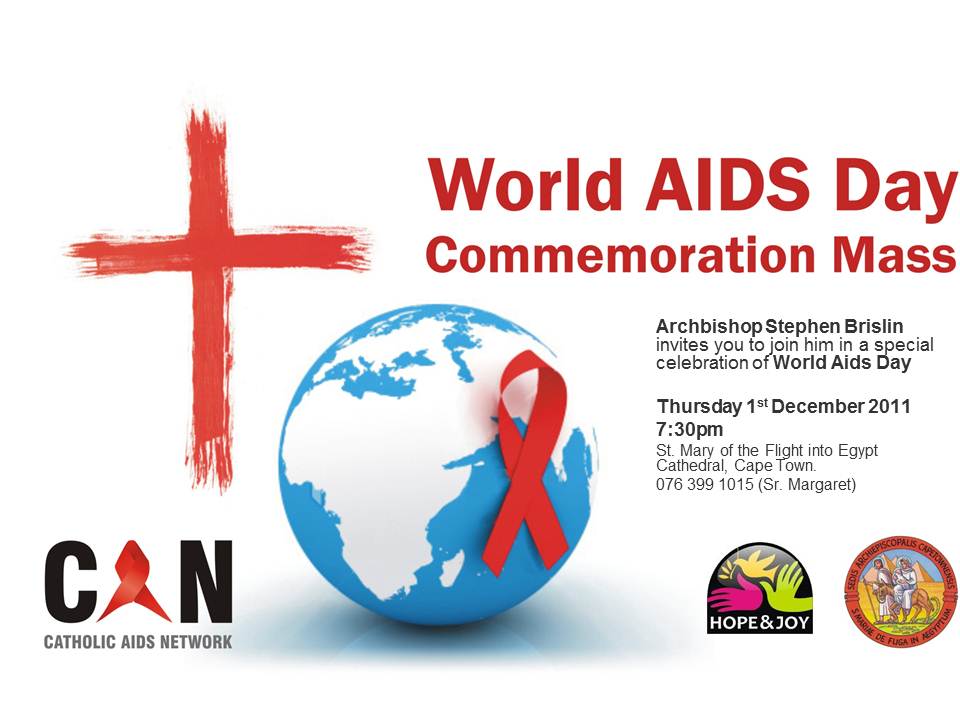
Invitation for those in Cape Town

All are invitedThursday 1st December 20117:30pmSt. Mary of the Flight into Egypt Cathedral, Cape Town.076 399 1015 (Sr. Margaret)


Filed under: HIV and AIDS, Networking, Reflection, , , , , , ,

In between: interesting news from around the globe

This are different links leading to interesting and important news in the field of HIV and AIDS. Sometimes it is important to see, that there are encouraging news – even if it does not happen today or tomorrow. HOPE is the motor of life.

* HIV Drug Delivery Patch in the Pipeline

* R.I.P. HIV

* Legal matters: AIDS Is Not an “Automatic Death Sentence”

* Cure Watch

* HIV Therapeutic Vaccine Shows Signs of Promise

* Gold Drug Shows HIV Eradication Potential

Filed under: HIV and AIDS, HIV Prevention, HIV Treatment, Medical and Research, Networking, Politics and Society, Reflection, Society and living environment, Uncategorized, , , , , , , , , ,

POZ magazine: Internet based HIV care

A group of HIV-positive people who received their health care via the Internet from a Barcelona HIV clinic felt that their care was comparable with—and potentially superior to—standard in-person care. These findings, published January 21 in the online journal PLoS One and reported March 21 on the website Computerworld, could offer hope to select patients in rural settings who must often travel great distances to receive specialty HIV care. By necessity, providers in resource-poor nations have been quick to adopt electronic communications as ways to provide health care. In countries where people are sometimes more likely to have access to a cell phone than running water or transportation, and where they must sometimes travel 100 miles or more to see a doctor, “e-medicine” has significantly expanded the reach of traditional health care.
Developed countries, including the United States, have been much slower to adopt these new technologies, partially because of concerns that e-medicine would result in poorer care, along with legal concerns about patient privacy. Recent positive experiences with using the Internet and telephones to extend and improve care for people with chronic diseases, such as diabetes, are beginning to tear down the walls that have kept e-medicine from wider implementation.
To determine whether e-medicine could be used in caring for people with HIV, Agathe León, MD, from the University of Barcelona, in Spain, and her colleagues set up a virtual hospital system in 2005 to help streamline care for patients in their HIV clinic. During the first two years of operation, León’s team tested its Internet-based system involving 83 HIV-positive people who were in stable health and had CD4s over 250. The study did not require participants to have an undetectable viral load or to be on antiretroviral (ARV) therapy—though about half were. All participants had a home computer and broadband Internet access.
Over the first year of the study, half of the group received their HIV care, pharmacy consultations, psychological care and appointments with social workers over the computer, while the other half received traditional in-person service. After one year, the groups switched their mode of receiving care. Participants went into local laboratories for any necessary lab work.

León’s team conducted detailed surveys of the participants throughout the study to assess their satisfaction with the care, their psychological health and their quality of life. Each participant’s CD4 count and viral loads were also recorded.
León and her colleagues found that patient satisfaction was high and that overall health and well-being—including CD4 counts and viral loads—were no different between those receiving care through the virtual hospital and those being seen at the clinic. This held true despite the facts that 7 percent started antiretroviral (ARV) therapy during the course of the study and 28 percent switched therapy. In fact, 85 percent reported that the Internet-based system actually made it easier for them to access the care they needed from their providers.
León reported that 200 people with HIV have now been followed through the virtual hospital.
“This program allows patients to continue their treatment without altering their routine. Medication is sent to their home, or other locations specified by the patient,” representatives for León’s clinic stated. “Telemedicine is emerging as a service appropriate for this treatment, and [the virtual hospital] as a safe and effective tool.”
It remains to be seen whether, or how, systems like these could be used with difficult-to-reach populations such as those with less access to modern technology, but experiments to test this are ongoing, especially in rural settings where access to quality health care is more challenging for people with HIV and other chronic illnesses.

Source:  http://www.poz.com/articles/hiv_emedicine_internet_761_20118.shtml

Filed under: HIV and AIDS, HIV Treatment, Medical and Research, , , , , , , , ,

SVD – Instituti Missiologici Societatis Verbi Divini

This evening a talk on HIV and the church at the SVD institute for missionary work in Siegburg – St. Augustin. A lively debate and the clear message at the end that we still have to go a way until we accept HIV positive people, also priests and religious without any stigma into the church. Also the question of vocations of HIV positive persons has potential for quite a debate amongst  those in charge of the ministries of the church. It is good to know that religious orders are keen to get involved within the church with these questions.

SVD Talk in Siegburg / Germany

HIV AIDS in the church

Filed under: HIV and AIDS, HOPE Cape Town Association & Trust, , , , , , , ,

Blog Categories

Follow God, AIDS, Africa & HOPE on WordPress.com

You can share this blog in many ways..

Bookmark and Share

Enter your email address to follow this blog and receive notifications of new posts by email.

Join 2,711 other subscribers

Translation – Deutsch? Française? Espanol? …

The translation button is located on each single blog page, Copy the text, click the button and paste it for instant translation:
Website Translation Widget

or for the translation of the front page:

* Click for Translation

Copyright

© Rev Fr Stefan Hippler and HIV, AIDS and HOPE.
Unauthorized use and/or duplication of this material without express and written permission from this blog’s author and/or owner is strictly prohibited. Excerpts and links may be used, provided that full and clear credit is given to Rev Fr Stefan Hippler and HIV, AIDS and HOPE with appropriate and specific direction to the original content.

This not withstanding the following applies:
Creative Commons License
This work is licensed under a Creative Commons Attribution-ShareAlike 3.0 Unported License.