God, AIDS, Africa & HOPE

Reflections / Gedanken

USA and the complexity of the world

11 days of traveling in the USA coming to an end.  Since 2 years HOPE Cape Town tries with the help of friends to establish itself as a fundraising NGO in the States. Finally this time things are coming together and it seems a way is found to start in earnest with our efforts to raise funds for the work in the Western Cape. Having an offical representative in New Jersey voted onto the advisory board of the HOPE Cape Town Trust helps a lot. The USA is not South Africa – laws and requirements are different and since 9/11 the trauma of the US nation dictates a lot of scrutiny channeling money from one of the 50 states to Africa or any other part of the world.

It is worth noting that the Catholic Church also plays a big role in this, assisting in setting up and bridging the time until the process is finalised and HOPE Cape Town Trust (USA) will be established in the first of the states. It was great to see how an entity like my church can be of help with its structures and abilities and so speeding up the process of helping others in need. There is still a long way to go but what are 2 or 3 years more compared to eternity :-).

In the time I have visited the killing of an 18-year-old black youngster through a white police officers were not only constant headlines but also led to unrest in St. Louis (Mo). The little suburb of Ferguson brought again onto the light the problem of race and justice. As somebody living in South Africa, where race is often still determining how a person sees himself, it was somehow eye-opening to understand that the question of injustice does not stop at a certain nation. It seems to me that the perceived inferiority of Afro-American or the perceived superiority of white people is a worldwide problem manifesting itself quite harshly in the “great nation on earth”. It is a clear expression and outcome of a cruel world order, especially when it comes to economic justice or the power balance in our world. And having visited the National Museum for Indian History in Washington, I have learned anew what I already have somehow know before: How much also my church has contributed to eliminate old ancient tradition and forced people to take over the white European lifestyle. While Christianity absorbed so much from the European (Greek and Roman) habits and tradition and converted its meanings, it failed to do the same often on American or African soil. This is indeed a problem we have until today and whoever is observing the reactions on Pope Francis from the neo-conservative side will pick up that his “latin-american” style is seen as a treat to European structured theology and hierarchy.

I am always thrilled to see and learn how inter-connected the world, it’s past, present and future, is and how important it is to learn from the past to understand the present time. It is indeed also the only way to prevent from injustice happening again even if it seems that humanity does not learn and has to go through all the trials and errors again and again.

What has survived through history is for most people the compassion and will to better the world – and that brings me back to the beginning and the fundraising efforts which would not be possible without this life line of hope. And it is indeed the only hope we have, that despite all the failures, of the systematic injustices there have been always people and there will be always people who care about their brothers and sisters near and far away.

Filed under: Catholic Church, General, HIV and AIDS, HOPE Cape Town Trust, Networking, Politics and Society, Reflection, Religion and Ethics, Society and living environment, , , , , , , , , , , , , , , , , , , , , , ,

HIV – curse or blessing?

For most people, on first side a pandemic is surely seen as a curse translating into sickness. In the case of HIV- without treatment – it turns into full-blown AIDS and consequently death. Who does not remember the eighties: a quick and cruel death for young people, killed in the prime of their lives.
HIV also means evolution: a small little bug jumps onto a different host and kills the host. Not intentionally of course and it will take a quite some time, maybe a couple of hundred years to develop into a symbiosis which lets bug and host live peacefully together. Otherwise it’s a dead-end for evolution and will at a certain point cease to exist.
HIV is a challenge: In the 1980’s the scientific world raced to find an answer what causes the syndrome. To isolate the bug, to find anti-bodies and consequently a test to determine infection and last but not least to develop first medications working to prevent full-blown AIDS took its time and toll. But HIV is also a challenge for every human being: transmission via bodily fluids means it touches on one of our strongest drive and urge: sexuality. And who controls this desire controls humans – just look into the history of religion and the significance of the control of sexuality via faith.
HIV mixes categories normally separated in society: youth and death. Death is anyhow so often hidden in modern society; now associated with youth and radical eradicating the beauty of it destroys the unspoken view how society works and develops. It changed the rules of engagement on that level dramatically and still does it in developing countries.
HIV means to open up to people living and loving in same sex relationships. Coming from the dark and hidden corners of social life gay people suddenly stood in the limelight of society. HIV and AIDS was part of a sometimes cruel outing process. In our days HIV is globally not anymore associated with homosexuality but the pandemic, almost as a side effect, opened up society to look at different life styles. And without any doubt the solidarity in gay circles in the beginning of the pandemic for their infected friends and partners was an impressive show of compassion and left traces which transformed into signs of normality and acceptance for gay love in the Western hemisphere. Obviously this triggers an antidote from the radical – fundamentalist side of society, mainly coming from the USA in an evangelical form even telling Africans what African culture means in Africa.
HIV is clearly a challenge for politicians and it was HIV which was put on the agenda as the first medical condition dealt with by the UN. This opened doors for other discussions on a global base like on Malaria or TB or all the other forgotten sickness of Africa and South America. We were reminded that they also kill millions a year and that they are in need of being addressed properly. The Global AIDS Fund was a first instrument of tackling a medical challenge on a global scale and not via bi-lateral negations which normally don’t’ see the full picture and are rather small –minded.
HIV means a challenge for society. While in Germany the campaign “Give AIDS no chance” with the commitment of the entire government prevented the pandemic to get into full swing, other countries and governments did not wake up to respond to the treat timely. The bible is right, that the sin of the fathers, in this case the sin of neglect comes onto the children and grandchildren. South Africa, but also Swaziland, is an example of failure with the result of hundred thousands of death and a generation born and plagued by HIV. What a challenge for the social coherence of society.
HIV translates into a challenge for religion, for our faith. Just a look at Ronald Reagan, who refused to act on the first reports of the new disease as it seemly “only” targeted gay people. His faith told him that they anyhow did not live according to God’s moral code; somehow no real action was needed. It reminds us also in this context of all those clerics calling the HIV pandemic the punishment of God for Sodom and Gomorrah in our times.
HIV is not a punishment but a clear sign of the time to reflect on our Christian theology – it has shown clearly that answering new questions with old answer do not serve humanity. The opposite is true: it endangers life. The question of protection cannot be answered with the reply given by authorities quite some time earlier on the question of procreation.
And how about the single human being infected with the HI Virus?
The challenges and reactions are as different as people are different: shock, disbelieve, despair, give–up mentality, defiance, hope….
What is indeed an almost general rule I discovered with people living positively is that after the balance in life is found again, there is a new sense for health and the value of life. HIV has shown how fragile life is and treatment has given almost the opportunity for a second chance in life. People infected mostly have a peace treaty with their boarder – always present even when tested undetectable. There is also the sense of gratitude and somehow, even if it sounds absurd, it changes from being a personal curse into a blessing. And I strongly believe that church should be and could be promoter of this transition, personal and in communities where stigma could be transformed into a blessing. The Catholic Student organisation of South Africa maintains in one of their publications that people living with HIV cannot live life to the fullest as stipulated in John 10.10.
They are wrong: God is giving everyone in his unconditional love the possibility to life their life to the fullest – for him, sexual identity or preference is not a hindrance nor is race or income or any other ability or disability or HIV or AIDS.
You will be a blessing for others – this promise of God applies to everybody who lives and loves with or without HIV.

Filed under: Catholic Church, General, HIV and AIDS, HIV Prevention, HIV Treatment, Reflection, Religion and Ethics, Society and living environment, Uncategorized, , , , , , , , , , , , , , , , , , , , , , , , , , , , , , ,

Good news: Ball of HOPE in Cape Town booked out

This is indeed great news for the organizers and who ever could get hands on a ticket for the annual Ball of HOPE will not be disappointed: A great entertainment program, the introduction of a MC leading though the procedure of the evening, great food and a fantastic live band will make this evening an unforgettable one.
But this is also good news for the people, HOPE Cape Town is so compassionate caring for; all proceeds will give them more hope, more life, more joy and for some even an entire future. We often forget how little it takes to change the fate of a person to the good and every cent donated on this eve will translate into practical assistance and help.
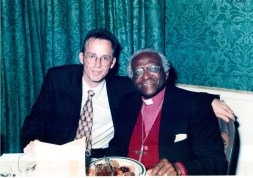
I remember the first time in 1998 when the Ball, at that time called “dinner-dance” at the Mount Nelson was launched. Desmond Tutu was the guest of honor and spoke to us till the food was cold, but it was all in all a marvelous evening for 80 mostly German-speaking people. How far have we come since then and how grateful should we be for the journey of 16 years of this annual event. With the opening of the office of the Southern African – German Chamber of Commerce and Industry at the beginning of the new millennium in Cape Town, the “dinner-dance” was transformed into a real black tie affair. Anja Tambusso Ferraz as my partner in crime put her special stamp on the event and together we developed it as we went along. But all was only possible through the great support of so many people along the way – no way two people can stem an event like this without so many never officially mentioned colleagues, friends, partners, associates and supporters. The opening of the Westin Hotel gave us the chance to add to the number of guests possible for the event and so when we will launch the Ball of HOPE 2014 in a couple of days, there is again excitement paired with gratefulness to all and everyone supporting this charity in lieu of HOPE Cape Town. It is also good to know that the German-speaking Catholic Community remained faithful to this event all the years. There is a lot of German and German rooted influence in Cape Town and surely on the society side, the Ball of HOPE was a welcome addition to the social calendar of the mother city.
So welcome to all our guests from Cape Town, but also flying in from Germany and Switzerland for this event and let’s celebrate life and doing good at the same time.
Picture: 1998 the author and Archbishop Desmond Tutu @ the first “dinner-dance”

1998


Filed under: Catholic Church, General, HOPE Cape Town Association, HOPE Cape Town Association & Trust, HOPE Cape Town Trust, Networking, Politics and Society, Reflection, SA-German Chamber of Commerce & Industry, , , , , , , , , , , , , , , , , ,

Believe it or not – it’s Lent…

Other than Ramadan it seems Lent is becoming an almost invisible time of the 1.2 billion Catholics in this world. Putting the sweets or the alcohol away is rather driven by diet than religious consideration and besides those going to mass every Sunday and seeing the purple of the priests stole it seems that this marked time has little impact on this world.
I think this is a pity as times like lent could be a collective “breathe deeply” – and I am sure it those 1.2 billion do this on the same day – it would have an interesting impact. But as the church until now was obsessed with bedroom questions and dogma – such liturgical times slipped through as unimportant. There seems to be change in the air and as the jewel of social teaching starts shining and overrides the impression of religion as a strict moral institution there might also be more conscience about the treasure of special times in the church year.
I would love to see lent as a time where the rush of life slows down and words and judgements are ceased to be on the forefront. Lent could be a time of collective reflection on what is important in life and whether we really serve the one and only purpose church can have: showing that God loves everybody unconditional. Dot. Not more, but also not less…  I can tell you miracles would happen again on this earth…

A joyful Lent to all of you!

Filed under: Catholic Church, General, Reflection, Religion and Ethics, Society and living environment, Uncategorized, , , , , , ,

Gloves are off?

The clock is ticking and the preparations for the synod of the bishops to discuss family and marriage matters are in full swing. Some churches publish their findings on the questionnaire, others treat it as a sort of highly secretly exercise. Some parts of the hierarchy asked frankly those called the laity, others compiled answers without elaborating on the ways how they did it. In Germany it seems that the topic is highly contested. Cardinal Marx from Munich made it very clear that in the question of divorced and remarried couples, the church must be able to consider all their options. This was in answer to soon-top-be Cardinal Mueller in Rome, who insisted already upfront that nothing can be changed at all. Only to be reprimanded by an South American Cleric in the same rank that there is more to it than just dogmatic insistence. The Diocese of Freiburg published a guideline for the possibility in some instances for a blessing of a second marriage and communion for those who are divorced and remarried. Which obviously drew flag from Mueller in Rome again, who insisted that people living in a second marriage are living in sin and therefore are excluded from Holy Communion.
Such debates are not new – I remember that  then Bishop of Rottenburg – Stuttgart and now Cardinal Kasper, then Bishop and now Cardinal Karl Lehmann from Mainz as well as Archbishop Oscar Saier from Freiburg published a letter to the faithful on the 10th of July 1993 declaring that in case of a remarried divorce, the priest must find out in a talk “whether that, what is right in general, also applies for the situation of the couple concerned”. It’s the simple question of oikonomia, one of the acknowledged traditions of the Orthodox church through all ages till today which is in principle also recognized in the Roman-Catholic Church, but not for marriage cases. Oikonomia means that there is a law (like the marriage is for ever) but it acknowledges that humans can fail and for the greater good of the people involved and because of the unconditional love of God to be experienced through the church, there is a solution to start anew without denying the general rule.  The Orthodox church requires a time of penance and acknowledgement of failure before allowing the new marriage. And I think it’s right so: Couples tend to think that love never ends when they get married and it is for most horrible to experience failure and the ceasing of love. There is need for a time of reflection, soul-searching before restarting life again. So saying that there is only the Roman Catholic alternative of being faithful to the letter of the law is cheating the people of alternatives which have proven their value through 2000 years without compromising faith. In 1993 the reaction of then head of the department for doctrine, Cardinal Ratzinger was sharp and direct: He found the Bishops being unfaithful and in opposition to the teaching of the church and that was end of the story. Thanks God times have changed and at least it is allowed in church now to think again – at least in most parts of it.

Bishop Ackermann from Trier, one of the younger bishops in Germany made his standpoint quite clear in a series of interviews. After the German Bishops Conference published parts of the finding of the laity for the synod, the Bishop was asked about sex before marriage, contraception, same-sex marriage and the question of divorce and remarriage. He stated that not every sexual act before marriage can be considered a great sin, the question of distinguishing between “artificial contraception” and ‘natural contraception” is in his opinion artificial itself. Even on the question of same-sex partnerships he clearly stated that there is no way of conducting a marriage as understood by the church, but he admitted that he would not refuse to  bless a same-sex couple, if they would come up for a blessing in one of the services dedicated to couples and their love ending with a personalized blessing for each couple. I guess it is a sensitive answer, it shows that there is acknowledgement of love between to people independent from their sexual orientation, but it makes at the same time clear, that there is a difference how church and theology defines marriage and the state defines it. Same sex partnerships are not a marriage in a sacramental way as understood by the church – I often think if the church would put all the energy it takes to fight the state on same-sex partnerships instead would put into supporting marriage and family life in parishes it would surely look better on this side.  Church and state are different entities with different definitions of certain aspects of life which indeed can be lived next to each other without fighting. I read once a quote from Cardinal Napier which stated that civil partnerships have nothing to do with the church. Right so, if that is the case don’t fight them. But I also have to admit that I still don’t like the word “same-sex marriage” – same rights yes, but create another word, less burdened with a long tradition leading, yes asking for debates dividing people unnecessarily.

Following the internet debates on all those topics it seems that the gloves are off and all parties concerned are anxious to get their message through. It shows how divided the church is on that topic and that in the last 30 years the rift was covered up through tough measures against anybody even asking the right questions. Academic theologians were to scared to research freely as they had to fear not to get into teaching with the blessing of the official church. Doctrine was everything – but times have changed and as a bishop in South Africa put it: “We are allowed to think again and to debate questions without fear”. This is indeed a step in the right direction and I only hope that all this debate ends up not with winners and losers but with the unconditional love of God being personalized in those leading the church so that everybody can see and experience that faith is an assistance to life and not a constant headache.

Filed under: Catholic Church, General, Politics and Society, Reflection, Religion and Ethics, Society and living environment, Uncategorized, , , , , , , , , , , , , , , , , , , , , , ,

Blog Categories

Follow God, AIDS, Africa & HOPE on WordPress.com

You can share this blog in many ways..

Bookmark and Share

Enter your email address to follow this blog and receive notifications of new posts by email.

Join 2,711 other subscribers

Translation – Deutsch? Française? Espanol? …

The translation button is located on each single blog page, Copy the text, click the button and paste it for instant translation:
Website Translation Widget

or for the translation of the front page:

* Click for Translation

Copyright

© Rev Fr Stefan Hippler and HIV, AIDS and HOPE.
Unauthorized use and/or duplication of this material without express and written permission from this blog’s author and/or owner is strictly prohibited. Excerpts and links may be used, provided that full and clear credit is given to Rev Fr Stefan Hippler and HIV, AIDS and HOPE with appropriate and specific direction to the original content.

This not withstanding the following applies:
Creative Commons License
This work is licensed under a Creative Commons Attribution-ShareAlike 3.0 Unported License.