God, AIDS, Africa & HOPE

Reflections / Gedanken

Bidding farewell to IAM

We all are learning to bid farewell at times, it is like a repeated rehearsal for the big farewell of dying.  Today I bid farewell to IAM where I was for 6 years on board as a trustees. IAM stands for Integrative Affirmative Ministry and deals with the question of inclusion of gay and lesbian and transgender people into the mainstream churches. It is an amazing bunch of people, straight, gay and lesbian, priests, reverends and bishops are taking seriously the situation of the gay and lesbians who are part of the churches, but most times are not welcomed. Take my church: Homosexuality is intrinsic evil, so I have read – but being a homosexual is ok – well, as long as you don’t live it out. Not even in a committed partnership. It’s one of the most contradictory teachings in the church: Your God-given sexuality is not allowed to be practised, you are sentenced to a life in chastity to be certain to go to heaven… So they think or so some think.. Not sure what God thinks.. But I am sure that his unconditional love allows more than the church’s teaching. Other churches are fine with homosexuality – as long as it is not the pastor. Some are fine with a homosexual pastor – but not that the boyfriend or partner is living in the parish house. And vividly I remember the fight in the Anglican church when the first openly gay living bishop was ordained. What kind of threats from African and US Anglicans wanna – know – it – better – what – is – God’s – will…

The churches teaching is based on the scripture – well, the scripture did not know about committed relationships, it did not know about sexuality as we do – but what St. Augustin and others thought to know some hundred years ago – nothing has changed for the official church. Or has it? The permission of a bishop in Vienna to allow for a gay parish council chair is a light at the end of a very long tunnel. But the fight continues about the issue – and we often forget that we talk about brothers and sisters in Christ – this is not an academic study or reflection. I personally believe that we should leave it to God and the people concerned what happens between two adults in a bedroom as long as it is consensual and committed.

But back to the farewell – after six years of serving on board of this fine organisation I retired today from service and it was a touching moment. I really learned a lot about the Afrikaans culture, about LGBTI, about church and Christian communities – it was a humble experience and an eye opener in many instances. Judith, Peter, Retha and all the rest: I thank you from the bottom of my heart for your love, your friendship and the joined efforts. David, who also left today after 8 years of service: Have a great sabbathical, bishop and keep your friendly and welcoming attitude…  And yeah, we all keep in touch…

Filed under: General, Networking, Politics and Society, Reflection, Society and living environment, Uncategorized, , , , , , , , , , , , , , , , ,

Being a priest…

Since I picked up the topic “HIV and AIDS” in the context of being a priest, life became more difficult. Touching and questioning the moral teaching did not go well with the authorities and even being outspoken about it and publishing my concerns, experiences and questions lead in late nineties to the fact, that I could not be a chaplain to a German-speaking Catholic Community anymore. obedience hurrying ahead and being scared of the mighty Vatican – induced with some jealousy at times brought an end to it – and let me to pick up the pieces and – being lucky – brought me to the position I am now in. And I honestly cannot complain as it gives me all opportunities to work in my beloved South Africa and with and amongst those less fortune.

But I have the feeling that the atmosphere in my church is changing. The unfortunate attempt of Benedict XVI to get the Pius XII Society on board, the permission to more mass services of the old order as the exceptional rule brought warfare into the church – instead of achieving more peace and stability within the church, we are in a constant battle between Latin and mother tongue, between a salvation only within the RC church and a Holy Spirit who is able to work where he wants to work. The attempt of the Vatican to be inclusive – at least for those living in the past and refusing to come out and face modern life – is for a normal priest dealing with everyday’s sorrows and plights a situation not asked for and making the pastoral work more difficult. Reading the pamphlets and attacks of right wingers in the church on mainly European websites make me feel sick and tired. The church has come a long way in its tradition and in its way to comfort and proclaim the love of God to those living today. Tradition is a way, not a status quo. I am not sure what drives the Vatican, the pope and others to bring the church in turbulent waters without any need or necessity. But they should be aware that in doing so they make the life of priests not easier, they divide energy into directions without any need or positive outcome and they force us to focus on topics put to rest a long time ago.

The way of the church is forward, God calls us to a future, not back into the past and I hope and pray that this storm of arguments, attacks and unwarranted battle is over soon. And that we can concentrate again on a liturgy which has a meaning to most people of God, a way forward answering the questions of today’s faithful in a way understandable for them. Let those hanging on to old traditions be as they are – God does not mind diversity and if they think that salvation only happens within their church – so it be.. They are then happy and we can continue to serve the people without having an extra battle field within the church.

Filed under: General, Networking, Reflection, Society and living environment, Uncategorized, , , , , , , , , , , , , , , , , , , , , , ,

Follow up…

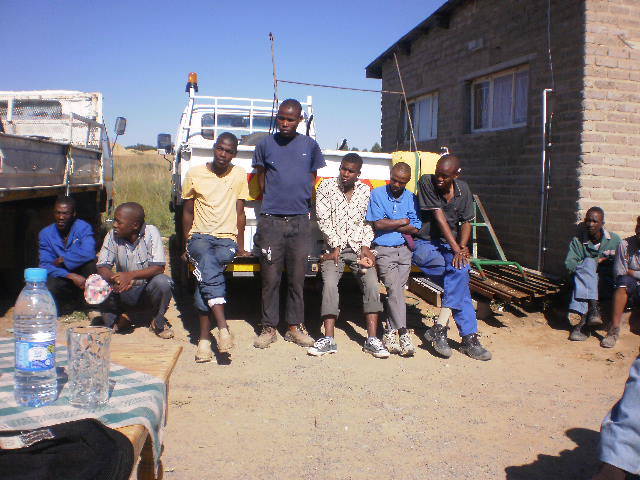
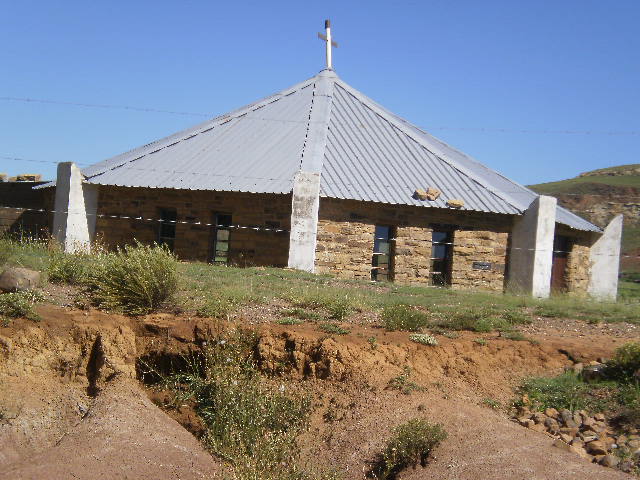
The reader might remember the trip to Sterkspruit in the Eastern Cape before Easter and since then things are moving a bit at least: The water from the mountains is in Cape Town and awaits analysis about content and quality. Sam, our trustee have had a meeting with the representative of the SA-German Chamber of Commerce and Industry and is now going to Johannesburg with Fr Jo to investigate the possibilities of training with the Chamber’s head of training services. Just to give you an idea about the place we visited some pictures:

]

Filed under: General, HIV and AIDS, HIV Prevention, Networking, Reflection, Society and living environment, Uncategorized, , , , , , , , , , , , , , , , , , ,

No second “humanae vitae” effect please

Preface:
Please note that this entry is my personal opinion. As theology also is linked to the topic of HIV and AIDS I guess it is important to see it in this context too.
Like it or condemn it – whatever you do, first please read the whole text, reflect on it and then you are welcome to comment on it too. If you like it, share it – if you don’t like it, you most probably will not share it, but you still can pray for me and leave the last judgement to the Lord himself . 🙂
Don’t do it now
Following the discussions in my church about the integration of the Pius XII Society and reading their website and publications I can only plead with my church not to wipe over the fundamental differences but to keep an open door policy fur further discussions without taking them in yet. The time is not here yet. We might close formally a separation but I fear for another division amongst the faithful like we have seen and still is to be seen on the issue of “Humanae Vitae”.
Even if we formally do not acknowledge it as a church: This encyclica was the beginning of loosing ground as church being taken seriously by major part of the faithful and societies. We don’t need within one century a repeat of this effect which divides people again within the church.
Let’s acknowledge:
The world is not flat but round and traditions develops and God is calling us into a future – he is always ahead of us and he is not asking us to turn back to the good old times – if they ever been so good at all. And there is indeed salvation possible outside the church. We don’t need amongst us more in-fights (we have more than enough), no internal crusades, no creeping back under the modder of old plush vestments.
Please church I belong to: most of us, of our members are living in the 21st century – and we have to overcome poverty and hunger and other obstacles; we have to contribute towards justice and peace and a healthy environment. We have to catch up with all scientific developments and the related moral teaching instead of inviting people to discuss celebration styles, Latin wording or if God’s good spirit is allowed outside the church to go and do his work.
I wish for the church to be relevant in this world, in this time for those living and struggling now.
I wish a church spelling out the unconditional love of God understandable – it is so much needed and wanted.
Therefore: Keep the door open but don’t unite under these circumstances. God has time and he does not mind diversity at all. We should follow his example…

Filed under: General, Networking, Reflection, Society and living environment, Uncategorized, , , , , , ,

And it does move

Stefan Hippler


And it does move  –  Instead of an epilogue, a wish list for our Church

Why did we write this book? Because we have a matter with which we are trying to reach the Vatican, the centre of our Church. We sent the German edition of this book to Pope Benedict XVI in Rome as this was the only way of reaching him. We tried, but for an ordinary foreign chaplain it is impossible to secure a private audience with the pontiff, and even less so when he is accompanied by a critical brethren, a journalist even. “But why is the pope so important to you?” our friends ask. That’s simple: because the Catholic Church is centred on one man whose word is the law in the Catholic Church; he represents God’s supremacy. In these bewildering times of HIV/Aids, he – and only he – can effect a real landmark change.

I have tried to get access at least to an influential curial cardinal, the equivalent of a cabinet minister in the Vatican government. But even that turned out to be a mission impossible, because the path to them runs through local episcopates, which in turn were less than cooperative because our matter relates to the delicate subject of HIV/Aids. My co-author Bartholomäus Grill asked Father Eberhard von Gemmingen, the Jesuit editor-in-chief of Vatican Radio’s German service, for advice. He suggested that we collaborate with other theologians in formulating a kind of declaration to be sent to the Vatican. This book is our declaration.

Some fellow Catholics advised against taking this route. “It won’t accomplish anything. You won’t be thanked for it and in the end you’ll get into trouble,” they warned. Clearly there is not much confidence in our Church leadership’s openness to dialogue. But in the Second Vatican Council’s Pastoral Constitution Gaudium et Spes it is written: “By virtue of her mission to shed on the whole world the radiance of the Gospel message, and to unify under one Spirit all men of whatever nation, race or culture, the Church stands forth as a sign of that brotherhood which allows honest dialogue and gives it vigour” (92). This is a caution that even in the licit diversity of thought in the Church, dialogue must always be marked by “mutual esteem, reverence and harmony”. Gaudium et Spes teaches that  “thus all those who compose the one People of God, both pastors and the general faithful, can engage in dialogue with ever abounding fruitfulness. For the bonds which unite the faithful are mightier than anything dividing them. Hence, let there be unity in what is necessary; freedom in what is unsettled, and charity in any case.” This could be the leading motto of our book.

I am convinced that in this spirit, development on controversial ecclesial and theological issues is and must be possible – that in the 21st century we can and may revise the time-honoured teachings of Church Fathers such as St Augustine.

Konrad Hilpert, professor of moral theology at Munich’s Ludwig-Maximilian University, in a highly recommended essay demonstrated how St Augustine’s dictum of error having no freedom marked papal proclamations right up to the Second Vatican Council (1962-65). As recently as the reign of Pius IX in the 19th century, encyclicals such as Quanta cura and its attendant syllabus (a list of “theological errors”) denied the notion of religious freedom. Pius IX even described the idea of freedom of conscience and safeguarding it in civil law as an “error and absurdity, and even madness”.

Hilpert credits our Pope Benedict XVI, among others, for the Vatican II decree which enshrined religious freedom. For the Pope, then Fr Joseph Ratzinger and a theological expert at the Council, 28 October 1965 signified the “end of the Dark Ages” That was the day that, after much heated discussion, the Council adopted the decree Nostra aetate. It included the revolutionary sentence: “The Church reproves, as foreign to the mind of Christ, any discrimination against men or harassment of them because of their race, colour, condition of life, or religion.” A courageous Council managed a breakthrough from which we can’t and don’t want to turn back.

More than 40 years have passed since, and the world has become so much more complex and complicated that an individual person can’t understand it in its totality. Not even the Pope. He must rely on the analysis of highly qualified experts. And this is where the problems begin: It always seems as though some papal advisers have divorced themselves from the secular world, as if they are sitting in the ivory tower of the Vatican, trying to understand the realities of “out there”. Often this creates a conflict with actual conditions. A reform that would see the regular rotation of consultative curial personnel is overdue. We need consultants who know real life and in the pursuit of truth conduct a fearless dialogue with the world.

Our hopes rest entirely with the Pope. He is a kind and humble man, and a brilliant theologian – that is a perfect combination of attributes to bring about freedom of research and spiritual examination within the ecclesiastical system. Theology and life, teaching and praxis, tradition and experience, religion and enlightenment must reconcile for the convergence of truth. Of course this is a self-critical endeavour which might afflict some people. It’s about the Church’s capacity to adapt, something which throughout Church history has always posed a challenge. But we have the protection of the Holy Spirit and must trust that the Spirit will guide our thoughts and actions.

The journey with HOPE Cape Town has changed my life. My encounters in the townships, my work with people from different cultures, the existential confrontation with dying and death, with desperation and hope – all these experiences are a gift from God for which I am infinitely thankful. I am at home in two worlds: in the world of poverty which needs aid, and in the world of prosperity which can offer such aid. I am something of a nomad between these worlds – I often had doubts that I might be able do that. Today I can say that it was the best thing that could ever have happened to me.

One must have visited a corrugated iron shack in South Africa to get a measure of the extent of the crisis. One must have held the hand of someone about to die from the effects of immune deficiency to appreciate the extreme injustice of globalised apartheid. One must have seen, heard, smelled and tasted the misery to really understand it. Only then is it possible to fully comprehend the scandal of the present conditions, the ignorance of the mighty, and the indifference of the affluent.

The Sabbath exists for the people, not the people for the Sabbath (Mark 2:27). With that in mind, I express my wish that the Church leaders in the inner circles would occasionally turn around to see the realities faced by the people on the periphery.

I have contributed to this book as a human being who is confronted every day with the struggles for survival of the poor and the ill, as one who lives and suffers with them. I have written as a Christian who believes to be meeting Jesus in every one of our brothers and sisters. I have written as a Catholic who knows that the joys and fears of his fellow human beings are also his joys and fears. And I have written as a pastor of a church which always seeks, because of its historical experience and eternal vocation, to reform itself anew.

Translation from the book:
Gott – Aids – Afrika
Hardcover: 207 pages  –  Publisher: Kiepenheuer & Witsch GmbH (August 31, 2007)
Language: German  –  ISBN-10: 3462039253  –  ISBN-13: 978-3462039252
Gott – Aids – Afrika
Paperback  – Bastei – Luebbe  –
Language: German  –  ISBN-10: 3404606159  –  ISBN-13: 978-3404606153

Filed under: General, HIV and AIDS, HIV Prevention, HIV Treatment, HOPE Cape Town Association & Trust, HOPE Cape Town Trust, Medical and Research, Networking, Politics and Society, Reflection, Society and living environment, , , , , , , , , , , , , , , , , , , ,

Blog Categories

Follow God, AIDS, Africa & HOPE on WordPress.com

You can share this blog in many ways..

Bookmark and Share

Enter your email address to follow this blog and receive notifications of new posts by email.

Join 2,711 other subscribers

Translation – Deutsch? Française? Espanol? …

The translation button is located on each single blog page, Copy the text, click the button and paste it for instant translation:
Website Translation Widget

or for the translation of the front page:

* Click for Translation

Copyright

© Rev Fr Stefan Hippler and HIV, AIDS and HOPE.
Unauthorized use and/or duplication of this material without express and written permission from this blog’s author and/or owner is strictly prohibited. Excerpts and links may be used, provided that full and clear credit is given to Rev Fr Stefan Hippler and HIV, AIDS and HOPE with appropriate and specific direction to the original content.

This not withstanding the following applies:
Creative Commons License
This work is licensed under a Creative Commons Attribution-ShareAlike 3.0 Unported License.